
Tools
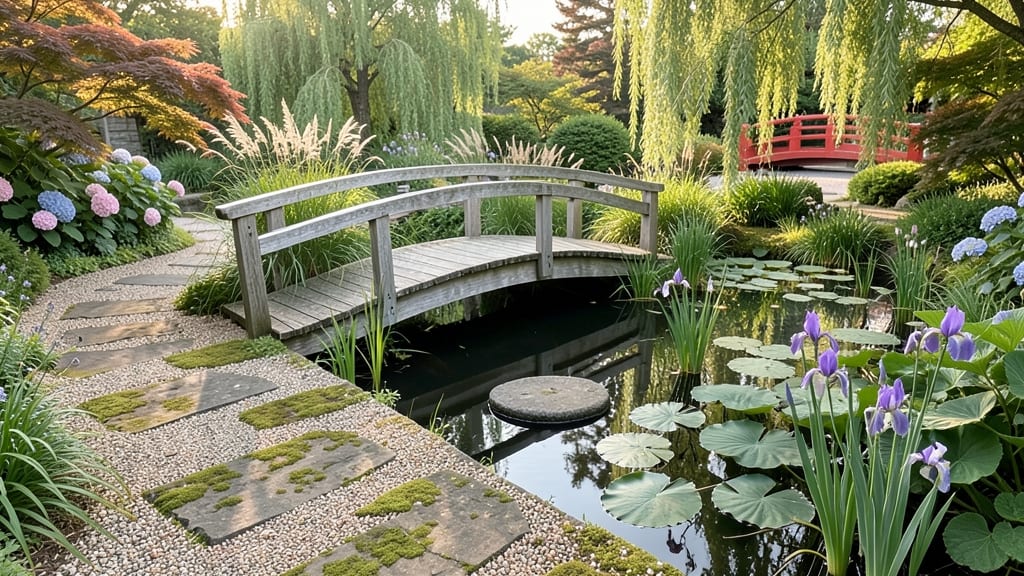
The pathways in Monet's garden at Giverny were designed as organic, serpentine trails that wove through vibrant plantings, creating ever-changing perspectives of his famous water lilies and surrounding landscapes.
The garden's winding paths weren't just functional—they were carefully crafted to mirror Monet's artistic vision. 🌿 These meandering trails encouraged visitors to experience the garden slowly, with each turn revealing new colors and compositions. Monet often planted tall flowers along the edges to frame views, while lower shrubs created depth.
The paths themselves were never straight, reflecting his belief that nature should feel alive and unpredictable. This design philosophy still influences modern garden layouts today.
What's particularly fascinating is how these pathways served as both a physical journey and a visual study. Monet would paint the same scenes from different angles along the trails, capturing how light and shadow changed throughout the day.
The gravel paths, often lined with moss or stepping stones, were chosen for their natural, unrefined look—perfect for blending with the surrounding flora.
💡 In This Article
- Monet’s Pathway Design Philosophy: Nature as a Living Canvas
- Restoring Monet’s Garden Paths: Materials and Techniques for Authentic Replication
Monet’s pathway design philosophy: nature as a living canvas
Monet’s pathways weren’t just functional—they were deliberate artistic statements that transformed the garden into an ever-evolving painting. He rejected straight lines entirely, instead creating organic curves that mirrored the natural flow of rivers and streams.
These serpentine trails forced visitors to move slowly, mirroring how he approached painting: capturing fleeting moments of light and color rather than rigid compositions. The average path width was just 3-4 feet, narrow enough to create intimacy while still allowing wheelbarrows to pass during maintenance.
The inspiration came from two key sources: Japanese garden design and Monet’s own impressionist techniques. Japanese gardens often use irregular paths to guide visitors through layered perspectives, and Monet adopted this principle but amplified it with vibrant European flora.
He planted tall delphiniums and hollyhocks along path edges to frame views, while lower rosemary and lavender created textural contrast. The gravel paths themselves were carefully chosen for their neutral tones—typically a mix of quartz and limestone—to avoid competing with the colorful plantings.
What’s most fascinating is how these paths functioned as visual studies. Monet would paint the same water lily pond from multiple angles along different trail segments, demonstrating how perspective changed with each step.
The paths also created dynamic light patterns: morning sun would illuminate different sections as visitors progressed, while afternoon shadows would shift the entire color palette. This interplay between movement and light was central to his impressionist philosophy—capturing nature’s impermanence through carefully designed physical spaces.
The emotional impact came from the unexpected: sudden bursts of color from peony blooms, the scent of jasmine along hidden turns, or the sound of water trickling through stone bridges.
Each pathway was designed to feel like a discovery, where the next moment might reveal a new artistic masterpiece in progress. Monet once said, "My garden is my most beautiful masterpiece"—and these winding trails were the brushstrokes that made it possible.
Today, these principles influence modern garden design through what’s called "curvilinear pathways." Unlike geometric layouts, Monet’s approach creates a sense of adventure and connection to nature.
The key difference is in the rhythm: his paths never repeated the same visual experience twice, just like his paintings never showed the same scene identically. This intentional irregularity is what makes both his garden and artworks feel so alive and immediate.
For gardeners wanting to replicate this effect, start with 3-5 foot wide gravel paths that gently curve rather than turn sharply. Layer plantings with varying heights—tall at the edges, medium in the middle, and low ground cover underneath—to create depth.
And most importantly, avoid symmetry: Monet’s paths had no mirror images, just organic variations that felt like nature’s own handiwork.