
Tools
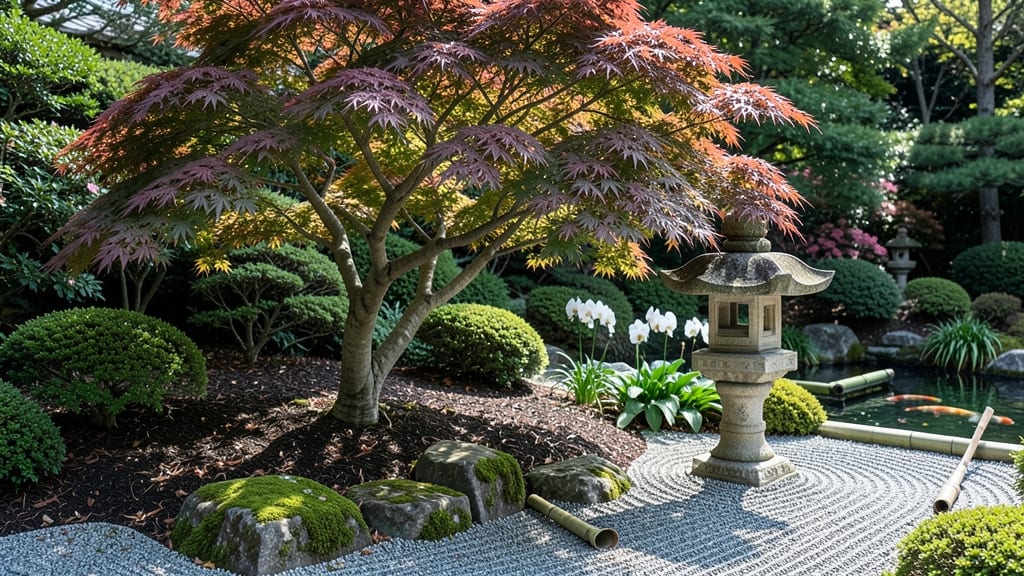
Staten Island's Japanese gardens create peaceful retreats by combining classic Zen design with the island's natural beauty, featuring standout spots like the Snug Harbor Cultural Center’s Japanese Tea Garden and Tottenville’s moss-covered sanctuaries, complete with tranquil koi ponds, sculpted trees, and ever-changing seasonal displays that invite quiet reflection.
These gardens aren't just beautiful—they're carefully crafted to balance nature and human presence. 🌿 The Snug Harbor Tea Garden uses traditional Zen rock arrangements and water features to symbolize purity, while Tottenville's moss gardens emphasize organic imperfection through wabi-sabi principles.
What makes them special is how they adapt classic Japanese techniques to Staten Island's climate, using native plants like maple trees and bamboo groves that thrive year-round.
The best time to experience them is during spring blooms (when cherry trees burst into color) or fall foliage seasons, though winter offers its own quiet beauty with frost-covered stones. Pro tip: Visit Conference House Park in late afternoon when the light filters through bamboo leaves—it creates magical photography opportunities.
Many gardens also host seasonal events like lantern festivals that bring the community together in celebration.
💡 In This Article
- Design Principles Behind Staten Island’s Japanese Gardens
- Best Times to Visit and What to Look For
Design principles behind Staten Island’s Japanese gardens
Japanese gardens on Staten Island follow strict design principles rooted in Zen philosophy, where every element serves a symbolic purpose. The most iconic feature is the Zen rock arrangement, or suiseki, which represents mountains and islands in miniature form.
At Snug Harbor’s Tea Garden, the carefully placed stones mimic natural landscapes while creating focal points for meditation.
These rocks are often placed near water features like koi ponds, where the sound of flowing water symbolizes purity and the cycle of life—something you won’t find in traditional Western gardens where water is purely decorative.
The concept of wabi-sabi—embracing imperfection and transience—is woven into every detail, from the irregular shapes of moss-covered stones to the asymmetrical placement of plants.
Unlike manicured European gardens, these spaces celebrate nature’s natural decay, like the gnarled branches of 100-year-old Japanese maples at Conference House Park that show signs of age. 🌿 Even the bamboo groves are pruned to maintain their wild, organic appearance rather than being sheared into perfect lines.
This philosophy extends to seasonal plant rotations, where spring brings delicate sakura cherry blossoms (that bloom for just 2 weeks) and autumn showcases fiery red maple leaves that contrast with evergreen pines.
Water plays a crucial role beyond aesthetics—it’s a living element that reflects both the garden’s design and the visitor’s soul. The koi ponds at Tottenville’s moss gardens use gentle waterfalls that create a rhythmic sound masking city noise, while the still surfaces double as mirrors for the surrounding landscape.
Gardeners here use a technique called shakkei (borrowed scenery), where views are framed to include distant Staten Island landmarks like the Verrazzano Bridge, blending the gardens with their urban surroundings. This creates a sense of continuity that’s uniquely Staten Island.
What makes these gardens work so well in Staten Island’s climate is their use of native-adapted plants.
Traditional Japanese gardens often rely on delicate species like wisteria, but Staten Island’s gardens incorporate hardier alternatives: dwarf bamboo that thrives in partial shade, Japanese black pine resistant to salt air near the waterfront, and ground covers that prevent erosion on the island’s rocky terrain.
The result is a harmony between imported tradition and local resilience that you won’t find in mainland Japanese gardens.
Seasonal transitions are carefully planned to maintain visual interest year-round. Spring features weeping cherry trees that cascade over stone bridges, while summer introduces hydrangeas that change color with soil pH. Autumn’s star is the red maple, whose leaves turn vibrant orange before falling to create natural mulch.
Even winter has its beauty with frost-covered moss and the skeletal branches of pruned trees that reveal their structural elegance—a concept called karesansui (dry landscape) that’s adapted here with local materials.
The most striking example is how these gardens use perspective and scale to create depth. At Snug Harbor, visitors enter through a torii gate that marks the transition from the outside world to sacred space, while Tottenville’s moss gardens use stone lanterns to guide paths through layered vegetation.
This careful attention to visual storytelling transforms a simple walk into a meditative journey, where each turn reveals a new harmony between human design and natural elements.