
Light Requirements
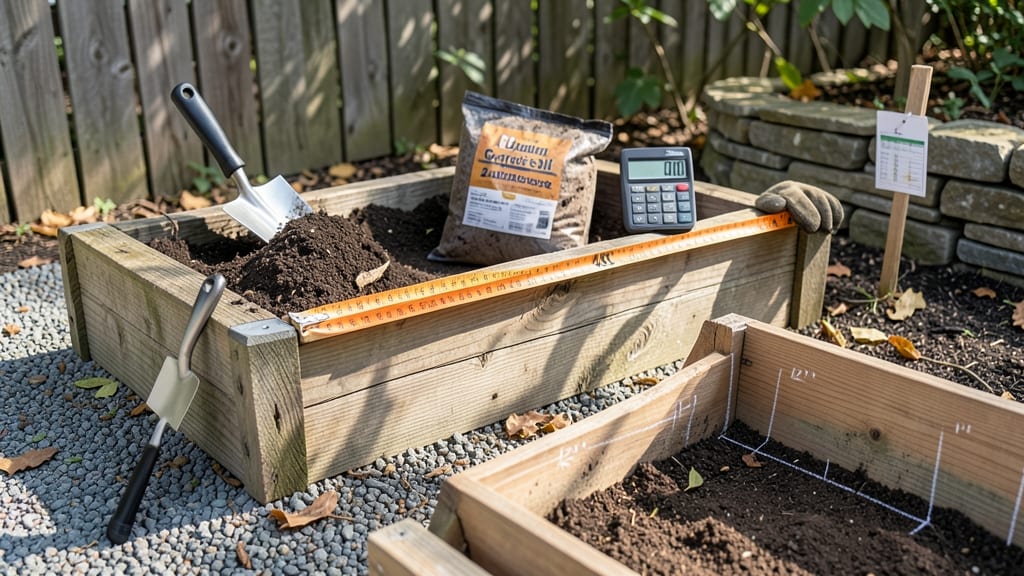
To determine how much soil you need for a raised garden bed, multiply the bed’s length and width by the desired depth (typically 6–12 inches) and divide by 27 to convert cubic feet to cubic yards. For example, a 4’x8’ bed at 10” depth requires 1.5 cubic yards of soil.
Calculating the right amount of soil prevents wasted trips to the nursery and ensures your plants thrive.
The depth matters most—vegetables need at least 12 inches for root development, while flowers can thrive in shallower beds. 🌱 For instance, a 4’x8’x12” bed (common for veggies) requires 2 cubic yards, while a 3’x6’x6” bed (ideal for flowers) needs just 0.75 cubic yards.
Always account for existing soil or landscape fabric underneath, as this can reduce your fill needs by up to 20%.
Pro tip: Buy 10-15% more soil than calculated to account for settling and uneven bed bases. Mixing 60% topsoil with 30% compost and 10% perlite creates the perfect balance of nutrients and drainage. This blend not only supports root growth but also retains moisture better than pure topsoil alone.
💡 In This Article
- Calculating Raised Garden Bed Soil Volume by Dimensions
- Best Soil Types and Mixes for Raised Garden Beds
Calculating raised garden bed soil volume by dimensions
Understanding how to calculate soil volume starts with the simple formula: length × width × depth = cubic feet. The depth is where most gardeners trip up—most vegetables need at least 12 inches of soil for proper root development, while flowers can thrive in 6-8 inches.
For example, a 4’x8’x12” bed (a classic veggie garden size) holds 32 cubic feet of soil. Divide that by 27 to convert to cubic yards (32 ÷ 27 ≈ 1.18), so you’d need about 1.25 cubic yards to account for settling.
The science behind depth matters: roots need space to spread and access nutrients.
Carrots, for instance, require 12-18 inches of loose soil to grow straight, while shallow-rooted herbs like basil thrive in just 6 inches. 🌱 If your bed sits on grass or hardpan, subtract 2-4 inches from your depth calculation since you won’t need to fill the entire height.
Always measure the interior dimensions of your bed—not the outer frame—since soil won’t reach the edges.
For a quick reference, here’s a cheat sheet for common bed sizes:
- 3’x6’x6”: 0.75 cubic yards (ideal for flowers or herbs)
- 4’x8’x10”: 1.5 cubic yards (perfect for veggies)
- 8’x4’x12”: 3.5 cubic yards (large vegetable garden)
Pro tip: Round up to the nearest 0.25 cubic yards when ordering soil. Bags of soil are often sold in 0.5-1 cubic foot increments, so a 4’x8’x12” bed would require about 32 bags of 1 cubic foot soil each.
Always check the bag’s cubic foot rating—some brands overstate volume by 10-15%.
One common mistake is ignoring the bed’s base. If you’re using landscape fabric or cardboard to suppress weeds, you’ll save 1-2 inches of fill depth. For example, a 4’x8’x10” bed on fabric might only need 8 inches of soil, reducing your total by 0.5 cubic yards.
Always account for this to avoid overbuying.