
Light Requirements
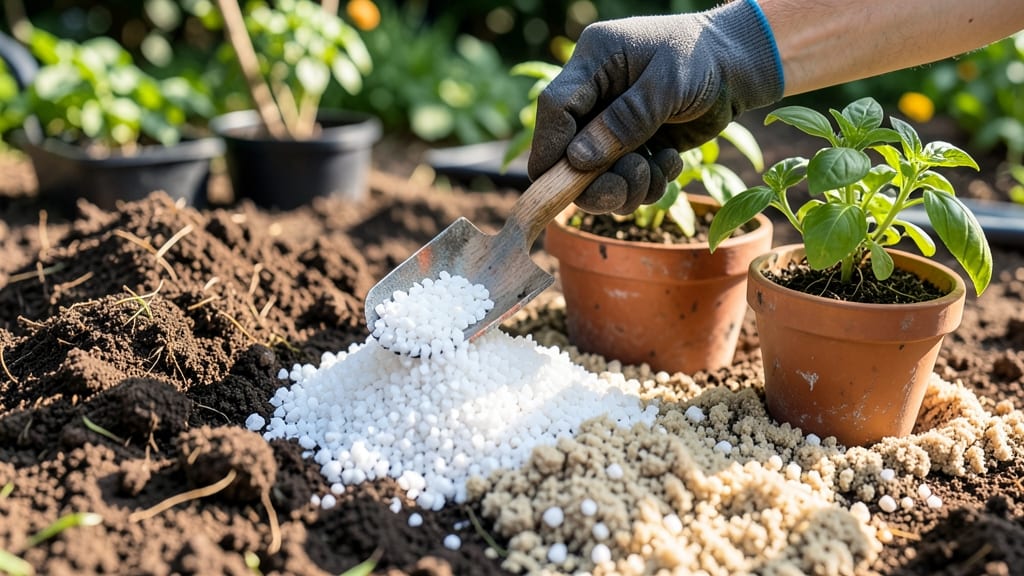
To determine how much perlite to add to garden soil, start with a 1:3 to 1:4 perlite-to-soil ratio for most plants. For sandy soils, reduce to 1:5, while heavy clay benefits from a 1:2 mix. Always blend evenly to prevent uneven moisture distribution.
Perlite acts like a soil sponge—its porous structure holds air and water while preventing compaction, which is especially critical for root-heavy plants like tomatoes or herbs. 🌱 The key is balancing aeration with moisture retention; too much perlite can wash away nutrients, while too little leaves soil dense and waterlogged.
I’ve found that container gardens often need slightly more perlite (1:3 ratio) since they dry out faster than in-ground soil.
For heavy clay soils, where drainage is the primary issue, the 1:2 ratio helps break up compaction while still retaining enough moisture for root growth. Test your soil first—if water pools on the surface after 30 minutes, you likely need more perlite.
Just remember: perlite doesn’t replace organic matter, so always mix it with compost for the best results.
💡 In This Article
- How Perlite Enhances Soil Structure and Plant Health
- Perlite Mixing Ratios for Different Plants and Soil Types
How perlite enhances soil structure and plant health
Perlite’s magic lies in its microscopic, sponge-like structure—each tiny particle expands to 20 times its original size when heated, creating a network of air pockets that improve soil aeration.
This porous nature allows roots to breathe while preventing compaction, which is especially critical for plants like tomatoes or herbs that have dense root systems. The lightweight material also reduces soil density by up to 30%, making it easier for roots to penetrate and access nutrients.
When comparing perlite to alternatives like vermiculite or sand, the differences become clear. Perlite’s particles are larger (0.5–2mm) and more irregularly shaped, which creates better drainage channels. Vermiculite, while excellent for moisture retention, can become waterlogged, while sand lacks the air pockets needed for proper aeration.
The ideal mix combines perlite’s drainage with organic matter to balance moisture—think of it as adding a breath of fresh air to your soil’s foundation. 🌱
For moisture-sensitive plants like succulents or cacti, perlite’s ability to wick away excess water is a game-changer. These plants thrive in soil that dries out quickly, and perlite’s high porosity (up to 80% air space) prevents root rot.
In contrast, heavy feeders like leafy greens benefit from perlite’s ability to hold air near roots, promoting microbial activity that breaks down organic matter into plant-accessible nutrients.
One common misconception is that perlite only improves drainage—it also acts as a natural insulator, protecting roots from temperature extremes. In summer, it keeps soil cooler by reflecting sunlight, while in winter, it traps heat near roots.
This dual function makes perlite a year-round ally for plant health, especially in containers where temperature fluctuations are more pronounced.
To see the difference firsthand, try this test: Fill two containers with the same soil—one with perlite, one without. Water both equally, then observe how quickly the perlite-amended soil drains. You’ll notice water moves through it like a sieve, while the plain soil stays soggy.
This visual demonstration proves why perlite is a staple in seed-starting mixes and hydroponic systems alike. ✨