
Watering
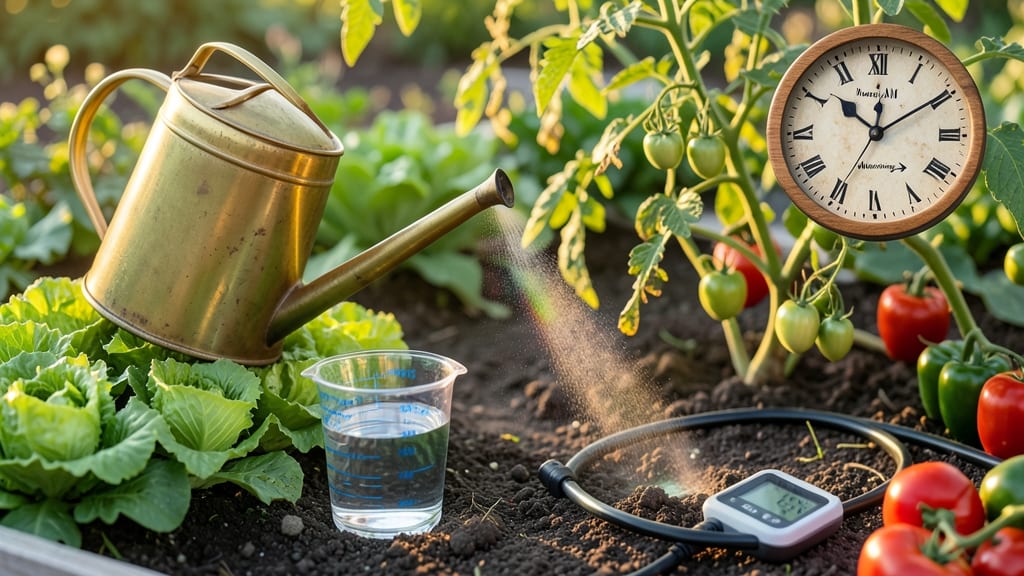
Watering a vegetable garden the right amount keeps your 🥬 thriving without wasting a drop — and the science behind it is simpler than you think.
Overwatering or underwatering your vegetable garden can mean the difference between a thriving harvest and wasted effort—yet most gardeners guess rather than follow science-backed watering schedules.
Think about it: too little water stresses roots, while too much drowns them or invites fungal diseases. The key is matching your watering to the plant’s needs, soil type, and even the time of day.
Below, I’ll break down exactly how much to water by plant type, when to adjust for weather, and the smartest tools to make it effortless.


Science-backed watering requirements for common vegetable types
Understanding the watering needs of your vegetable garden isn't just about keeping soil damp—it's about delivering the right amount at the right time for each plant type. Leafy greens, root vegetables, fruiting plants, and herbs all have unique moisture requirements, and getting them wrong can lead to stunted growth, disease, or even crop failure.
The key is consistent soil moisture at specific depths, not just surface watering.
For most vegetables, the goal is 1 to 2 inches of water per week, delivered either through rainfall or irrigation. However, this varies based on the plant's growth stage and type.
For example, tomatoes and peppers need deeper watering during fruiting, while lettuce and spinach prefer shallow, frequent moisture. Let’s break down the science-backed guidelines for each category to keep your garden thriving.
Soil moisture depth is critical—most vegetables need water to penetrate 6 to 12 inches deep, depending on their root system. Using a soil moisture meter or simply sticking your finger 2 inches into the soil can help you gauge when it’s time to water. If the soil feels dry at this depth, it’s time to hydrate your plants.
Leafy greens like lettuce and spinach thrive with shallow, frequent watering because their roots are close to the surface. Aim for 3 to 4 watering sessions per week, keeping the top 1 inch of soil moist but not waterlogged. Overwatering can cause these plants to bolt or develop fungal issues like downy mildew. A light misting in the morning is ideal, as it reduces evaporation and gives leaves time to dry before nightfall.
Root vegetables, such as carrots and radishes, need a different approach. Their roots grow deep, so water must penetrate at least 6 inches into the soil. Water these plants 2 to 3 times per week, ensuring the soil stays evenly moist but not soggy. Uneven moisture can cause roots to split or become woody. Drip irrigation is perfect for this category, as it delivers water directly to the root zone without disturbing the soil.
When it comes to fruiting plants like tomatoes and peppers, deep, consistent watering is non-negotiable. These plants need 1.5 to 2 inches of water per week, especially during flowering and fruiting stages. Watering at the base of the plant (not the leaves) prevents fungal diseases like early blight.
Mulching with straw or grass clippings helps retain moisture and keeps roots cool, which is crucial for heavy producers like cucumbers and eggplants.
Herbs like basil and parsley are often overlooked, but they have specific needs too. Most herbs prefer well-draining soil and moderate moisture, with waterings spaced 2 to 3 times per week. Overwatering can lead to root rot, while underwatering causes herbs to become bitter or wilted. A good rule of thumb is to water herbs when the top 0.5 inch
How to adjust watering based on weather, soil, and season
Your vegetable garden's watering needs aren't one-size-fits-all—they shift dramatically with weather patterns, soil composition, and seasonal changes. What works for sandy soil in summer may drown plants in heavy clay during spring. Understanding these variables lets you tailor your approach for maximum yield without waste.
Start by recognizing that 1 inch of water per week is the general rule, but this varies wildly. For example, leafy greens like lettuce tolerate more frequent light watering, while root crops such as carrots need deep, infrequent soaking to develop properly.
Even within the same plant type, adjustments are needed based on your local climate.
⚠️ callout-warning
Most gardeners water based on a schedule, not soil conditions. This leads to soggy roots or wasted water. Always check moisture 2-3 inches deep—that's where roots actively grow. Use your finger or a moisture meter to test before watering.
💧 Pro Tip: Clay soil stays wet longer—reduce water by 30-50% compared to sandy soil, which drains quickly.
Seasonal shifts demand the most attention. In spring, focus on deep watering to encourage root growth before hot weather arrives. By summer, increase frequency to every 2-3 days (or daily in extreme heat) while ensuring water penetrates 6-8 inches deep.
Fall brings a gradual reduction—water less often but maintain consistent moisture until the first frost.
Don't overlook weather events. After heavy rain, skip watering for 2-3 days and let soil dry slightly. During drought conditions, prioritize watering in the early morning to reduce evaporation and use mulch to retain moisture.
Even a 3-inch layer of straw can cut water needs by up to 40%.
Soil type dictates your entire approach. Sandy soil drains quickly, requiring frequent shallow watering (2-3 times per week), while clay soil holds moisture longer, needing deep watering every 5-7 days. For loamy soil (the gold standard), aim for 1-1.5 inches per week, adjusting based on rainfall.
A simple test: Grab a handful of soil—if it crumbles easily, it's time to water.
Pay attention to plant signals. Wilting leaves often mean underwatering, but yellowing leaves or mushroom growth at the base signal overwatering. Adjust your schedule weekly by monitoring these cues and tracking your garden's response.
With practice, you'll develop an intuitive sense of what your specific soil and climate demand.