
Advice
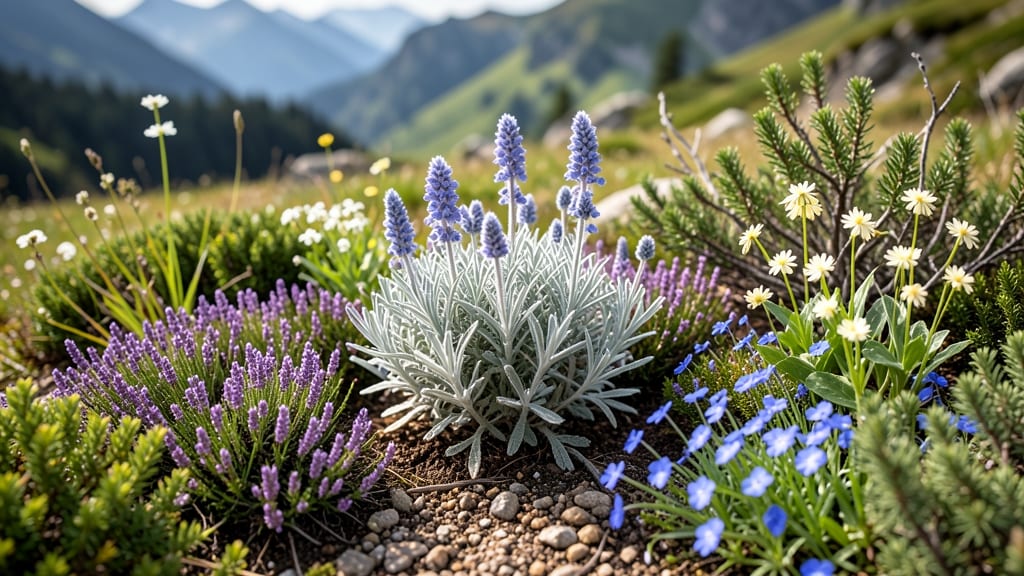
High Country Gardens is located at 1313 W. 11th Street, Unit 100, in the historic Santa Fe Plaza area of Santa Fe, New Mexico, 87501. The nursery and gift shop welcomes visitors by appointment and during select public hours year-round, specializing in drought-tolerant plants and gardening expertise.
This iconic Santa Fe nursery sits right in the heart of New Mexico's oldest neighborhood, where the high desert climate creates perfect conditions for growing water-wise plants. 🌵 The plaza's historic adobe architecture and elevation of over 7,000 feet actually help plants thrive with less water—a key reason why High Country Gardens became a leader in arid-land gardening.
Their location makes it easy to combine a plant shopping trip with exploring Santa Fe's famous art galleries and restaurants just steps away.
The nursery's prime location also means they can offer plants perfectly adapted to New Mexico's unique growing conditions. Visitors often comment on how the shop's knowledgeable staff can recommend specific plants that will flourish in their own yards, whether they're dealing with alkaline soil or intense sun exposure.
💡 In This Article
- Exploring High Country Gardens’ Santa Fe Location and History
- Visiting High Country Gardens: Hours, Appointments, and Nearby Attractions
Exploring High Country Gardens’ Santa Fe location and history
Santa Fe's high desert climate—with its 7,200-foot elevation and 300+ days of sunshine annually—creates the perfect natural laboratory for drought-tolerant plants. The nursery's location at 1313 W. 11th Street sits just blocks from the historic plaza, where adobe buildings have been using passive solar design for centuries.
This architecture, combined with the thin air and intense sunlight, means plants here need to be resilient yet beautiful—a core principle of High Country Gardens' mission since 1987.
The elevation plays a crucial role in plant selection. At this altitude, temperatures swing dramatically between day and night (20-30°F differences), which actually helps drought-resistant plants develop deeper root systems.
The nursery's founder, Adriaan and Diana Dorrestein, specifically chose this location because the alkaline soil and low humidity mirror conditions across much of the Southwest. Their early experiments with native plants like yuccas, agaves, and penstemons became the foundation for their signature collections.
What makes this location special is how the microclimate varies just blocks away.
While the plaza area benefits from the adobe buildings' thermal mass, moving half a mile east toward the Rio Grande can bring 5°F cooler temperatures and higher humidity—something the nursery's staff uses to recommend plants for different zones.
The prevailing winds from the west also help disperse pollen efficiently, which is why many of their pollinator-friendly plants thrive here.
The historic setting isn't just aesthetic—it's functional. The thick adobe walls of neighboring buildings create sheltered microclimates perfect for testing delicate perennials. Visitors often notice how the nursery's outdoor displays show plants growing in full sun one moment and partial shade the next, demonstrating real-world adaptability.
This hands-on approach to plant selection is why their catalog became so influential for gardeners nationwide.
Consider these key climate advantages that make Santa Fe ideal:
- Low humidity: Reduces fungal diseases, allowing plants to focus energy on growth rather than defense
- Intense sunlight: Encourages natural pigment production, resulting in more vibrant flowers
- Temperature extremes: Forces plants to develop hardy constitutions perfect for unpredictable climates
- Alkaline soil: Matches conditions in much of the Southwest, ensuring plants will thrive in customers' yards
The nursery's location also benefits from Santa Fe's UNESCO World Heritage status, which protects the area's unique ecosystem. This means High Country Gardens operates within a designated conservation zone, where they must follow strict guidelines for water usage and native plant propagation.
Their commitment to sustainability is literally written into the landscape around them.
What most visitors don't realize is how the altitude affects plant metabolism. At 7,200 feet, photosynthesis occurs more slowly, which is why High Country Gardens' plants often grow more slowly but develop stronger structural integrity.
This is particularly noticeable in their tree collection, where species like the New Mexico Privet grow with remarkable density compared to their lowland counterparts. 🌱