
Tools
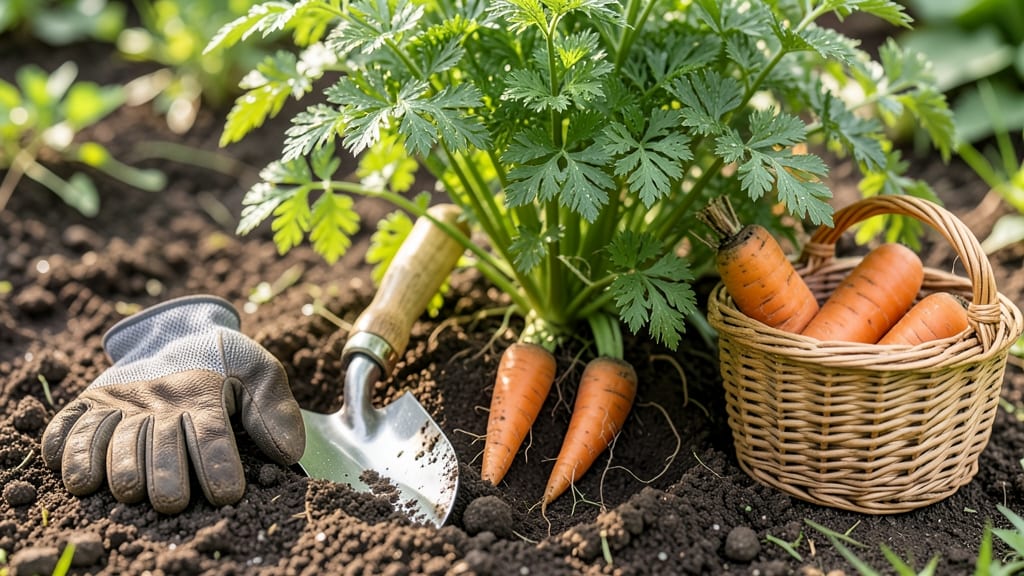
To pull carrots from the garden, harvest when they reach 1-1.5 inches in diameter and soil is loose enough to extract roots cleanly, typically 60-80 days after planting, before bolting or hardening occurs in hot weather.
Timing your harvest right ensures tender, flavorful carrots instead of tough, woody roots. 🌱 The 1-1.5 inch diameter rule applies to most varieties, but heirloom types like Purple Haze may need slightly longer.
Soil should pull away cleanly when you gently tug—if it resists, loosen the earth with a fork first. Hot weather triggers bolting (flowering), which makes roots bitter, so always check soil moisture and plant in cooler seasons for best results.
For consistent harvests, plant successive batches every 2-3 weeks in spring and fall. This staggered approach prevents overcrowding and ensures a steady supply. 🌿 If you're growing multiple varieties, note their maturity times—some bolt faster than others.
After pulling, store carrots in a cool, dark place with their greens trimmed to preserve freshness for up to 3 weeks.
💡 In This Article
- Carrot Maturity Stages and Soil Conditions
- Preventing Carrot Bolting and Maximizing Yield
Carrot maturity stages and soil conditions
Carrot readiness hinges on three key factors: size, color, and soil conditions. Most varieties reach ideal harvest size at 1-1.5 inches in diameter, though heirloom types like 'Danvers' or 'Nantes' may need slightly longer growth time.
Look for a vibrant orange hue—pale or green-tinged carrots often indicate uneven growth or nitrogen deficiency. The shoulder (top 1-2 inches) should be slightly tapered, signaling maturity, while the root tip remains pointed.
The soil's texture and moisture play a critical role in harvest success. Well-drained, loose soil allows roots to grow straight and cleanly. Before pulling, perform the "finger test": Gently press your finger into the soil around the carrot.
If it crumbles easily and the root slides out with minimal resistance, it's ready. Compacted soil forces roots to grow irregularly, creating forks or hairy roots.
In sandy soils, carrots mature faster (50-60 days) than in clay (70-80 days), so adjust expectations based on your garden's composition.
Temperature dramatically impacts carrot quality. Hot weather above 75°F triggers bolting—when the plant shifts energy from roots to flowering stems, resulting in bitter, woody roots. The ideal growing temperature range is 55-65°F, which is why spring and fall plantings yield the sweetest, tenderest carrots.
Even a single heatwave can cause premature bolting, so always monitor weather forecasts and use shade cloth if temperatures spike unexpectedly.
Texture is your final clue. A mature carrot should feel firm yet yield slightly when pressed—like biting into a crisp apple. Overmature carrots develop woody cores due to lignin buildup, a natural defense mechanism against stress.
This happens most often when carrots are left in the ground too long or when soil nutrients become imbalanced. To prevent this, harvest regularly and maintain consistent soil moisture (about 1 inch of water per week).
Consider these visual cues for different varieties:
- Short varieties (e.g., 'Paris Market'): Harvest when 1 inch long—they're ready in just 55-60 days and taste sweeter when small.
- Standard varieties (e.g., 'Nantes'): Aim for 6-8 inches long with a 1-inch diameter at the shoulder.
- Long varieties (e.g., 'Chantenay'): Wait until 8-10 inches with a 1.5-inch diameter, as they store better longer.
Timing your harvest isn't just about size—it's about capturing the perfect balance of sweetness and texture. The earlier you harvest, the more tender (and sweeter) the carrots will be, but leaving them too long risks tough, fibrous roots. 🌱