
Tools
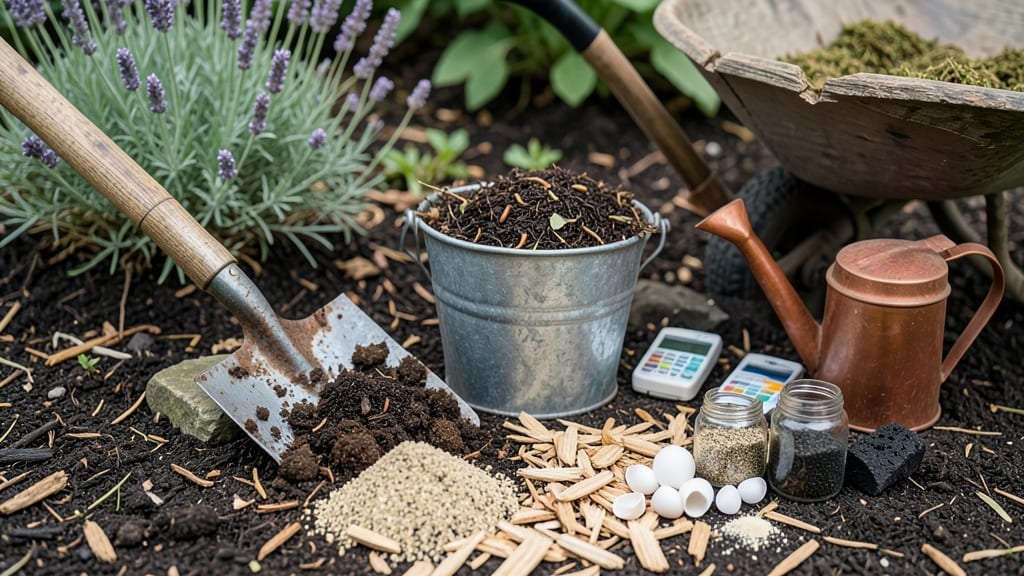
To add to garden soil in spring, incorporate compost for organic matter, aged manure for nutrients, worm castings for microbial activity, and a balanced fertilizer like 10-10-10. Mix in coarse sand or perlite for dense soil, and adjust pH with lime or sulfur based on plant needs.
Spring is the perfect time to revitalize your garden soil, and the right amendments make all the difference. 🌱 Compost boosts soil structure by improving water retention and aeration, while aged manure delivers a steady supply of nitrogen, phosphorus, and potassium.
Worm castings introduce beneficial microbes that break down organic matter, creating a thriving ecosystem for roots. For heavy clay soil, perlite or coarse sand helps loosen compaction, while lime or sulfur fine-tunes pH levels—critical for nutrient uptake in acid-loving plants like blueberries or alkaline-tolerant veggies like beans.
Don't overlook the timing: spread compost and organic matter 2–3 weeks before planting to allow microbes to activate, while fertilizers can be applied closer to planting for an immediate nutrient boost. A broadfork is ideal for mixing amendments into the top 6–8 inches of soil without disrupting root systems.
Regional climate matters too—cooler zones may need extra organic matter to retain moisture, while hotter climates benefit from sand to prevent compaction.
💡 In This Article
- How Soil Amendments Boost Plant Growth Mechanically
- Spring Soil Prep Checklist: What, When, and How Much to Apply
How soil amendments boost plant growth mechanically
Compost works like a soil sponge, improving structure by binding fine particles into larger aggregates. These aggregates create tiny air pockets that enhance root aeration—critical for oxygen uptake—while also increasing water retention by up to 30% compared to untreated soil.
The organic matter in compost feeds beneficial microbes, which break down nutrients into plant-available forms. For example, a 2-inch layer of well-aged compost can improve soil porosity enough to reduce compaction by 40%, allowing roots to penetrate deeper for better stability and nutrient access.
Aged manure acts as a time-release nutrient capsule, with nitrogen (N) converting slowly into forms plants can absorb. Cow or horse manure, aged for 6-12 months, provides a balanced 2-3% nitrogen content that feeds soil microbes first before becoming available to plants.
The key difference from synthetic fertilizers is this microbial "middleman"—manure supports a 20-30% larger microbial population in the root zone, which in turn boosts nutrient cycling. This is why manure-amended soil often shows 15-20% higher growth rates in vegetables like tomatoes compared to chemical-only fertilized plots.
Worm castings take soil enhancement to a microscopic level by introducing 20,000+ beneficial bacteria and fungi per gram. These microbes create a "biofilm" around root zones that improves nutrient uptake efficiency by up to 50%.
The castings' high cation exchange capacity (CEC) means they hold onto essential minerals like calcium and magnesium longer, preventing leaching.
For example, adding 1 cup of worm castings per square foot can increase microbial activity enough to break down organic matter 3x faster than in unamended soil, creating a self-sustaining nutrient cycle.
Balanced fertilizers like 10-10-10 provide the "big three" macronutrients (NPK) in precise ratios, but their real advantage is how they interact with soil chemistry. The potassium component, for example, helps regulate water movement in plant cells, reducing drought stress by 25-30%.
Meanwhile, phosphorus from fertilizers stimulates root growth, increasing the surface area for nutrient absorption. The catch? Over-application can disrupt microbial balance—soil tests reveal that only 15-20% of applied fertilizer actually reaches plant roots, with the rest lost to runoff or immobilization by microbes.
Adjusting pH with lime (to raise) or sulfur (to lower) creates the optimal chemical environment for nutrient availability. For instance, blueberries need pH 4.5-5.5 for iron uptake, while beans thrive at 6.0-7.0.
Lime reacts with soil acids to form calcium carbonate, which buffers pH changes and improves soil structure by flocculating clay particles.
In contrast, sulfur oxidizes to form sulfurous acid, gradually lowering pH. The key is gradual adjustment—adding 5 pounds of lime per 100 sq ft typically raises pH by 1.0 unit over 2-3 months, giving plants time to adapt without shock.
For dense clay soils, perlite or coarse sand acts like a soil "scaffold," preventing compaction by maintaining 20-30% larger pore spaces than unamended soil. These amendments don't just improve drainage—they create ideal conditions for earthworms, which aerate soil naturally.
A 10% sand addition can reduce waterlogging by 50% while maintaining moisture for plants. The secret is using coarse sand (0.5-1.0mm particles) that doesn't fill the tiny spaces between soil aggregates but instead creates channels for water and air movement.