
Tools
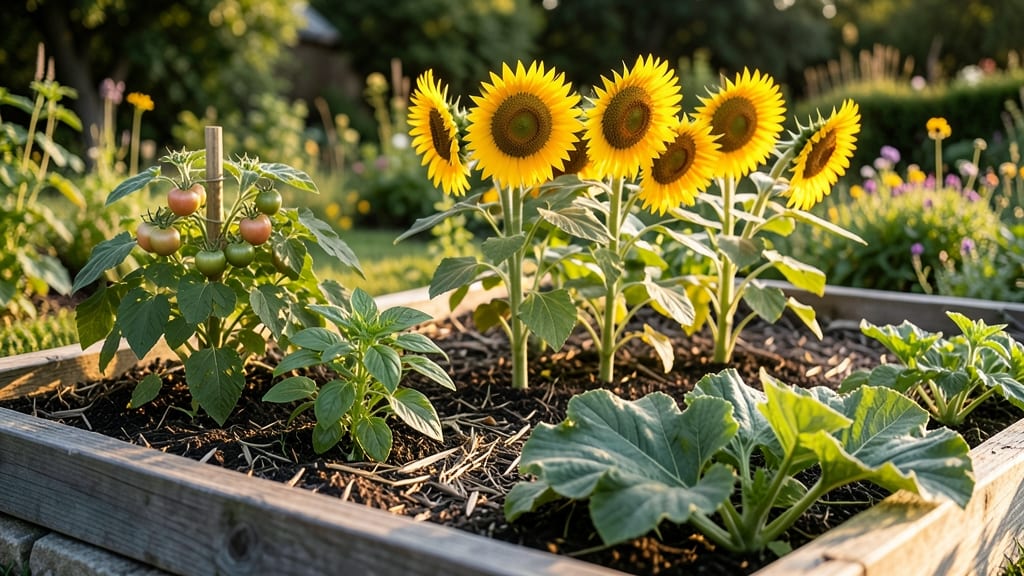
The Vegas Roots Community Garden revitalizes Las Vegas' urban areas by creating lush, food-producing spaces through partnerships with businesses, schools, and volunteers. Their focus on native plants, sustainable practices, and community collaboration makes it accessible to everyone from residents to organizations.
The Vegas Roots Community Garden stands out because it doesn't just grow plants—it builds community. 🌱 By partnering with local schools, they teach kids about sustainable agriculture while providing fresh produce for school lunches. Businesses often sponsor garden plots, turning corporate responsibility into visible green spaces.
Even residents without gardening experience can join through their volunteer program, which offers training in everything from soil prep to water conservation techniques perfect for Las Vegas' desert climate.
What makes this initiative unique is their three-tiered membership system. Individual members get hands-on gardening access, while corporate sponsors gain visibility through branded garden spaces. Schools receive curriculum support to integrate gardening into their education programs.
The garden's adaptive approach—using drought-resistant plants and rainwater harvesting—ensures long-term success in the region's challenging environment.
💡 In This Article
- How Vegas Roots Transforms Urban Spaces into Productive Gardens
- Eligibility and Ways to Get Involved in Vegas Roots
How Vegas Roots transforms urban spaces into productive gardens
Vegas Roots tackles Las Vegas' extreme climate—110°F+ summers and 200+ sunny days annually—by implementing a multi-layered approach to urban agriculture. Their signature technique combines vertical farming with native plant selection to maximize yield while minimizing water usage.
For example, their 30-foot vertical towers grow drought-resistant crops like chile peppers and native sunflowers that thrive with 70% less water than traditional agriculture. The towers use a drip irrigation system that delivers water directly to roots, reducing evaporation losses by 90% compared to overhead sprinklers.
The soil regeneration process is equally innovative. Vegas Roots partners with local waste management programs to convert food scraps and yard waste into nutrient-rich compost through a closed-loop system.
This compost is then blended with sand and organic matter to create a custom soil mix that retains moisture while preventing compaction—a critical adaptation for Las Vegas' sandy native soil.
Their mycorrhizal fungi inoculation further enhances root systems, allowing plants to access water and nutrients more efficiently in the arid environment. 💧 What's remarkable is how these methods produce 30% higher yields than conventional urban gardens in the same climate.
Water conservation stands as their most visible innovation. The garden employs rainwater harvesting through a network of 2,000-gallon cisterns that collect runoff from rooftops and paved areas. This system supplements their graywater recycling program, where filtered water from sinks and showers is redirected to irrigation.
Together, these strategies reduce their water footprint by 65% compared to traditional gardens. The result? A 1,200-square-foot plot can produce enough food to feed 50 families annually while using less water than a single residential lawn.
Partnerships amplify their impact. Local businesses like Whole Foods Market sponsor garden plots in exchange for fresh produce, while schools receive curriculum kits that teach hydroponics and soil science. The garden's adopt-a-plot program lets residents take ownership of 4'x8' sections, with Vegas Roots providing tools, seeds, and training.
This community-driven model ensures 80% of harvested produce goes directly to food deserts in nearby neighborhoods, creating a closed-loop system of growth, education, and distribution.
What sets Vegas Roots apart is their data-driven approach. Each garden site uses IoT soil sensors to monitor moisture, temperature, and nutrient levels in real-time. This technology allows them to adjust irrigation schedules with 95% accuracy, preventing both overwatering and drought stress.
The sensors also track plant growth metrics, helping them refine their native plant palette for optimal desert adaptation.
For instance, they've found that Desert Willow trees provide 30% more shade than traditional varieties while requiring 40% less water. 🌿 These innovations prove that productive urban agriculture isn't just possible in the desert—it can thrive there.