
Container Gardens
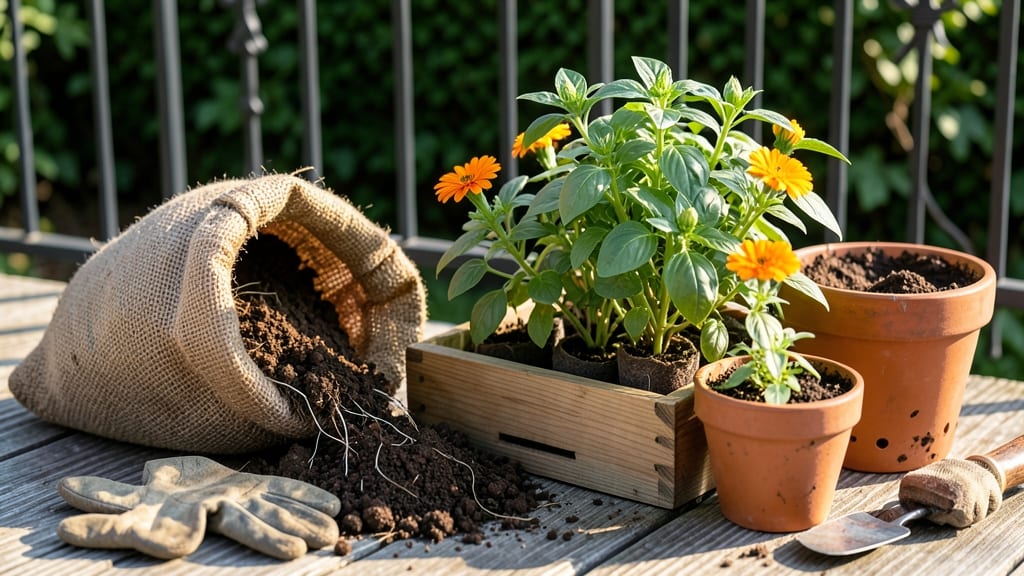
Using garden soil in containers needs careful handling because it compacts too easily, holds excess moisture, and often contains weeds or pests. Mix it with perlite or compost and use containers with proper drainage holes for best results.
Garden soil's heavy texture makes it a poor fit for containers because roots need room to breathe. Without amendments like perlite or vermiculite, it can suffocate plant roots and lead to rot. 🌱 I've found that adding 20-30% compost by volume improves aeration while maintaining nutrients.
Test your mix by squeezing a handful—if water drips slowly, it needs more sand or coarse material for better drainage.
Another key issue is nutrient imbalance. Garden soil often lacks the consistent feeding containers demand. For example, herbs like basil thrive in amended mixes but struggle in pure garden soil, which may contain too many weeds or pathogens.
Always sterilize garden soil before use by baking it at 200°F for 30 minutes to kill pests and seeds.
💡 In This Article
- Why Garden Soil Fails in Container Gardening
- How to Safely Modify Garden Soil for Pots
Why garden soil fails in container gardening
Garden soil's natural composition makes it ill-suited for containers because its fine particles pack tightly when wet, creating a dense matrix that restricts root growth. In-ground soil benefits from natural compaction relief through seasonal freeze-thaw cycles and earthworm activity, but containers lack this dynamic environment.
Roots in pots need 30-40% air space for oxygen exchange—something pure garden soil can't provide without modifications. 🌱
The moisture retention issue stems from clay and silt particles that hold water like a sponge, often leading to anaerobic conditions where roots suffocate.
For example, a 1-gallon container filled with unamended garden soil can retain 50% more water than a properly amended mix, creating ideal conditions for fungal diseases like root rot. Even drought-tolerant plants struggle when their roots can't access both water and oxygen simultaneously.
Nutrient availability becomes another critical factor. Garden soil contains organic matter that decomposes slowly, but containers require faster nutrient cycling due to limited soil volume. The microbial communities that break down organic matter thrive in undisturbed in-ground soil but get disrupted in confined container environments.
This imbalance often results in nutrient spikes followed by deficiencies as plants outgrow the available reserves.
Weed seeds and soil-borne pathogens present another challenge. A single handful of garden soil can contain hundreds of weed seeds that germinate in containers, competing with your intended plants.
The closed system of pots also allows pests like fungus gnats to establish populations more easily than in open garden beds, where natural predators can intervene.
Consider the case of tomatoes—one of the most popular container crops. In garden soil without amendments, their roots can't expand properly, leading to stunted growth and poor fruit production. The same soil in an in-ground bed would support healthy tomato plants because of its greater volume and natural structure.
This stark contrast highlights why container gardening demands a different soil approach entirely. 🌿
Even when garden soil appears fertile, its heavy texture creates physical stress on plant roots. The root tips, which need to penetrate easily to access nutrients, get restricted in compacted soil.
This stress triggers a survival response where plants allocate energy to root growth instead of foliage or fruit production, directly impacting yield quality.