
Tools
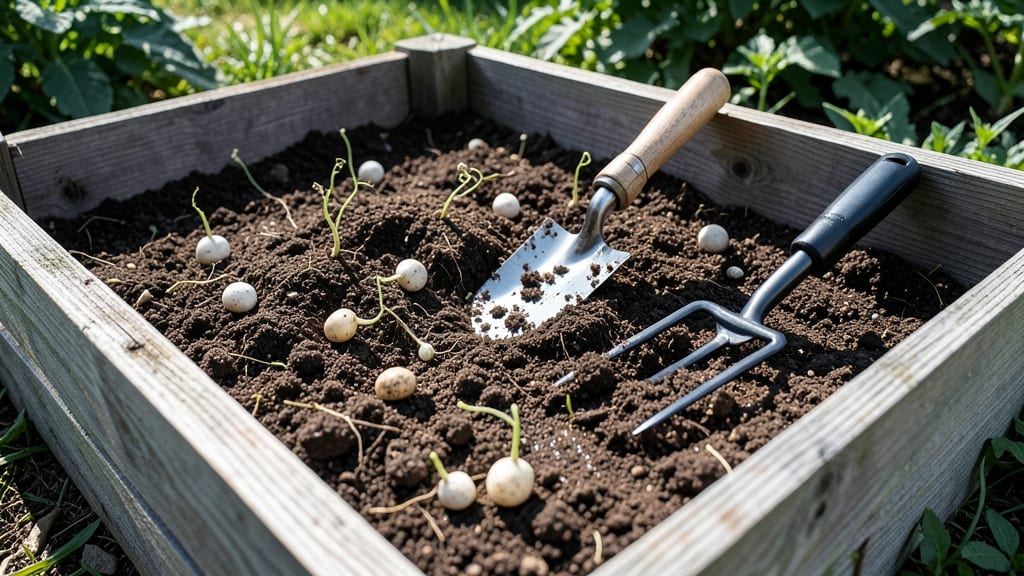
When you spot white balls in garden soil, they're usually harmless gypsum crystals, leftover fertilizer pellets, or pest egg sacs that can harm plant roots. Test the texture—gypsum crumbles easily, fertilizer dissolves in water, and egg sacs feel waxy or papery when removed by hand.
Those mysterious white specks aren't just an eyesore—they can actually smother roots or attract pests if left unchecked. Gypsum forms when calcium sulfate crystallizes in dry soil, often after heavy watering or rain.
Fertilizer granules might still be intact if you applied them recently, while pest egg sacs from aphids or whiteflies can hatch into destructive larvae. 🌱 The key is acting fast: gypsum needs gentle breaking up with a rake, fertilizer dissolves with a vinegar-water mix, and egg sacs should be picked off with tweezers or sprayed with neem oil.
Pro tip: Check your soil's pH first—gypsum forms more readily in alkaline conditions, while fertilizer residue is common in over-fertilized areas. If you're dealing with pests, examine nearby plants for signs of infestation like sticky residue or curled leaves. Regular soil testing can help prevent these issues before they start.
💡 In This Article
- Identifying Common Causes of White Balls in Soil
- Safe Removal Methods for Different Types of White Soil Balls
Identifying common causes of white balls in soil
Gypsum balls form when calcium sulfate crystals precipitate in dry soil, especially after sudden watering or rain. This mineral dissolves easily in water but re-crystallizes when moisture evaporates, creating those distinctive white, chalky spheres.
You'll often find them in alkaline soils (pH 7.5+) where calcium levels are high. Their texture is crumbly—when crushed between fingers, they break into fine powder rather than dissolving.
Fertilizer granules, particularly slow-release types, can also appear as white balls. These pellets are designed to break down over time, but if your soil stays too dry, they may remain intact for weeks. Look for granules that feel slightly waxy or rubbery when touched—common in nitrogen-based fertilizers.
Unlike gypsum, these won't dissolve in water immediately but will break down with prolonged soaking. 🌱 The size varies from 1-3mm for standard granules to 5-10mm for coated slow-release versions.
Pest egg sacs from aphids or whiteflies create another type of white ball, typically found near plant stems or undersides of leaves. These sacs feel waxy or papery when handled and often contain hundreds of tiny eggs.
Unlike gypsum or fertilizer, they're biological—removing them prevents future infestations. Check for accompanying signs like honeydew (sticky residue) or yellowing leaves, which confirm pest activity rather than mineral buildup.
Moisture plays a critical role in distinguishing these causes. Gypsum thrives in dry conditions, fertilizer granules persist when soil lacks sufficient water, while pest egg sacs prefer humid environments.
Test your soil's moisture by squeezing a handful—if it crumbles, it's likely gypsum; if it stays clumpy, check for fertilizer or pest activity. A soil pH test (available at garden centers) can also help: readings above 7.0 increase gypsum formation.
Seasonal patterns offer clues too. Gypsum appears most after winter rains or summer droughts, while fertilizer residue peaks after spring/summer applications.
Pest egg sacs, however, can appear year-round in greenhouses or protected garden areas. 🔍 For accurate identification, use a magnifying glass—gypsum crystals show geometric shapes under magnification, while fertilizer granules have visible coatings or markings.
Consider these visual cues when inspecting your soil:
- Gypsum: Chalky, powdery texture; forms in patches; dissolves in water
- Fertilizer: Waxy/rubbery; may have color coding; breaks down slowly
- Pest sacs: Waxy/papery; often near plants; contains tiny eggs when opened