
Tools
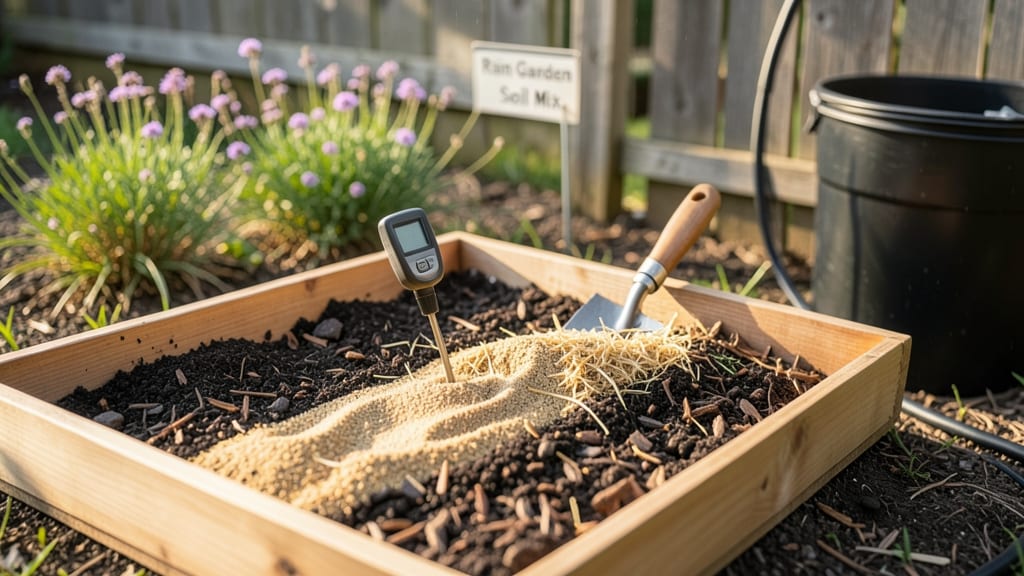
For a rain garden soil mix, combine 60% native topsoil, 20% compost, and 20% coarse sand or perlite to balance drainage and moisture retention for plants like coneflowers or asters. Adjust these ratios based on your local soil type, whether clay-heavy or sandy.
A rain garden soil mix thrives on the right balance between aeration and nutrient retention. The native topsoil provides the foundational structure, while compost feeds beneficial microbes and supports root growth.
Adding coarse sand or perlite prevents compaction, ensuring water flows through without drowning delicate roots. 🌱 This blend mimics natural wetland conditions, where plants like cardinal flowers and sedges flourish.
If your soil leans toward clay, you might increase the sand ratio to 30% for better drainage, while sandy soils benefit from extra compost to hold moisture.
What sets this mix apart is its adaptability—you can tweak it based on the plants you’re growing. For example, nitrogen-loving perennials like bee balm need more compost, while moisture-sensitive varieties might require additional perlite. Testing your soil’s pH and organic matter levels beforehand helps fine-tune the recipe for peak performance.
💡 In This Article
- How to Balance Drainage and Nutrients in Rain Garden Soil
- Plant-Specific Soil Mix Adjustments for Rain Gardens
How to balance drainage and nutrients in rain garden soil
The foundation of a successful rain garden soil mix lies in its porosity, which determines how water moves through while retaining essential nutrients. Native topsoil provides the structural backbone, containing a mix of sand, silt, and clay particles that naturally create tiny air pockets.
These pores allow oxygen to reach roots while holding moisture—critical for plants like asters that thrive in wet conditions but can't tolerate soggy roots. The 20% compost introduces organic matter that decomposes slowly, feeding microbes and improving soil texture over time.
Particle size plays a crucial role in drainage dynamics. Coarse sand or perlite (both 20% of the mix) creates larger voids between particles, preventing compaction that would suffocate roots. Think of it like a sponge with varying pore sizes: fine particles hold water tightly, while coarse materials release it gradually.
For example, clay-heavy soils (common in midwestern regions) benefit from 30% sand to break up dense clumps, while sandy soils (like those in southeastern coastal areas) may need extra compost (30%) to improve water retention.
The ideal mix mimics natural wetlands, where water flows freely but nutrients linger near roots.
Microbes are the unsung heroes of this balance. Compost introduces beneficial bacteria and fungi that break down organic matter, releasing nutrients like nitrogen and phosphorus in forms plants can absorb. Without this microbial activity, even the best soil mix would become nutrient-poor over time.
The 60% native soil ratio preserves these existing microbial communities while the amendments create an optimal environment for them to thrive. This living ecosystem is what truly distinguishes a healthy rain garden from sterile planting soil.
Texture matters just as much as composition. A well-mixed rain garden blend should feel crumbly yet moist, like damp potting soil with a slightly gritty texture from the sand or perlite. When you squeeze a handful, it should hold shape but crumble easily—this indicates proper moisture retention without waterlogging.
For visual reference, imagine the consistency of a well-tended garden bed after a light rain: firm enough to support plants but loose enough to allow roots to expand freely.
Seasonal adjustments are key to long-term success. In spring planting, add slightly more compost (25%) to jumpstart microbial activity, while fall amendments can include extra perlite (25%) to prevent winter waterlogging.
The goal is to create a dynamic system that evolves with your plants' needs rather than a static medium. This adaptability is what allows rain gardens to thrive across diverse climates, from Pacific Northwest moisture to southeastern humidity.
One common mistake is over-amending with compost, which can create anaerobic (oxygen-poor) pockets that harm roots. The 20% compost rule provides enough organic matter without overwhelming the native soil's structure.
For visual learners, think of it as adding just enough fertilizer to a plant—too little starves it, but too much burns it. The same principle applies here: balance is everything in creating a thriving rain garden ecosystem.