
Tools
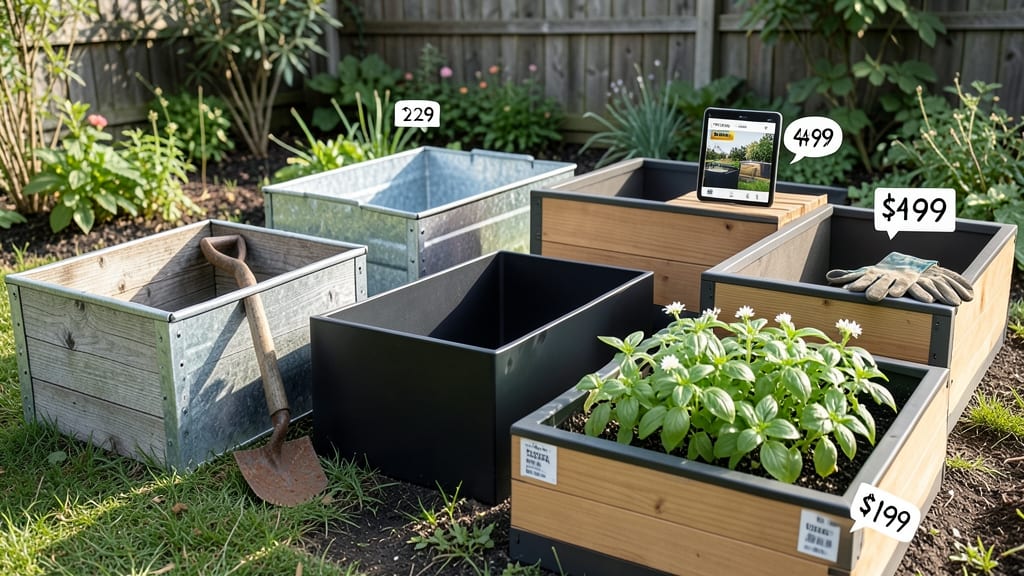
The price of raised garden beds varies widely from $50 to over $1,200, with cedar or redwood beds typically costing $10-$30 per square foot and composite or metal beds ranging from $15-$50 per square foot. Your final cost depends heavily on size, materials, and whether you opt for pre-assembled kits or DIY plans.
The cost differences come down to material quality and construction. 🌱 Cedar and redwood beds are popular for their natural rot resistance, but they require more maintenance over time compared to composite or metal options.
For example, a 4'x8' cedar bed might run $300-$600, while the same size in composite could cost $600-$1,000. The trade-off? Composite beds last decades without needing replacement, while wood beds may need refreshers like sealant every few years.
Size plays a huge role too—standard 4'x8' beds are the most budget-friendly, but custom dimensions or tiered designs can quickly add hundreds to your total. Pre-assembled beds save time but often cost more upfront, while DIY kits let you control costs but require tools and assembly skills.
I always recommend measuring your space first and considering long-term use before choosing materials.
💡 In This Article
- How Materials Affect Raised Garden Bed Pricing
- Size and Design Factors That Influence Costs
How materials affect raised garden bed pricing
The core cost driver for raised garden beds is the material choice, which directly impacts durability, maintenance, and lifespan. Cedar and redwood rank as premium options because their natural oils make them highly resistant to rot and insects.
A 4'x8' cedar bed typically costs $300-$600 due to these protective properties, while untreated pine—costing $10-$20 per square foot—may need replacement in 5-7 years due to moisture damage. The price premium pays off in longevity: cedar beds last 10-15 years with proper sealing.
Composite materials like recycled plastic or wood fibers offer a middle ground with $15-$30 per square foot pricing. These beds eliminate wood rot entirely and resist pests, but their higher upfront cost ($600-$1,200 for a 4'x8') is justified by 20+ year lifespans.
Metal beds, particularly galvanized steel or aluminum, run $15-$50 per square foot depending on thickness and finish. While they're durable against weather, their cost jumps when you factor in rust prevention coatings or powder coating for aesthetics.
What most people overlook is the hidden cost of maintenance. Untreated wood beds require annual sealing ($20-$50 per treatment) to prevent cracking, while composite beds need occasional cleaning to remove algae buildup. Metal beds demand periodic repainting to prevent corrosion.
The total cost of ownership over 10 years often evens out between wood and composite—cedar beds might cost $1,200 total (initial + maintenance), while composite could reach $1,500 upfront but require no future treatments. 💰
For budget-conscious gardeners, pressure-treated lumber offers a compromise at $8-$15 per square foot, but contains chemicals that may leach into soil. Always check for ACQ-treated (arsenic-free) options if growing edibles. The material choice isn't just about price—it's about matching your bed's lifespan to your gardening goals.
A 2-year vegetable garden might justify pine, while a permanent landscape bed demands composite or cedar.
Here's a quick comparison of material trade-offs:
- Cedar/Redwood: $10-$30/sq ft, 10-15 year lifespan, natural rot resistance, requires sealing
- Composite: $15-$30/sq ft, 20+ year lifespan, no maintenance, higher upfront cost
- Metal: $15-$50/sq ft, 15-25 year lifespan, needs painting, best for urban spaces
- Pine/Pressure-Treated: $8-$20/sq ft, 5-10 year lifespan, lowest initial cost, highest maintenance
The right material depends on your climate (humid areas need cedar/composite), gardening intensity (heavy use favors metal), and budget timeline. For example, in Pacific Northwest rain, untreated pine lasts 3 years—cedar's $500 premium becomes a smart investment. 🌧️