
Companion Plants
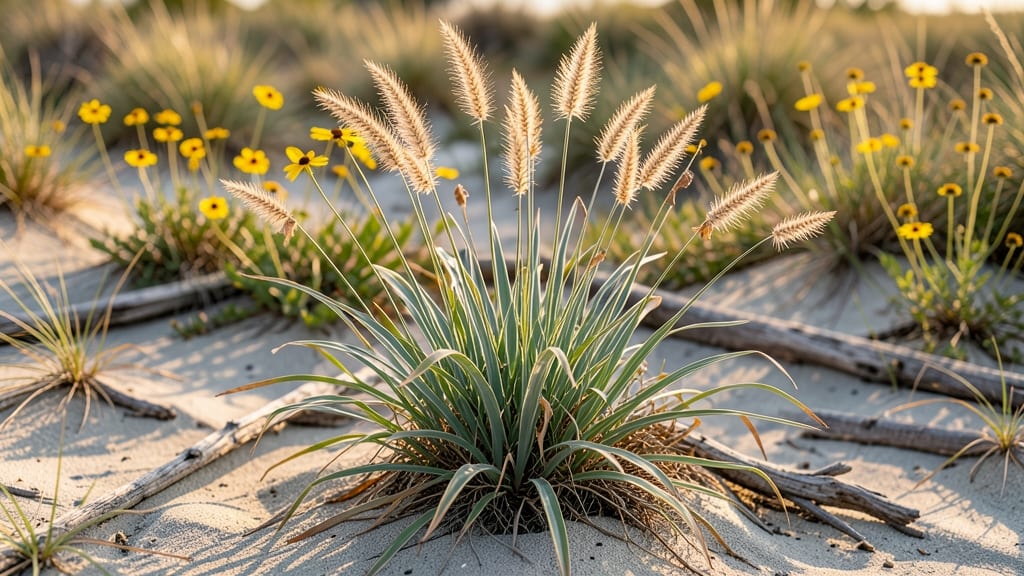
For seaside gardens, salt-tolerant plants like sea oats, beach grass, and saltmarsh cordgrass thrive in windy, salty conditions with sandy soil. Dune sunflower and beach heather also perform well when planted with proper soil preparation and drainage.
Coastal gardens demand special care because salt spray and sandy soil can be tough on most plants. 🌊 The best options are native species that naturally resist salt buildup and drought, like sea oats and beach grass, which have deep roots to anchor in shifting sands.
I’ve found that adding organic compost and mulch helps retain moisture while preventing salt from damaging plant roots. These hardy plants not only survive but often thrive in the harshest conditions, making them perfect for seaside landscapes.
When planning your garden, consider the microclimate—some areas may get more direct salt exposure than others. For example, dune sunflower handles wind better than many other coastal plants, while beach heather adds color and fragrance without needing extra care.
The key is to start with well-draining soil and avoid overwatering, which can worsen salt concentration in the roots.
💡 In This Article
- Salt-Tolerant Plant Adaptations for Coastal Gardens
- Preparing Soil for Seaside Plant Success
Salt-tolerant plant adaptations for coastal gardens
Salt-tolerant plants have evolved remarkable survival strategies to thrive where most would perish. One key mechanism is salt exclusion—their roots filter out excess sodium chloride before it reaches sensitive tissues.
For example, saltmarsh cordgrass (Spartina alterniflora) can excrete salt through specialized glands on its leaf edges, creating visible crystalline deposits.
This process, called salt secretion, allows the plant to maintain internal water balance even when submerged in salty tides. 🌊 Another adaptation is their deep, fibrous root systems, which can extend up to 6 feet deep to access freshwater from underground aquifers while anchoring in shifting sands.
Wind resistance is equally critical in coastal environments, where gusts can exceed 50 mph during storms. Plants like sea oats (Uniola paniculata) have flexible, upright stems that bend rather than snap, while their dense seed heads reduce wind drag.
Meanwhile, beach grass (Ammophila breviligulata) forms dense mats that stabilize dunes and trap blowing sand. These adaptations aren’t just about survival—they create microclimates that protect other plants from salt spray and erosion.
For instance, a well-established beach grass clump can reduce wind speeds by up to 30% in its immediate vicinity.
Moisture regulation is another critical factor, as sandy soil drains water rapidly. Many coastal plants, such as dune sunflower (Helianthus debilis), have succulent stems and leaves that store water during dry spells.
Others, like beach heather (Hudsonia tomentosa), have silvery, hairy foliage that reflects sunlight and reduces water loss through transpiration. These traits allow them to thrive in areas where rainfall averages just 10-20 inches annually, with much of it evaporating before reaching the roots. The result?
Plants that not only survive but often flourish in conditions that would kill most garden varieties.
Hardiness zones play a role in selecting the right species for your location. Most salt-tolerant coastal plants thrive in USDA Zones 5-10, but some, like sea lavender (Limonium spp.), extend into Zone 4 with protection.
For example, saltmarsh cordgrass is hardy down to -10°F when established, while beach heather prefers milder climates (Zones 6-9) and may struggle in freezing conditions. Understanding these zones helps you choose plants that align with your local winter lows and summer heat—critical for long-term success in seaside gardens.
Beyond survival, these plants offer practical benefits like erosion control and wildlife support. For instance, sea oats provide nesting material for birds, while beach grass stabilizes dunes that protect coastal properties. Their deep roots also improve soil structure over time, making it easier to grow other plants later.
The trade-off? Some species, like dune sunflower, have aggressive spread—plant them in containers if you want to control their growth. 🌱
What most gardeners overlook is how these plants interact with their environment. For example, beach heather releases a subtle fragrance when crushed, while sea lavender attracts pollinators with its lavender-purple blooms. These sensory rewards make coastal gardening not just functional but also rewarding.
The key takeaway? Choose plants that match your climate zone and soil conditions, and let their natural adaptations do the heavy lifting.