
Pruning
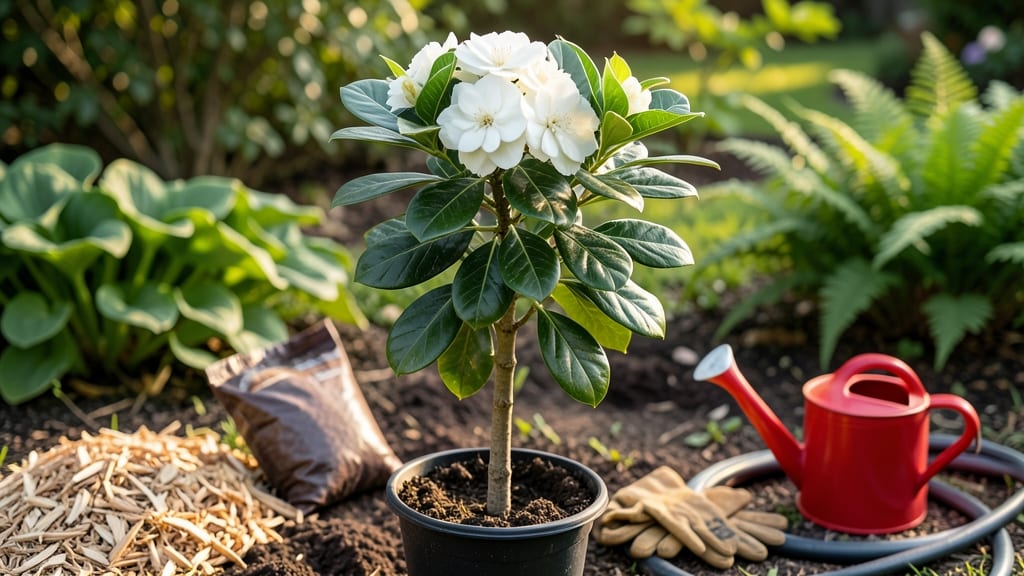
Planting a gardenia tree requires well-draining, acidic soil with a pH of 5.0–6.5, bright but indirect sunlight, and spacing 6–8 feet apart for mature growth. Water deeply after planting and mulch to retain moisture while protecting roots from heat.
Gardenias thrive when you mimic their natural tropical habitat, which means acidic soil is non-negotiable—they simply can't absorb nutrients properly in alkaline conditions. 🌱 I've found that mixing equal parts peat moss, pine bark, and sand creates the perfect foundation, while regular pH tests (every 6 months) help maintain that 5.0–6.5 range.
The right soil mix isn't just about chemistry—it also prevents root rot by keeping water from pooling around delicate roots.
Timing matters just as much as technique. Spring or early fall planting gives roots time to establish before extreme temperatures, and container planting offers flexibility for urban gardeners. Never let the soil dry out completely after transplanting, but avoid soggy conditions—gardenias hate "wet feet."
My secret weapon? A thick layer of pine bark mulch that locks in moisture while keeping roots cool.
💡 In This Article
- Optimal Soil Conditions and pH for Gardenia Trees
- Step-by-Step Guide to Planting Gardenia Trees in Containers or Ground
Optimal soil conditions and pH for gardenia trees
Gardenias originate from tropical regions where the soil naturally stays acidic and well-aerated, which is why their roots struggle in alkaline conditions. The ideal pH range of 5.0–6.5 isn't just a recommendation—it's essential for nutrient uptake.
At pH levels above 7.0, iron and manganese become locked out of the soil, causing yellowing leaves (chlorosis) even when these nutrients are present. Think of it like a lock and key: gardenia roots can only absorb nutrients when the soil chemistry aligns perfectly with their evolutionary adaptations.
Creating the right soil mix involves more than just adding acidifiers. A blend of 50% peat moss (for moisture retention and acidity), 30% pine bark fines (for drainage and organic matter), and 20% coarse sand (for aeration) mimics their natural forest floor habitat.
This combination prevents compaction while maintaining that critical acidity. For existing alkaline soil, you'll need to amend it with sulfur (1–2 pounds per 100 square feet) or pine needles, which break down into organic acids over time. 🌿
The drainage component is equally critical—gardenias despise soggy conditions that lead to root rot. Their native environment features well-draining volcanic soils where water moves freely through the root zone.
In containers, this means using pots with drainage holes and a mix that allows excess water to escape within 15–20 minutes of watering. For in-ground planting, consider raised beds or mounding native soil over heavy clay to improve drainage.
The key is replicating that tropical forest floor where roots never sit in standing water.
Nutrient-wise, gardenias prefer a balanced but iron-rich fertilizer (like a 6-6-6 or 8-3-9 formula) applied every 6–8 weeks during growing season. The high nitrogen in the first number supports leafy growth, while the iron (often labeled as Fe on fertilizer bags) prevents chlorosis.
What most gardeners miss is that these plants also need micronutrients like zinc and magnesium—deficiencies show up as yellowing between leaf veins. A soil test every 6 months reveals exactly what's missing, saving you from guessing games with fertilizers.
Here's a pro tip: If you notice new growth looking pale or leaves developing brown edges, it's often a sign of pH imbalance rather than overwatering.
Adjusting the pH downward with elemental sulfur (which takes 2–3 months to work) or upward with lime (if pH drops below 4.5) can turn things around.
The goal is consistency—gardenias reward stable conditions with lush, fragrant blooms, but they punish abrupt changes with stress responses like leaf drop or flower buds failing to open.
Remember that container-grown gardenias may need more frequent pH adjustments since their root environment is smaller and more isolated. In-ground plants benefit from the natural buffering of the surrounding soil, but both require regular monitoring.
The payoff? Healthy gardenias produce those iconic 4-inch white blooms with their signature citrusy fragrance—worth every bit of soil science! 🌸