
Tools
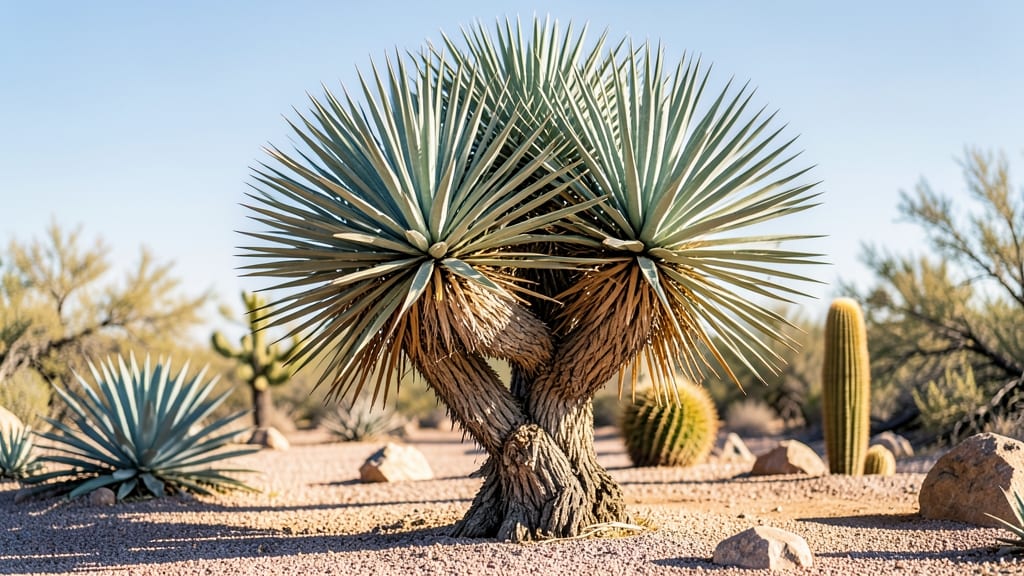
Moorten Botanical Garden in Palm Springs showcases stunning desert landscapes, rare cacti collections, and vibrant seasonal blooms like desert marigolds and agave flowers, with hidden trails featuring native and exotic plants year-round. The garden is free to enter, though guided tours unlock its most fascinating botanical details.
This 12-acre desert oasis in Palm Springs is a must-visit for plant lovers and nature enthusiasts alike. 🌵 What sets Moorten apart is its focus on arid-adapted flora, including over 1,000 cacti species and succulents that thrive in the region's unique microclimates.
The garden's hidden trails wind through carefully curated collections, offering a peaceful escape from the city while showcasing how desert plants have adapted to thrive with minimal water.
Whether you're a seasoned gardener or just appreciate beautiful landscapes, the combination of free entry and expert-guided tours makes it an accessible yet rewarding experience.
The garden's seasonal displays are another highlight, with spring wildflowers painting the desert in vibrant hues and summer agave blooms reaching dramatic heights. 🌼 Pro tip: Visit in late afternoon when the lighting is perfect for photography, and pair your trip with a stop at the nearby Living Desert Museum for a full desert botanical experience.
💡 In This Article
- Exploring Moorten’s Desert Flora and Rare Cacti Collections
- Seasonal Blooms and Best Times to Visit Moorten Botanical Garden
Exploring Moorten’s desert flora and rare cacti collections
Moorten Botanical Garden thrives because of its precise adaptation to Palm Springs' 300+ sunny days per year and low humidity conditions. The garden's soil composition—primarily coarse, well-draining sand mixed with decomposed granite—mirrors the natural desert substrate, allowing roots to access moisture while preventing waterlogging.
This mimics how native species like the Ferocactus wislizeni (Barrel Cactus) stores up to 1,000 gallons of water in its thick stems during rare rainfall events.
The garden's 1,000+ cacti collection includes rare species like the Echinocereus engelmannii (Hedgehog Cactus), whose spines create a natural barrier that reduces evaporation by 30% compared to smooth-skinned varieties. 🌵 Visitors often overlook how these plants use crassulacean acid metabolism (CAM)—a water-conserving photosynthesis process that opens stomata only at night—allowing them to thrive where most plants would wilt.
The garden's drip irrigation system delivers water directly to roots, minimizing waste and replicating natural desert fog collection.
What makes Moorten's collections special is their geographic diversity. While many desert gardens focus solely on Sonoran Desert species, Moorten includes Chihuahuan Desert varieties like the Lophophora williamsii (Peyote Cactus) alongside native California Desert plants.
This creates microclimates within the garden where temperature variations of up to 15°F can occur between shaded and sun-exposed areas, demonstrating how different species have evolved distinct survival strategies.
The garden's hidden trails reveal these adaptations firsthand. Along the Agave Trail, visitors can see how Agave parryi develops its iconic rosette shape to funnel rainwater to its roots while its thick, waxy leaves reduce moisture loss.
Nearby, the Yucca Trail showcases how Yucca schidigera (Mojave Yucca) produces flowers that attract pollinators even in drought conditions, with each bloom containing 30-50% more nectar than its mesquite counterparts.
For plant enthusiasts, the garden's labeling system provides scientific names, native regions, and growth habits—information that's often missing in commercial cactus collections. The Night Blooming Cereus section demonstrates how some species only flower after dark, with flowers opening at 9 PM and lasting just 24 hours.
This nocturnal blooming coincides with nighttime humidity peaks, ensuring successful pollination despite the arid daytime conditions.
What most visitors don't realize is how the garden's elevation variations (ranging from 1,400 to 1,600 feet) create distinct plant communities. Higher elevations feature more moisture-sensitive species like the Peniocereus greggii (Night-Blooming Cactus), while lower areas showcase extreme drought-tolerant varieties such as the Mammillaria heyderi.
This elevation gradient creates a natural laboratory for observing plant adaptations in action.