
Fertilization
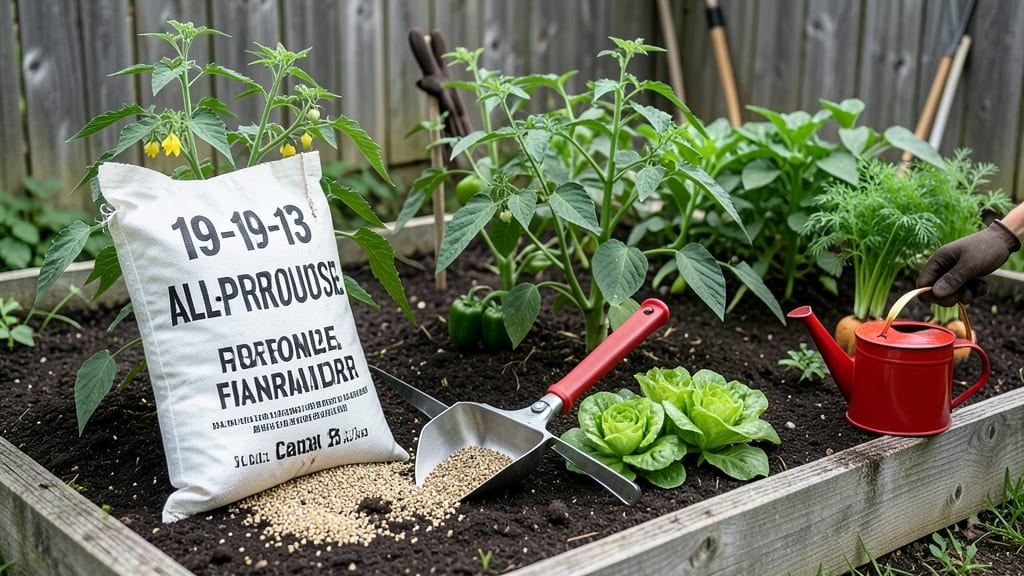
19-19-19 fertilizer can be good for vegetable gardens when used correctly, offering balanced nitrogen, phosphorus, and potassium to support growth, blooming, and fruiting—but its high salt content may require dilution and careful application timing for sensitive plants like leafy greens.
19-19-19 fertilizer works well for many vegetables because its equal NPK ratio (19% each) provides steady nutrition across all growth stages. 🌱 For example, the balanced nitrogen helps leafy greens like spinach thrive, while phosphorus supports root development in carrots. However, the high salt concentration means you should dilute it to half-strength for delicate plants or use it sparingly during hot weather to prevent root burn. I've found that applying it in early spring and again after harvest gives the best results without overloading the soil.
For heavy feeders like tomatoes or peppers, you might want to supplement with additional phosphorus later in the season. Always test your soil first—this helps you adjust the ratio based on what your garden truly needs, whether that's more nitrogen for leafy growth or potassium for disease resistance.
💡 In This Article
- Understanding 19-19-19 NPK Ratios for Vegetable Growth
- Best Practices for Using 19-19-19 in Vegetable Gardens
Understanding 19-19-19 NPK ratios for vegetable growth
The 19-19-19 ratio means each of the three primary nutrients—nitrogen (N), phosphorus (P), and potassium (K)—is present at 19% by weight.
This balance makes it ideal for general vegetable growth because it supports all three critical stages: leafy growth (nitrogen), root development and flowering (phosphorus), and fruit production and disease resistance (potassium).
For example, nitrogen fuels the lush foliage of spinach or kale, while phosphorus helps carrots and onions establish strong roots. 🌱 The equal distribution ensures no single nutrient limits growth, unlike specialized fertilizers like 10-20-20, which prioritize phosphorus for blooming plants.
However, the 19-19-19 ratio isn't perfect for every crop. Leafy greens like lettuce or Swiss chard thrive with more nitrogen, so a 10-10-10 blend might be better to avoid excessive foliage at the expense of roots.
Conversely, fruiting vegetables like tomatoes or peppers often need higher phosphorus early on (e.g., 5-10-10) to encourage blooming, then more potassium later for fruit development. The 19-19-19’s equal split works as a "jack-of-all-trades" but can lead to over-fertilization if not monitored, especially in sandy soils where nutrients leach quickly.
What makes 19-19-19 unique is its solubility and fast release. The granular form dissolves quickly in water, making it easy to apply via irrigation systems or foliar sprays.
This rapid uptake is great for mid-season boosts but requires careful timing—applying it too late in the season can cause excessive leaf growth instead of fruit development.
For instance, I’ve seen tomatoes produce more leaves than tomatoes when over-fertilized with 19-19-19 in August, even though they needed potassium for ripening. 🌿 The key is matching the fertilizer to the plant’s current needs, not just its general stage.
The downside? Its high salt index (around 60-70) can stress plants if overapplied. Salts draw water out of plant roots, leading to wilting or burn—especially in sensitive crops like peas or radishes.
To mitigate this, always dilute to half-strength (9-9-9) for delicate plants or water thoroughly after application to flush excess salts from the root zone.
Soil testing before applying 19-19-19 is non-negotiable; it tells you whether your garden needs more nitrogen (for greens) or potassium (for stress resistance) to avoid wasting resources.
Comparing it to organic options like compost (which has a variable NPK ratio, often 1-0.5-0.5) highlights another trade-off: 19-19-19 delivers immediate, predictable results, while compost builds soil health slowly but improves microbial activity.
For example, a compost tea might provide 0.5% nitrogen but also beneficial microbes that enhance nutrient uptake—something synthetic fertilizers lack. The choice depends on your priorities: quick growth (19-19-19) or long-term soil vitality (compost).
For best results, pair 19-19-19 with micronutrients like calcium or magnesium, which are often deficient in synthetic blends. A soil test will reveal gaps—say, low calcium causing blossom-end rot in tomatoes—which can’t be fixed by NPK alone. Think of 19-19-19 as the foundation, not the whole picture. 💡