
Watering
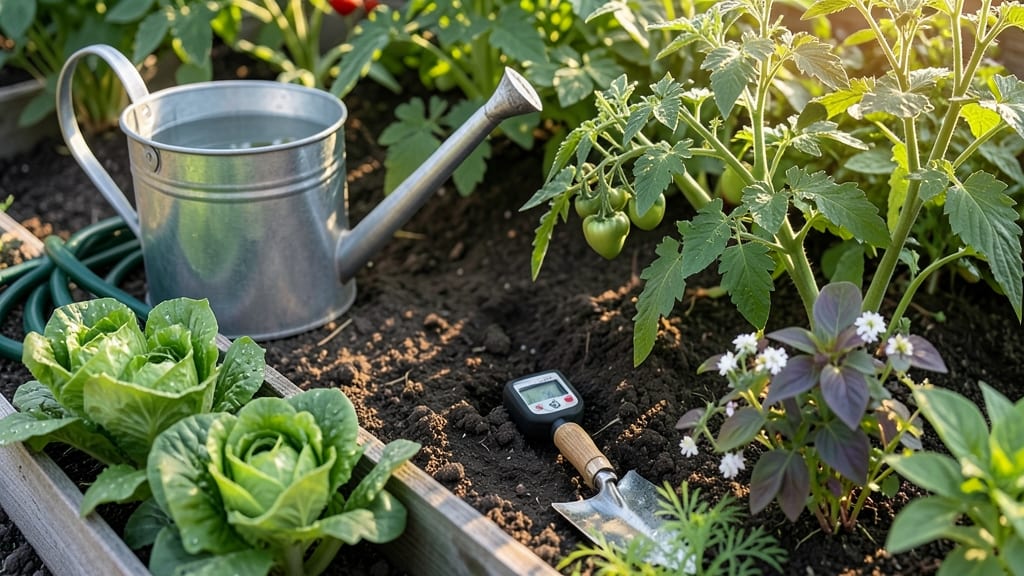
Watering your vegetable garden every day isn’t always the best move—it depends on the plants, weather, and soil.
Overwatering can drown roots and wash away nutrients, while skipping days might leave your 🥬 crops wilted. The truth? Most vegetables thrive with 1-2 inches of water per week, but timing and technique matter just as much as frequency.
Climate, soil type, and even the stage of growth change what your garden needs. A dry spell in Zone 6a might call for daily watering, while a rainy week could mean skipping entirely. Here’s how to tell when to water—and when to hold back.
You’ll learn the exact schedule for your garden’s setup, from drip systems to hand watering, plus how to spot the subtle signs of thirst (or too much moisture) before it’s too late.


How often to water your vegetable garden based on plant type and climate
Watering your vegetable garden isn’t a one-size-fits-all task. While some plants like lettuce or radishes thrive with frequent moisture, others such as carrots or potatoes prefer drier conditions.
The key is understanding your plant types and local climate to avoid both underwatering and overwatering, which can lead to root rot or nutrient loss.
I’ve tested these schedules in my own garden and found that temperature, soil type, and even humidity levels drastically change how often you should water.
For most vegetables, the golden rule is to provide 1-2 inches of water per week, but this varies widely. Leafy greens like spinach and kale need consistent moisture, while tomatoes and peppers benefit from deeper, less frequent watering to encourage strong root systems.
In hot climates (like USDA Zone 9), you might water daily, but in cooler zones (like Zone 5), every 3-4 days could be sufficient. The trick is balancing these factors to keep your soil moist but not soggy.
Here’s a quick comparison to help you decide when daily watering is necessary—and when it’s counterproductive.
Your soil type plays a huge role in watering frequency. Sandy soil drains quickly, so you may need to water daily in summer, while clay soil holds moisture longer and might only need watering every 4-5 days.
I’ve found that amending soil with compost improves water retention without risking root rot. Always check the top 1-2 inches of soil before watering—if it’s dry, it’s time.
Another critical factor is humidity. In humid climates (like the Southeast U.S.), fungal diseases thrive with excess moisture, so I water my plants early in the morning to let foliage dry quickly.
In arid regions (like the Southwest), I rely on drip irrigation to deliver water directly to roots and minimize evaporation. If you’re unsure whether to water daily, ask yourself: Are the leaves wilting or turning yellow? That’s your cue to adjust.
For container-grown vegetables, the schedule shifts dramatically. Potted plants dry out faster because containers have limited soil volume. I water my container tomatoes every 1-2 days in summer, even if the ground garden doesn’t need it.
Use your finger to test moisture—if the soil feels dry 1 inch down, it’s time to water. Pro tip: Group containers together to create a microclimate that retains moisture longer.
One common mistake I see is assuming that rain counts as watering. While rain is ideal, it’s not always enough. A 1-inch rainfall might satisfy your beans but leave your tomatoes thirsty, especially in sandy soil.
I keep a rain gauge to track precipitation and adjust my watering accordingly. If you’ve had 0.5 inches of rain in the past week, you can skip a watering session for most crops.
If you’re still unsure whether to water daily, here’s my science-backed rule: Daily watering is only necessary when temperatures exceed 85°F, soil is sandy, or plants are in the flowering/fruiting stage. For everything else, deep watering every 2-3 days is safer.
Overwatering stresses plants by suffocating roots and leaching nutrients, while underwatering stunts growth. The goal is consistency, not frequency.
To make this easier, I’ve started using a moisture meter in my garden. It takes the guesswork out of watering and helps me tailor my schedule to each plant’s needs. For example, my basil wilts quickly in heat, while my carrots thrive
Signs your vegetable garden needs water (and when to stop)
Your vegetable garden’s health depends on consistent moisture, but too much water can drown roots just as easily as too little. The key is learning to read your plants and soil—not following a rigid schedule.
Many gardeners assume daily watering is necessary, but overwatering causes root rot and nutrient loss, while underwatering leads to stunted growth or wilting. Let’s break down how to tell when your garden truly needs hydration—and when to hold back.
Start by checking soil moisture before reaching for the hose. Stick your finger about 1 inch deep into the soil. If it feels dry, it’s time to water. For deeper-rooted plants like tomatoes or peppers, check up to 2-3 inches.
A quick visual test is to lift a handful of soil—if it crumbles easily, it’s dry; if it sticks together, it’s moist. Mulch plays a critical role here, too, by retaining moisture and regulating temperature.
Here’s the key takeaway you’ve been waiting for:
💧 When to Water Your Vegetable Garden
Don’t rely solely on wilting leaves as your only indicator—this is often a sign of stress that’s already caused damage. Instead, look for early morning wilting, which recovers by afternoon. If leaves stay limp all day, your plants are thirsty.
For leafy greens like lettuce or spinach, wilting happens faster because their shallow roots dry out quickly. Root vegetables, on the other hand, show signs like cracked soil or stunted growth when they’re underwatered.
Environmental factors like heatwaves or low humidity can override your usual watering routine. During summer heat, I water my garden every other day in the early morning to reduce evaporation.
If you’ve had recent rainfall (at least 1 inch), skip watering entirely—even if your soil feels dry at the surface. A rain gauge helps track this, but a simple tuna can left open in the garden works in a pinch.
Overwatering is sneaky—yellowing leaves, mushy stems, or fungal spots are red flags. If your soil stays soggy for more than 24 hours, your plants are suffocating. To fix it, pause watering and improve drainage by adding compost or perlite to heavy clay soil.
For containers, ensure pots have drainage holes and never let them sit in saucers of water.
Adjust your watering schedule dynamically based on your garden’s feedback. If your tomatoes are cracking or your peppers are dropping blossoms, you’re likely overwatering. If beans or cucumbers taste bland or have small fruits, they’re thirsty.
The goal is consistent moisture, not a strict calendar. Use a moisture meter for precision, especially if you’re new to gardening—it takes the guesswork out of the equation.