
Tools
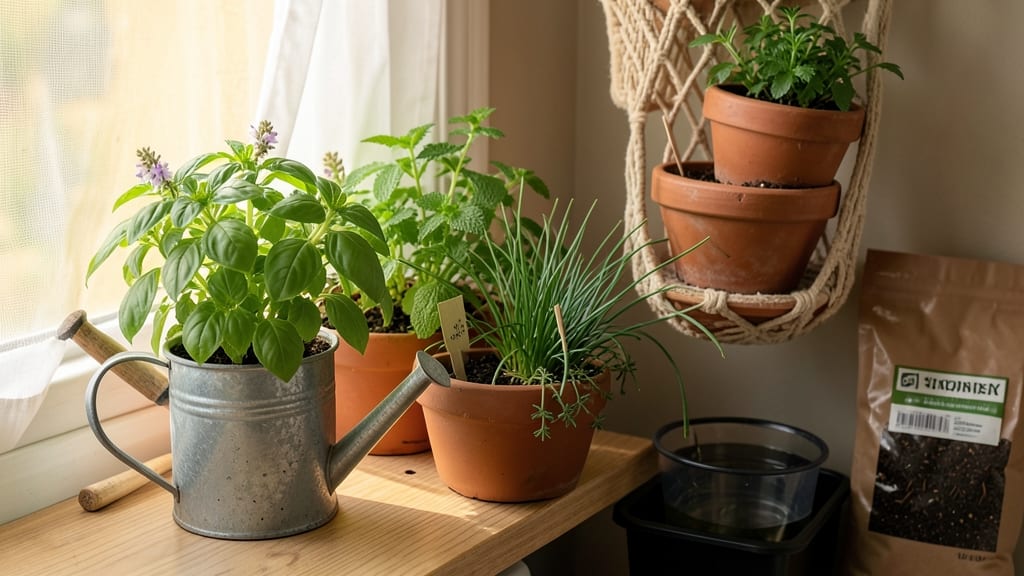
Having a garden in an apartment is easier than you think—you just need the right containers, plants, and a little creativity to turn even a tiny balcony or windowsill into a lush General Apartment Garden 🏡.
Dreaming of fresh herbs, vibrant flowers, or homegrown veggies but stuck with limited apartment space? You don’t need a backyard—just creative containers and smart planning to turn even the tiniest balcony or windowsill into a thriving urban oasis.
Whether you’re working with a sun-drenched south-facing ledge or a shady corner, there’s a setup that fits your space and your green thumb.
This guide covers everything from choosing the best low-maintenance plants for your light conditions to maximizing vertical space with hanging planters and tiered shelves. We’ll also tackle common challenges like humidity control, pest management, and keeping your plants happy year-round, even in Zone 6’s unpredictable fall weather.
By the end, you’ll have a customized, space-saving garden plan that works for your apartment—no yard required. Let’s get growing!
Space-saving apartment garden layouts for any size balcony or windowsill
Even the smallest apartment can become a lush garden with the right layout strategies. The key is maximizing vertical space and optimizing sunlight exposure—whether you have a north-facing windowsill or a south-facing balcony.
With tiered shelves, hanging planters, and modular systems, you can grow herbs, veggies, and flowers without sacrificing floor space. Let’s explore how to design a functional, space-saving garden that thrives in your urban home.
Sunlight is your most valuable resource in apartment gardening. A south-facing balcony gets the most light, while north-facing spaces need reflective surfaces or grow lights. Even east- or west-facing windows can support thriving plants with the right selection. By matching your plant choices to your light conditions, you’ll avoid common pitfalls like leggy herbs or stunted growth. Start by assessing your space’s light exposure for 6+ hours daily—the minimum most plants need.
Here’s how three popular space-saving layouts compare for different apartment sizes and light conditions. Each setup balances aesthetics, functionality, and plant health while adapting to your unique space constraints.
| Layout Type | Best For | Space Needs | Sunlight Needs | Key Features | Plant Examples |
|---|---|---|---|---|---|
| Tiered Shelf System | Small windowsills or corners | 1–3 sq ft | Bright indirect to full sun | Modular shelves, 3–5 levels, lightweight | Herbs, lettuce, succulents |
| Hanging Planter Wall | Balconies or patio railings | 2–5 sq ft | Full sun to partial shade | Macramé pockets, cascading plants, durable hooks | Trailing tomatoes, strawberries, petunias |
| Modular Rail Garden | Balcony railings or fences | 4–8 sq ft | Full sun required | Interlocking planters, deep pockets, weatherproof | Peppers, cherry tomatoes, basil |
For north-facing apartments, prioritize light-reflective surfaces like white walls or mirrors to bounce extra light onto your plants. Pair this with low-light-tolerant varieties such as parsley, mint, or snake plants, which thrive in bright indirect light.
If your space gets less than 4 hours of sunlight, consider LED grow lights (12–16 hours daily) to supplement natural light. These fixtures are energy-efficient and perfect for herbs and microgreens that need consistent light cycles.
A south-facing balcony is ideal for sun-loving plants like tomatoes, peppers, and rosemary. Use vertical trellises to train vining plants upward, saving floor space while maximizing yield. For example, a 6-inch-deep planter can grow cherry tomatoes with a small trellis, while basil thrives in shallow containers near the railing.
Group plants with similar water and sunlight needs together to simplify care routines.
If your space is limited to a windowsill, focus on compact, high-yield plants like bok choy, thyme, or chives. Use self-watering planters to prevent overwatering, which is a common issue in small containers.
Rotate your pots weekly to ensure even light exposure, as windows often have hot spots where one side gets more sun. For east-facing windows, morning light is ideal for leafy greens, while west-facing windows provide afternoon sun perfect for herbs and flowers.
Don’t overlook underutilized spaces like bookshelves, coat racks, or even the fridge. Repurpose these areas with small planters or fabric grow bags to add greenery without clutter.
For instance, a stack of vintage books can double as a plant stand for trailing plants like string of pearls or ivy. Even a single empty shelf can hold 3–5 small pots of herbs, creating a mini kitchen garden just steps from your stove.
Maintenance is simpler when you design for efficiency. Choose self-watering containers or wicking systems to reduce daily chores. For example, a 5-gallon bucket with a wicking fabric can keep succulents or herbs hydrated for up to a week. Group plants by watering needs—succulents and herbs need less frequent watering than lettuce or basil. Use a spray bottle for delicate leaves and a watering can with a long spout for deeper pots.
Finally, seasonal adjustments are key to keeping your apartment garden thriving year-round. In spring and summer, increase watering and fertilizing, while in fall and winter, reduce both to match slower growth. Rotate plants every few months to prevent uneven light exposure and nutrient depletion in the soil.
With these strategies, even a 50-square-foot balcony can produce **f
Best low-maintenance plants for apartment gardening: sunlight requirements and care tips
Apartment gardening thrives on compact, resilient plants that demand minimal care. The key is selecting varieties that match your sunlight exposure—whether you have a sun-drenched south-facing balcony or a dim north-facing windowsill.
My top picks focus on herbs, succulents, and microgreens, which flourish in containers and require only basic maintenance.
For full sun (6+ hours), prioritize basil, cherry tomatoes, and jalapeños. These plants love warmth and thrive in 5–6 inch pots with well-draining soil. If your space gets partial sun (3–6 hours), opt for mint, parsley, or Swiss chard, which tolerate lower light levels.
Low-light lovers like peppermint, lemongrass, or Boston ferns can even thrive in bright indirect light near east-facing windows.
| Plant | Sunlight Needs | Water Needs | Mature Size | Care Tips |
|---|---|---|---|---|
| Basil | Full Sun (6+ hrs) | Every 2–3 days | 1–2 ft tall | Pinch flowers for bushier growth |
| Succulents (Echeveria) | Bright Indirect (3–6 hrs) | Every 10–14 days | 6–12 inches wide | Use cactus soil; avoid overwatering |
| Lemongrass | Partial Sun (3–6 hrs) | Every 3–4 days | 3–4 ft tall | Harvest stems at base for regrowth |
| Microgreens (Pea Shoots) | Bright Indirect (4–6 hrs) | Daily (keep moist) | 6–12 inches tall | Harvest in 2–3 weeks; no replanting |
| Peppermint | Low Light (2–4 hrs) | Every 5–7 days | 1–2 ft tall | Contain roots; spreads aggressively |
Watering is the #1 challenge in apartment gardening. Most container plants dry out faster than in-ground gardens.
I recommend the "finger test": Stick your finger 1 inch into the soil—if it’s dry, water until it drains from the bottom. Succulents and herbs like thyme or rosemary can go 10–14 days without water, while leafy greens need moisture daily in summer.
Pest control in small spaces is simple: prevention and early action. I spray my plants weekly with neem oil (diluted) to deter aphids and spider mites. For fungal issues, increase airflow by spacing pots apart and avoiding overhead watering.
If pests strike, isolate the affected plant and treat with insecticidal soap—no harsh chemicals needed!
Fertilizing is easy with a balanced liquid fertilizer (like 5-5-5 NPK) applied every 4–6 weeks during growing seasons. For herbs and microgreens, I skip fertilizer entirely—they’re happy with compost-rich soil.
Rotate pots weekly to ensure even light exposure, which prevents leggy growth. With these tips, your apartment garden will stay lush and productive with minimal effort!