
How To
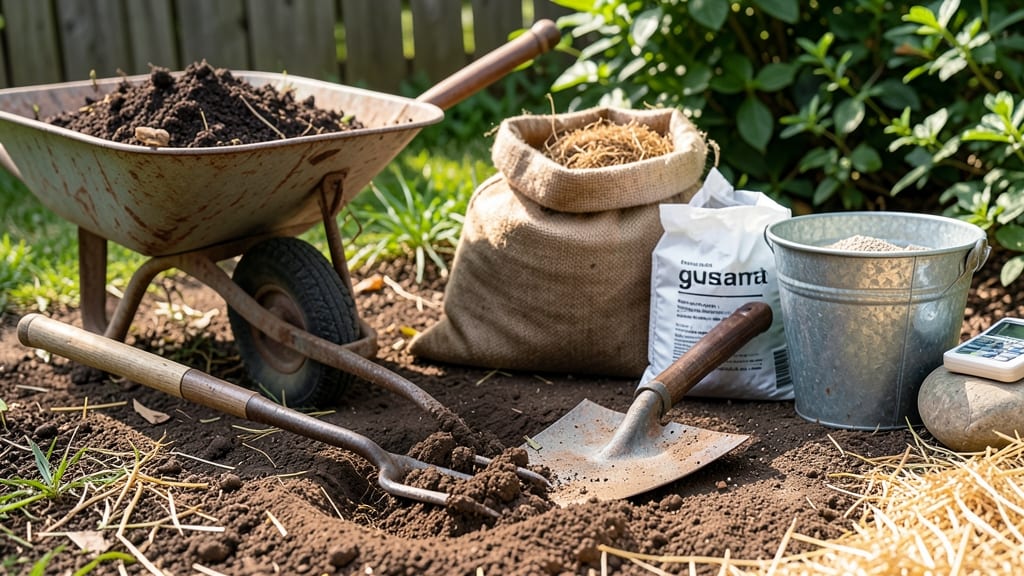
To fix clay soil for gardening, incorporate organic matter like compost, sand, or gypsum to loosen compaction, boost drainage, and enhance root growth while keeping moisture balanced.
Clay soil can feel like gardening with concrete—heavy, slow to drain, and prone to cracking when dry. The key to transforming it lies in amending its structure with materials that improve aeration without disrupting the soil's natural ability to hold nutrients.
I’ve found that compost (for microbial activity) and gypsum (to break up sodium bonds) work best when tilled into the top 6-12 inches, while sand should only be used sparingly to avoid creating a sand-clay mix that drains too quickly.
The goal is to mimic loamy soil’s ideal balance of air, water, and organic material. 🌱
Timing matters too—spring is ideal for adding compost, but gypsum should be worked in 6-12 months before planting to fully dissolve. For best results, test your soil’s pH first; clay often locks out nutrients, so a slightly acidic to neutral range (6.0-7.0) helps plants access what they need.
Think of it as giving your soil a spa treatment: you’re not just adding materials, you’re creating an environment where roots can thrive.
💡 In This Article
- Why Clay Soil Struggles and How Organic Amendments Help
- Step-by-Step Guide: Best Organic Amendments for Clay Soil
Why clay soil struggles and how organic amendments help
Clay soil's struggles stem from its microscopic structure: tiny plate-like particles pack tightly together, creating a dense matrix that blocks water and air movement. When wet, these particles swell and trap moisture, while dry clay shrinks and cracks, forming hardpan that roots can't penetrate.
This compaction also limits microbial activity, starving plants of essential nutrients. The result? Poor drainage, root suffocation, and stunted growth—even for hardy plants like kale or beans. 🌱
Organic amendments work by physically separating those clay particles. Compost introduces fibrous materials that act like tiny spacers, creating air pockets and channels for water to drain.
For example, a 5-10% compost mix (by volume) can increase porosity by up to 30% while adding beneficial microbes that break down organic matter into plant-available nutrients.
Gypsum (calcium sulfate) takes this further by replacing sodium ions that cause clay particles to stick together, allowing them to flocculate and form larger aggregates—think of it as ungluing the clay's molecular bonds.
The magic happens at the molecular level: organic matter's negative charges attract positively charged clay particles, forming loose clusters instead of dense sheets. This process, called flocculation, creates a soil structure that holds water like a sponge but releases it gradually to roots.
Unlike synthetic amendments that disrupt this balance, organic options feed the soil ecosystem, encouraging earthworms and fungi that further improve structure over time. 💫
Consider this comparison: pure clay has a water infiltration rate of just 0.1 inches/hour, while amended clay can reach 1.5-2.0 inches/hour—enough to prevent waterlogging. The key is patience; full benefits appear after 6-12 months as organic matter decomposes and stabilizes the new structure.
For immediate drainage, a 1-inch layer of coarse sand (like builder's sand) mixed into the top 6 inches can help, but avoid overdoing it—too much sand creates a "mucky" texture that drains too quickly.
What most gardeners miss is how clay's natural nutrient-holding capacity becomes an asset when properly amended. The same particles that once locked out phosphorus now release it slowly, feeding plants over months.
This is why amended clay often outperforms sandy soils in drought conditions—it retains 3-4x more water per volume while providing steady nutrient release. The secret? Balance: 20-30% organic matter (compost/manure) and 5-10% gypsum (if sodium is an issue) create the ideal loam-like texture.
Test your progress by doing the "squeeze test": grab a handful of moist soil—if it holds shape but crumbles easily, you've achieved the perfect balance. Clay that sticks together like putty needs more organic matter, while soil that falls apart like sand needs more gypsum or compost.
This tactile feedback is your best indicator of success. 🔥