
Light Requirements
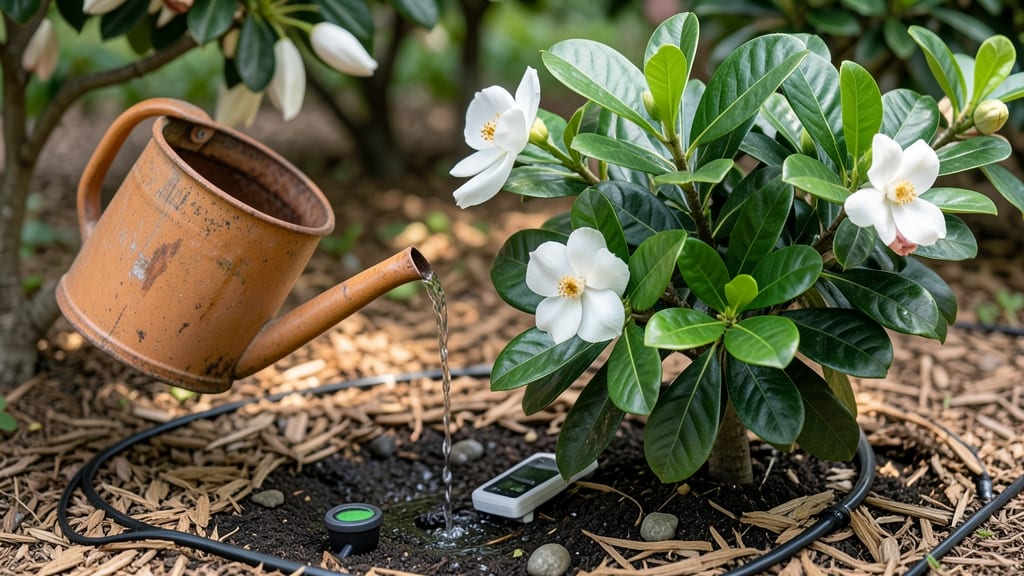
Gardenias need consistent moisture but not a lot of water—their roots rot easily when soggy, yet they wilt fast if left dry.
Picture this: your 🌸 gardenia thrives in 6a zones with spring rains, but a summer drought or overzealous watering can kill it faster than you’d think.
These tropical shrubs prefer soil that stays evenly damp, like a wrung-out sponge—not bone-dry or waterlogged. The key is deep watering every 2-3 days in summer, tapering to weekly in winter.
Below, I’ll break down how to read your gardenia’s soil, spot watering mistakes, and adjust for seasons—so you never guess again whether it’s thirsty or drowning.


How often to water gardenias: the ideal soil moisture balance
Gardenias thrive in humid, tropical conditions, but their watering needs are often misunderstood. While they love moisture, they hate soggy roots. The key is maintaining consistent soil moisture without drowning their delicate root systems.
Unlike drought-tolerant plants, gardenias need regular watering—but not the daily soak many gardeners assume. Let’s break down the science to keep your gardenias blooming beautifully.
Native to Asia and Australia, gardenias evolved in environments with high humidity and well-draining soils. This means they prefer their roots to stay moist but never waterlogged.
Overwatering is the #1 killer of gardenias, leading to root rot and yellowing leaves, while underwatering causes drooping foliage and bud drop. Striking the right balance is crucial for those fragrant white blooms you adore.
Here’s the golden rule: Water gardenias when the top 1-2 inches of soil feel dry to the touch. Stick your finger into the soil—if it’s damp, wait another day.
If it’s bone dry, it’s time to water. This method prevents both overwatering and underwatering, ensuring your gardenias stay healthy year-round.
Seasonal changes dramatically affect watering needs. In summer, when temperatures soar and humidity drops, gardenias may need daily watering—especially in containers, which dry out faster. During winter, reduce watering to every 10-14 days, as cooler temps slow evaporation.
Always adjust based on your local climate and soil type. Sandy soil drains quickly, while clay holds moisture longer.
Mulching is a game-changer for gardenias. Apply 2-3 inches of organic mulch (like pine bark or shredded leaves) around the base to retain moisture, regulate soil temperature, and suppress weeds.
Just keep mulch 2-3 inches away from the trunk to prevent rot. This simple step reduces watering frequency by 30-50% while keeping roots happy.
🌸Pro Tip: Use a moisture meter or the finger test to avoid guesswork. If you’re unsure, err on the side of underwatering—gardenias recover faster from dry spells than from waterlogged roots.
| Condition | Watering Needs | Frequency | Best Time |
|---|---|---|---|
| Summer (Hot/Dry) | Deep soak to 6 inches | Daily or every other day | Early morning (6-9 AM) |
| Spring/Fall (Moderate) | Moisten top 2 inches | Every 2-3 days | Morning or late afternoon |
| Winter (Cool/Dormant) | Light watering, top 1 inch | Every 10-14 days | Mid-morning (avoid frost) |
| Containers (All Seasons) | Soak until water runs out drains | Every 1-2 days (summer) | Morning only |
Morning watering is non-negotiable for gardenias. Watering in the early hours (before 10 AM) allows foliage to dry quickly, reducing fungal diseases like powdery mildew. Avoid evening watering, as damp leaves overnight create the perfect environment for bacterial infections.
If you must water in the evening, use a soaker hose or drip irrigation to target the root zone directly.
💧Visual Cues to Water: Look for wilting leaves, drooping stems, or buds falling off—these are clear signs your gardenia is thirsty. Conversely, yellowing leaves, mushy stems, or white mold on soil mean you’re overwatering.
Adjust your schedule based on these visual red flags to keep your gardenia thriving.
For container-grown gardenias, watering frequency doubles. Pots dry out 2-3 times faster than in-ground plants, so check soil moisture daily in summer. Use terracotta pots for better drainage, and always ensure the container has drainage holes.
If you notice water pooling in the saucer, your gardenia is definitely getting too much water—empty the saucer immediately.
🌿Final Tip: Group gardenias with other thirsty plants like hydrangeas or camellias to create a microclimate that retains moisture. This mimics their native tropical habitat and reduces the effort needed to maintain consistent soil moisture.
With these adjustments, your gardenias will reward you with abundant blooms and lush foliage all season long.
Signs your gardenia is overwatered or underwatered (and how to fix it)
Gardenias thrive in consistent moisture, but their roots are sensitive to both waterlogging and drought stress. As a gardener who’s nursed my fair share of struggling gardenias, I’ve learned the subtle differences between overwatered and underwatered plants.
The key lies in observing leaf color, stem firmness, and bloom production—each tells a unique story about your plant’s hydration health.
Overwatering is the sneakiest culprit because it mimics underwatering symptoms at first glance. Yellowing leaves, for example, could mean either too much water or too little.
But here’s the catch: overwatered gardenias often develop mushy stems and soggy soil, while underwatered ones show crispy edges and dry, brittle stems. Let’s decode these signs so you can rescue your gardenia before it’s too late.
Not always! While gardenias love moisture-rich soil, they hate soggy roots. A common myth is that their tropical origins mean they need constant watering—but in reality, they prefer consistent moisture with well-draining soil. Overwatering suffocates roots, leading to root rot and leaf drop. Test soil moisture by sticking your finger 2 inches deep—if it’s damp, wait before watering again. In containers, check daily, as potted plants dry out faster.
If your gardenia’s leaves turn yellow and feel soft to the touch, it’s likely overwatered. This is your plant’s SOS signal—its roots are drowning. Pair this with stunted growth or drooping branches, and you’ve got a classic case of water stress.
The fix? Stop watering immediately and let the soil dry out. For container gardenias, move them to a shady spot to slow evaporation and improve recovery.
On the flip side, brown, crispy leaf edges and wilted buds scream underwatering. Gardenias drop buds when they’re thirsty, so if you’re not seeing blooms, check the soil first. Deep watering—not light sprinkles—is critical.
Water until you see moisture drain from the bottom of the pot or 6 inches deep in garden beds. Mulching with organic matter (like pine bark) helps retain moisture and mimics their tropical habitat.
For recovery, prune any damaged leaves or soft stems with sterilized shears to prevent disease spread. If your gardenia is in poor drainage soil, amend it with perlite or sand to improve airflow.
In containers, ensure pots have drainage holes—this is non-negotiable for gardenias. After pruning, reduce watering slightly and monitor soil moisture closely for 2-3 weeks to avoid re-traumatizing the plant.
Seasonal adjustments are key. In summer heat, gardenias may need daily watering, while winter dormancy requires bi-weekly checks. I’ve found that morning watering (before 10 AM) prevents fungal issues like powdery mildew, which thrives in damp foliage.
Pair this with acid-loving fertilizer (like cottonseed meal) to boost resilience during recovery.
Remember, gardenias communicate through their leaves. Healthy leaves are deep green and leathery, while stressed leaves are your early warning system. With these fixes, your gardenia can bounce back in 4-6 weeks—just give it time, patience, and the right balance of moisture.
Your fragrant blooms will thank you! 🌸