
Light Requirements
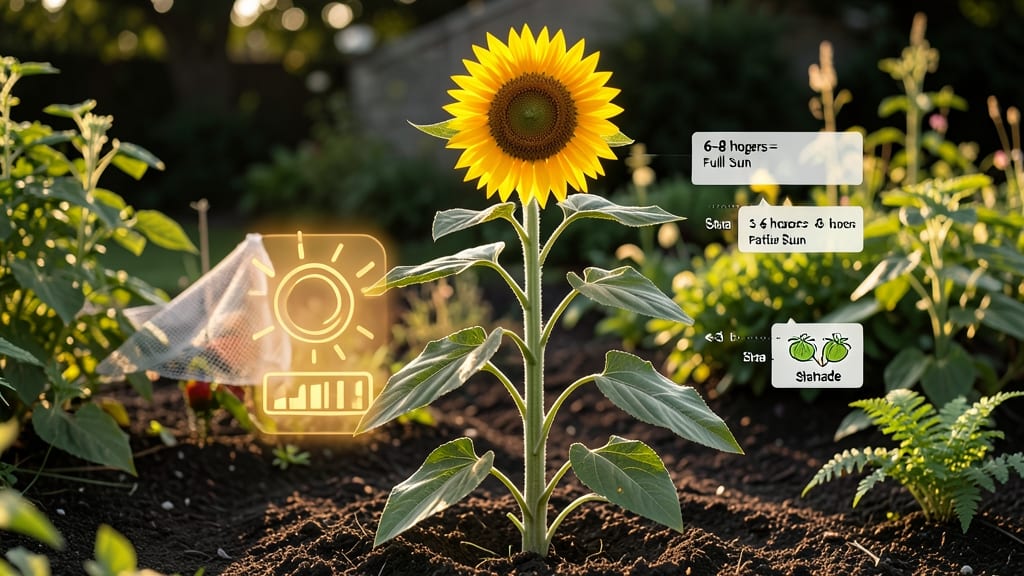
Gardens need varying sunlight hours depending on plant types: full-sun plants thrive with 6–8+ hours daily, partial-sun varieties do best with 3–6 hours, and shade-loving plants require under 3 hours. Aligning sunlight exposure with each plant's needs maximizes growth and productivity.
Sunlight directly fuels photosynthesis, the process that converts light energy into chemical energy for plant growth. 🌱 Different plants have evolved to optimize this process under varying light conditions—full-sun plants like tomatoes and sunflowers need intense light to prevent leggy growth, while shade plants such as ferns and hostas conserve energy in lower-light environments.
The key is observing your garden's natural light patterns throughout the day, as morning sun differs from afternoon intensity, and seasonal shifts can dramatically alter exposure.
For practical application, I recommend grouping plants by their sun requirements rather than relying on general rules. For example, basil and peppers demand full sun, while lettuce and spinach can tolerate partial shade. Vertical gardening solutions like trellises or hanging baskets also help maximize limited sunlight in smaller spaces.
Testing your garden's microclimates with a simple sunlight audit—marking sun/shade patterns over a week—can reveal unexpected hotspots or shaded corners perfect for specific plants.
💡 In This Article
- Sunlight Requirements by Plant Category: Full Sun vs Partial vs Shade
- Adjusting Garden Layout for Sunlight Efficiency
Sunlight requirements by plant category: full sun vs partial vs shade
Sunlight drives photosynthesis, where chlorophyll absorbs light energy to convert carbon dioxide and water into glucose and oxygen. Full-sun plants like tomatoes and marigolds require 6-8+ hours of direct sunlight daily to maximize chlorophyll production and prevent etiolation (stretched, weak growth).
These plants have evolved with high light tolerance, often developing thicker cuticles to reduce water loss under intense solar radiation. The energy they capture supports robust flowering and fruiting—tomatoes, for instance, need 8+ hours to produce optimal yields, while sunflowers thrive with 6-8 hours but may droop in partial shade.
Partial-sun plants, such as basil and peppers, operate efficiently with 3-6 hours of direct light. Their metabolic processes are adapted to moderate light conditions, balancing energy production with moisture retention.
For example, basil grown in full sun often becomes bitter due to excessive heat, while 3-4 hours of morning sunlight (cooler and less intense) yields sweeter leaves.
These plants typically have thinner leaves and less waxy coatings, making them more sensitive to dehydration in full sun. 🌿 The key is positioning them where they receive morning light and afternoon shade, especially in hot climates.
Shade-loving plants, like hostas and impatiens, thrive with under 3 hours of direct sunlight. Their photosynthesis operates optimally in lower light, often through shade-tolerant chlorophyll variants that capture blue and green wavelengths more efficiently. These plants prioritize survival over rapid growth, conserving energy for root development and leaf production.
For instance, ferns prefer dappled shade, where filtered light creates a humid microclimate that mimics their natural forest-floor habitats. Even 2 hours of direct sun can scorch their delicate fronds, while 1-2 hours of morning light suffices for most varieties.
Understanding these categories helps avoid common mistakes, like planting sunflowers in a north-facing bed or lettuce in full afternoon sun. For example, leafy greens like spinach and kale tolerate 3-4 hours of partial sun but bolt (go to seed) quickly in hotter conditions.
Herbs like cilantro and parsley also prefer partial shade, especially in regions with intense summer sunlight. The solution? Group plants by their light needs and rotate containers or beds seasonally to adapt to changing sun angles.
A simple observation: plants leaning toward light or developing yellow leaves are clear signals they need more (or less) exposure.
Seasonal variations further complicate sunlight calculations. In summer, days are longer, but high sun angles mean more intense (but shorter) exposure. Winter sunlight, though weaker, lasts longer due to lower sun arcs.
For instance, a garden receiving 6 hours of summer sun might only get 4 hours in winter—critical for perennial plants like lavender or rosemary, which need consistent light year-round.
Using a sunlight tracker (a simple app or marked stakes) for a week reveals these patterns, allowing precise adjustments like moving containers or pruning nearby trees to redirect light.
Here's a quick reference for common garden staples:
- Full Sun (6-8+ hours): Tomatoes, peppers, sunflowers, lavender, rosemary, marigolds
- Partial Sun (3-6 hours): Basil, parsley, cilantro, lettuce, spinach, impatiens
- Shade (under 3 hours): Hostas, ferns, ivy, caladiums, astilbe
Matching plants to their light needs isn't just about aesthetics—it's about unlocking their full genetic potential. A tomato plant in full sun produces 30-50% more fruit than one in partial shade, while a shade-loving hosta wilts under excessive light.
The science is clear: light is the currency of plant growth, and spending it wisely ensures a thriving, productive garden. 🌞