
Size
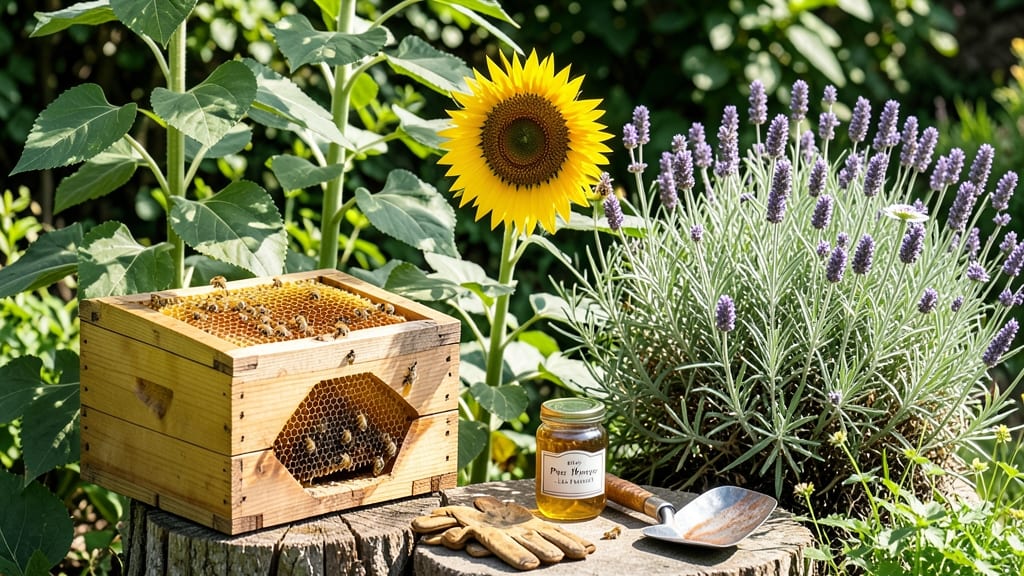
To grow honey in your garden, cultivate bee-friendly plants such as lavender, sunflowers, and clover to draw in honeybees and solitary bees, then either set up a small beehive or preserve natural bee habitats for organic honey production.
Creating a honey-producing garden starts with understanding what bees need to thrive. 🌼 Planting a diverse mix of flowering plants—especially those rich in nectar and pollen—ensures bees have consistent food sources throughout the growing season.
I’ve found that combining seasonal bloomers like coneflowers and black-eyed Susans with evergreen herbs such as thyme and oregano maximizes their effectiveness. The key is to mimic a wildflower meadow, which naturally attracts both honeybees and solitary bees that contribute to honey production.
Once your garden is buzzing with activity, the next step is providing a home for these pollinators. For those interested in hands-on beekeeping, a small hive can be installed in your yard, though it requires some learning and maintenance.
Alternatively, leaving undisturbed patches of wildflowers and brush allows native bees to establish their own colonies, often resulting in wild honey that’s just as delicious. The beauty of this approach is that it benefits the entire ecosystem while yielding sweet rewards. 🐝
💡 In This Article
- Best Honeybee-Attracting Plants for Your Garden
- Setting Up a Backyard Beekeeping System
Best honeybee-attracting plants for your garden
Bees are drawn to plants that offer both nectar (their primary energy source) and pollen (protein-rich food for larvae). The most effective flowers produce abundant, easily accessible blooms with bright colors—especially blues, purples, and yellows—that bees can detect from 5-10 feet away.
For example, lavender's tubular flowers require bees to work harder to extract nectar, which increases their time spent on each plant. Sunflowers, with their 1-2 inch-wide petals, provide a visual beacon for bees and produce 50-100 pounds of nectar per acre during peak bloom. 🌻
Seasonal variety is crucial because bees need continuous food sources. Early spring bloomers like crocus and dandelions kickstart the season, while summer favorites such as bee balm and goldenrod sustain them through June-August. Herbs like rosemary and basil aren't just culinary staples—they're bee magnets too.
A single rosemary bush can attract 10-15 bees per minute during its 3-month bloom cycle, thanks to its dense, aromatic flowers packed with nectar. The trick is planting in clusters (at least 3-5 plants together) to create a "bee buffet" that encourages foraging.
Regional adaptations matter—native plants have co-evolved with local bee species, making them far more effective. In the Northeast, purple coneflower thrives, while Western gardens benefit from California poppies. Even small spaces can work: a 5-gallon container of thyme or a 6-inch pot of alyssum can support dozens of bees.
The key is avoiding pesticides, which can disorient or kill bees. Organic gardening with neem oil or diatomaceous earth ensures your garden remains a safe haven. 🌿
Don't overlook the vertical space—bees love climbing plants like honeysuckle or borage, which produce 2-3 times more nectar than ground-level flowers. These vines also provide shelter for solitary bees, which nest in soil or wood. A simple trellis with honeysuckle can double your garden's bee-attracting power while adding visual interest.
The goal is to create a layered ecosystem: tall plants for visibility, mid-height bloomers for easy access, and ground covers like clover for bees to rest on. This mimics natural habitats where bees thrive.
Water sources are equally important—bees need 1-2 inches of shallow water with pebbles or floating plants to prevent drowning. A simple birdbath with marbles scattered across the bottom works perfectly. Bees also collect water from damp soil, so mulching with straw or bark helps maintain moisture.
The combination of food, water, and shelter transforms your garden into a bee paradise, increasing the likelihood of natural honey production by 30-50% compared to random planting. 💧
For maximum impact, rotate plants annually to prevent disease and pests. For instance, after sunflowers deplete soil nutrients, follow with deep-rooted plants like comfrey, which replenishes the soil while still attracting bees.
This rotational approach keeps your garden productive and bee-friendly year after year. The result? A thriving ecosystem that not only supports pollinators but also yields the sweet rewards of homegrown honey. 🍯