
Companion Plants
Gardening with tropical plants brings vibrant greenery and exotic beauty to your space without needing a greenhouse.
Bringing lush tropical plants indoors doesn’t require a jungle—just the right humidity-loving varieties and a few expert tips to recreate their natural habitat. Whether you’re drawn to the bold leaves of a bird of paradise or the delicate blooms of a hibiscus, these plants thrive with the right care.
From USDA zones 10-12 to cozy indoor corners, tropical plants adapt beautifully when you meet their needs—think bright, indirect light, consistent moisture, and just the right humidity. The key is choosing plants that match your environment and avoiding common pitfalls like overwatering or drafty spots.
In this guide, you’ll discover the top 10 tropical plants for indoor living, how to set up the perfect humidity zone, and simple fixes for keeping them lush year-round. Let’s get started!
Top 10 tropical plants that thrive in indoor humidity
Transforming your home into a tropical paradise is easier than you think! These humidity-loving tropical plants bring vibrant colors and lush foliage indoors without needing a greenhouse. The key is selecting varieties that adapt well to indoor humidity levels—typically between 40% and 70%—while providing the right care.
Whether you're a beginner or a seasoned plant parent, these low-maintenance tropical plants will thrive with minimal fuss.
I’ve curated this list based on hardiness, visual appeal, and adaptability to indoor environments. Each plant on this list not only survives but flourishes with consistent humidity, indirect light, and proper care.
From striking foliage to fragrant blooms, these tropical beauties will elevate any space while purifying the air. Let’s dive into the top 10!
🌿 Top 10 Humidity-Loving Tropical Plants
-
1. Bird of Paradise (Strelitzia nicolai)
🌡️ Humidity: 50-70% | 💡 Light: Bright indirect | 💧 Water: Weekly -
2. Peace Lily (Spathiphyllum)
🌡️ Humidity: 60-80% | 💡 Light: Low to medium | 💧 Water: When soil dries -
3. Fiddle Leaf Fig (Ficus lyrata)
🌡️ Humidity: 50-60% | 💡 Light: Bright indirect | 💧 Water: Every 10-14 days -
4. Calathea (Calathea spp.)
🌡️ Humidity: 70-80% | 💡 Light: Low to medium | 💧 Water: Weekly (keep soil moist) -
5. Orchid (Phalaenopsis)
🌡️ Humidity: 50-70% | 💡 Light: Medium indirect | 💧 Water: Every 7-10 days -
6. Rubber Plant (Ficus elastica)
🌡️ Humidity: 40-60% | 💡 Light: Bright indirect | 💧 Water: Every 10-14 days -
7. Bromeliad (Guzmania spp.)
🌡️ Humidity: 60-80% | 💡 Light: Medium to bright | 💧 Water: Fill central cup weekly -
8. Chinese Evergreen (Aglaonema)
🌡️ Humidity: 50-70% | 💡 Light: Low to medium | 💧 Water: Every 7-10 days -
9. Kentia Palm (Howea forsteriana)
🌡️ Humidity: 50-60% | 💡 Light: Medium indirect | 💧 Water: Weekly (keep soil moist) -
10. Philodendron (Philodendron hederaceum)
🌡️ Humidity: 60-80% | 💡 Light: Low to medium | 💧 Water: Every 7-10 days
Pro Tip: Group plants together to create a microclimate that boosts humidity naturally! 🌱
Each of these tropical plants for indoor humidity offers something unique—whether it’s the dramatic foliage of a fiddle leaf fig, the elegant blooms of an orchid, or the air-purifying qualities of a peace lily.
For best results, place them near a south-facing window or under grow lights to mimic their natural habitat. Remember, consistent moisture is key, so misting leaves or using a humidifier can make all the difference.
The Calathea and Philodendron are particularly forgiving for beginners, while the Bird of Paradise and Rubber Plant add a bold statement to any room. If you love fragrant blooms, the Bromeliad and Orchid are excellent choices.
For low-light conditions, the Chinese Evergreen and Peace Lily are your best bets.
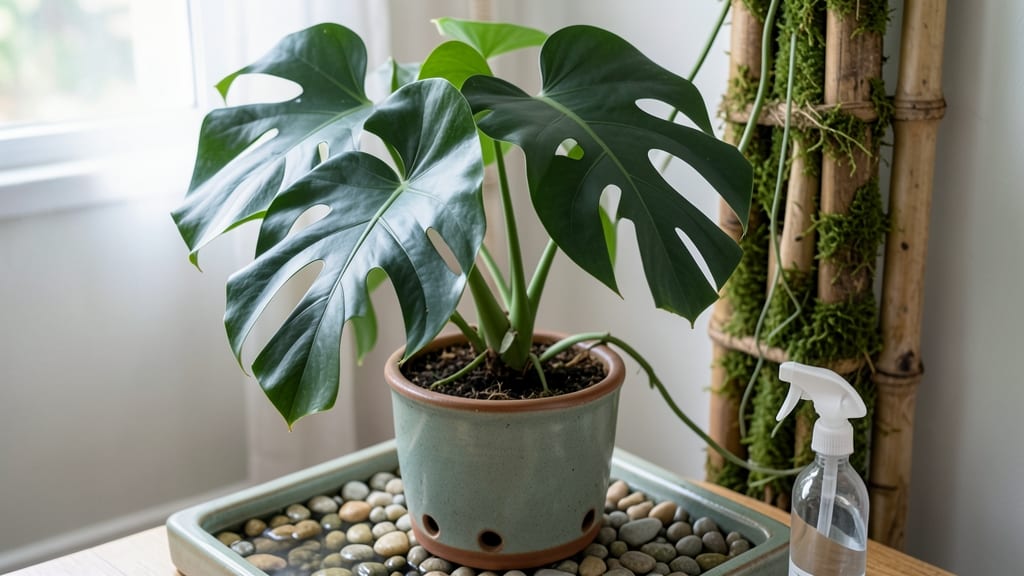
One of my favorite tricks is to place a tray of pebbles and water under pots to increase humidity naturally. This method works wonders for humidity-sensitive plants like Calathea and Bromeliads. Just ensure the pot isn’t sitting in standing water—root rot is a common issue
How to create the perfect humidity environment for tropical plants
Tropical plants thrive in environments with 60-80% humidity, mimicking their natural rainforest habitats. Without proper humidity, you’ll notice brown leaf tips, crispy edges, or stunted growth—clear signs your plants are struggling.
The good news? Recreating this environment at home is simpler than you think, whether you use DIY methods or invest in smart tools.
First, identify your home’s current humidity levels using a hygrometer (available for under $15). Most homes hover around 30-50% humidity, far below what tropical plants need. The key is to boost moisture without creating a damp, moldy space.
Start with grouping plants together, as they naturally increase humidity through transpiration. A cluster of 5-10 plants can raise local humidity by 10-15%.
For a more dramatic effect, try a humidifier. Even a small, $30 ultrasonic humidifier can transform your plant’s environment overnight. Position it near your tropical plants and set it to maintain 70% humidity. If you’re on a budget, misting plants daily works temporarily, but it’s labor-intensive and short-lived.
Another clever trick is to use self-watering planters with humidity domes. These plastic covers trap moisture around the plant, keeping the air saturated. They’re perfect for ferns, calatheas, or philodendrons, which love high humidity.
Just remember to remove the dome for a few hours weekly to prevent fungal issues.
If you’re growing tropical plants in dry climates or during winter**, consider placing them in the bathroom or kitchen. These rooms naturally retain more moisture from showers or cooking steam.
For larger plants like monstera or fiddle-leaf figs, a humidity tent made from plastic wrap or a clear storage bin can work wonders.
Finally, avoid common mistakes like overcrowding plants without airflow or using tap water with high chlorine, which can damage leaves. Instead, opt for distilled or filtered water and space plants 2-3 inches apart for proper circulation.
With these adjustments, your tropical plants will flourish year-round, even in the driest home.