
How To
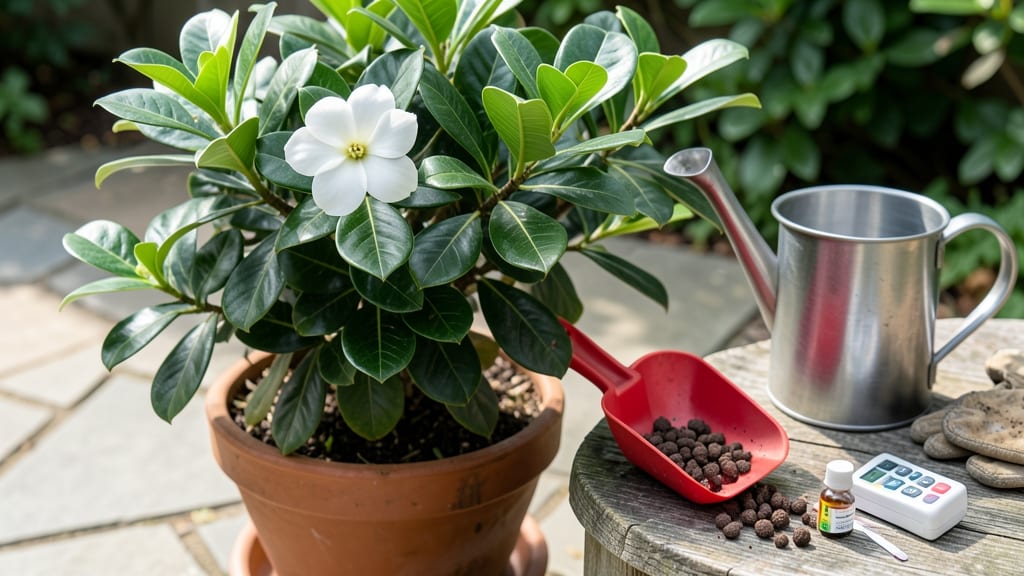
To fertilize gardenia 🌸 at the right time means feeding it when new growth appears in spring and again after blooms fade in early summer.
Picture this: you’ve just spotted those first glossy leaves of spring, and you’re eager to give your gardenia a boost—only to watch its leaves yellow and drop. That’s the kind of mistake that happens when you fertilize at the wrong moment, and it’s easier to avoid than you think.
Gardenia plants thrive on a spring feeding schedule that aligns with their natural growth cycle, while post-bloom care in summer keeps them flowering strong. The key is knowing when to start, how often to feed, and which fertilizer to use—organic or synthetic—to avoid overdoing it.
In this guide, I’ll walk you through the exact timing for fertilizing your gardenia, how to pick the right fertilizer, and what to watch for to keep your plant happy and blooming all season long.
Optimal gardenia fertilization schedule by season: spring vs. post-bloom timing
Timing your gardenia fertilization is the secret to show-stopping blooms and lush foliage. These acid-loving shrubs need precise feeding cues—new growth in spring and post-bloom recovery in summer—to perform at their best. Miss these windows, and you risk stunted flowers or leaf burn from overfeeding.
Most gardeners make the mistake of fertilizing at the wrong time, often during dormant months or right after bloom fade. The truth? Your gardenia’s growth cycle dictates when to feed.
We’ll break down the 3-month critical window (late winter to early summer) and how to adjust for container vs. in-ground plants.
🌱 Quick Tip: Always fertilize in the morning to avoid leaf scorch from afternoon sun. Use rainwater or distilled water to dilute fertilizer for container plants.
| Season | Key Cues | Fertilizer Type | Frequency | Container Adjustments |
|---|---|---|---|---|
| Late Winter (Feb) | New buds forming | Slow-release acid fertilizer | Light feed (½ strength) | Use ¼ tsp per 5-gallon pot |
| Spring (Mar-May) | Active leaf growth | Balanced 10-10-10 | Every 4-6 weeks | Flush soil monthly with water |
| Post-Bloom (Jun-Jul) | Faded flowers, new leaves | High-phosphorus (5-10-5) | Monthly until August | Reduce to ⅓ strength for pots |
| Summer (Aug-Oct) | Pre-winter dormancy | None | Stop fertilizing | Check for salt buildup |
Your gardenia’s spring feeding should begin as soon as you spot new growth after the last frost. In USDA Zone 6a (like my garden), this is typically mid-April. Use a balanced fertilizer (like 10-10-10) to encourage leaf and stem development, but avoid high-nitrogen formulas—they promote foliage over flowers.
For container gardenias, halve the fertilizer dose and flush the soil every 4 weeks to prevent salt buildup. I once killed a potted gardenia by ignoring this—its leaves turned crispy within weeks! Always water thoroughly after fertilizing to help nutrients reach the roots.
Post-bloom timing is where many gardeners go wrong. After your gardenia’s summer flowers fade (usually June-July), switch to a high-phosphorus fertilizer (like 5-10-5) to replenish energy for next year’s blooms. This is your 30-day recovery window—skip it, and you’ll see fewer flowers next spring.
In-ground gardenias need 1 cup of fertilizer per 10 sqft, while containers max out at 1 tbsp per 5-gallon pot. I learned this the hard way with my over-fertilized dwarf gardenia—its leaves yellowed, and it dropped buds. Always follow the less-is-more rule for acid-loving plants.
Watch for these environmental cues to adjust your schedule:
- New growth = Time to feed
- Faded flowers = Switch to phosphorus
- Yellow leaves = Over-fertilized or pH issue
If you live in a warmer climate (Zones 8-10), extend your feeding window until September. My friend in Florida fertilizes until early October and still gets blooms in winter! Just remember: never fertilize in winter—your gardenia is dormant and won’t absorb nutrients.
Pro tip
How to choose the right fertilizer for gardenias: acid-loving plant nutrient guide
Gardenias thrive when their acidic soil needs (pH 4.5-5.5) are met with the right fertilizer nutrients. Unlike many plants, they demand low nitrogen to prevent leafy growth at the expense of blooms.
The key lies in selecting a balanced acid-loving formula with micronutrients like iron and magnesium, which gardenias crave for vibrant flowers and glossy foliage.
I’ve found that organic options like fish emulsion or composted pine bark work wonders, but synthetic acid-based fertilizers (like those labeled for azaleas or camellias) can deliver faster results. The best approach? A mix of both—organic for long-term soil health and synthetic for quick nutrient boosts during bloom season.
When to Fertilize Gardenias
✅ DO
- Feed in early spring (March-April) to stimulate new growth
- Apply every 4-6 weeks during active growth (April-July)
- Use slow-release granules for steady nutrient delivery
- Fertilize in morning hours to prevent root burn
❌ DON'T
- Fertilize in winter months (plant is dormant)
- Use high-nitrogen lawn fertilizers (promotes leaves, not blooms)
- Apply fertilizer to dry soil (always water first)
- Over-fertilize in late summer (can stress plant before winter)
For NPK ratios, I recommend 8-3-9 or 10-10-10 formulas specifically designed for acid-loving plants. The lower nitrogen (first number) prevents excessive foliage while the higher phosphorus (middle number) encourages abundant blooming.
Don’t forget micronutrients—gardenias often show deficiencies as yellowing leaves or poor flowering if they lack iron or magnesium.
Testing your soil’s pH is non-negotiable before fertilizing. If your gardenia’s leaves appear yellow with green veins (a classic iron deficiency sign), you’ll need to lower pH further using elemental sulfur or peat moss.
I’ve had success with DIY acidifiers like coffee grounds or pine needles, which I mix into the top 2 inches of soil every 3 months.
When shopping for fertilizers, look for brands like Miracle-Gro Azalea, Camellia & Rhododendron or Jobe’s Acid-Loving Plants. For organic options, fish emulsion (1-2-2 ratio) or composted pine bark are excellent choices. Always follow package instructions, but remember: less is more with gardenias—over-fertilizing can burn roots and cause leaf drop.
Pro tip: If your gardenia isn’t blooming, it might be getting too much nitrogen. Switch to a low-nitrogen, high-phosphorus fertilizer like 10-30-20 to encourage flowers. And always water thoroughly after fertilizing to help nutrients reach the roots—gardenias have shallow root systems that need consistent moisture.