
Propagation
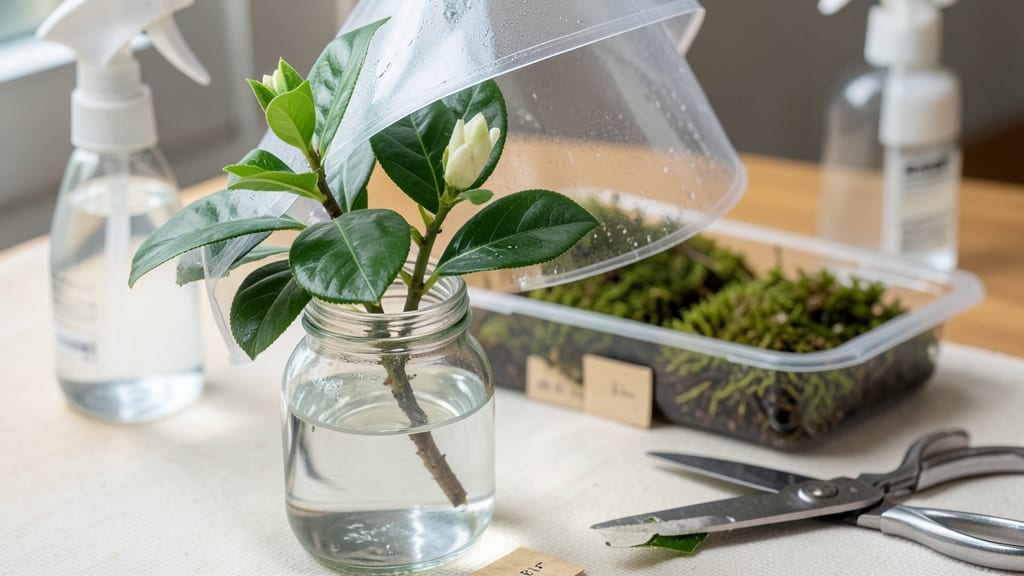
Propagating gardenia from cuttings works best with semi-hardwood cuttings, rooting hormone, and high humidity. You'll achieve success rates of 50-70% when starting in late spring or early summer during active growth phases.
Gardenia cuttings thrive when you capture that perfect balance between maturity and freshness—the semi-hardwood stage is your golden window. 🌱 This means choosing stems that are neither too soft (new growth) nor fully woody (older branches), as they've developed enough energy storage to support root development but still contain active growth hormones.
The late spring timing aligns with the plant's natural growth surge, giving your cuttings the best chance to establish roots before dormancy sets in.
What sets gardenia propagation apart is its sensitivity to ethylene gas, which triggers premature flowering at the expense of root growth. That's why I always recommend using a well-ventilated propagation chamber—even a simple plastic bag with air holes works—to maintain humidity without trapping gases.
The rooting hormone you apply should contain auxin, which stimulates cell division at the cutting base, though gardenias often respond well even to natural rooting powder.
💡 In This Article
- Science of Rooting Gardenia Cuttings
- Step-by-Step Gardenia Propagation Guide
Science of rooting gardenia cuttings
The biological magic behind gardenia cuttings lies in their auxin hormone sensitivity. When you take a semi-hardwood cutting, the natural auxin (primarily indole-3-acetic acid or IAA) in the stem's cambium layer triggers cell division at the base, forming the foundation for roots.
Gardenias, however, are particularly ethylene-sensitive—this plant growth regulator can actually inhibit root formation if allowed to accumulate, which explains why ventilation is non-negotiable in propagation setups.
Moisture balance is the next critical factor, as gardenia cuttings require 90-95% humidity to prevent desiccation while avoiding waterlogged conditions that lead to rot. The ideal rooting medium—like a 50/50 mix of perlite and peat moss—provides both aeration and moisture retention.
This balance supports adventitious root formation, where new roots grow directly from the stem rather than the root base, a process that typically takes 4-8 weeks depending on temperature and light conditions.
Light plays a subtle but crucial role: gardenias need bright, indirect light (about 1,000-2,000 foot-candles) to maintain photosynthesis without stressing the cutting. Too little light weakens the plant, while direct sun can scorch tender new growth.
The optimal temperature range for rooting is 70-75°F, as cooler conditions slow metabolic processes while heat above 80°F accelerates moisture loss and fungal risks.
What most gardeners overlook is the ethylene buildup in closed propagation chambers. Even a small plastic bag without ventilation can trap this gas, which triggers flowering hormones instead of root development.
This is why I recommend using a clear plastic dome with air holes or a simple DIY setup with a plastic bottle cut in half—it maintains humidity while allowing gas exchange. The key is creating an environment where the cutting's natural auxin can work without interference.
Success rates vary dramatically based on these factors. In controlled conditions with proper humidity, light, and ventilation, you'll see 60-70% rooting success—but drop any one element (like ventilation) and that rate can plummet to 20-30%.
The semi-hardwood stage is crucial because these stems contain enough stored energy to support early root development while still having active growth hormones. Newer growth lacks these reserves, while older wood has lost too much metabolic activity.
One fascinating detail is how gardenias respond to mycorrhizal fungi in the soil. While you won't see this in propagation, established gardenias form symbiotic relationships with these fungi, which can enhance nutrient uptake by up to 30%.
This natural partnership explains why gardenias often thrive once rooted, as they develop this underground network that supports their lush, fragrant growth—something you can't replicate in a simple propagation mix.