
Planting
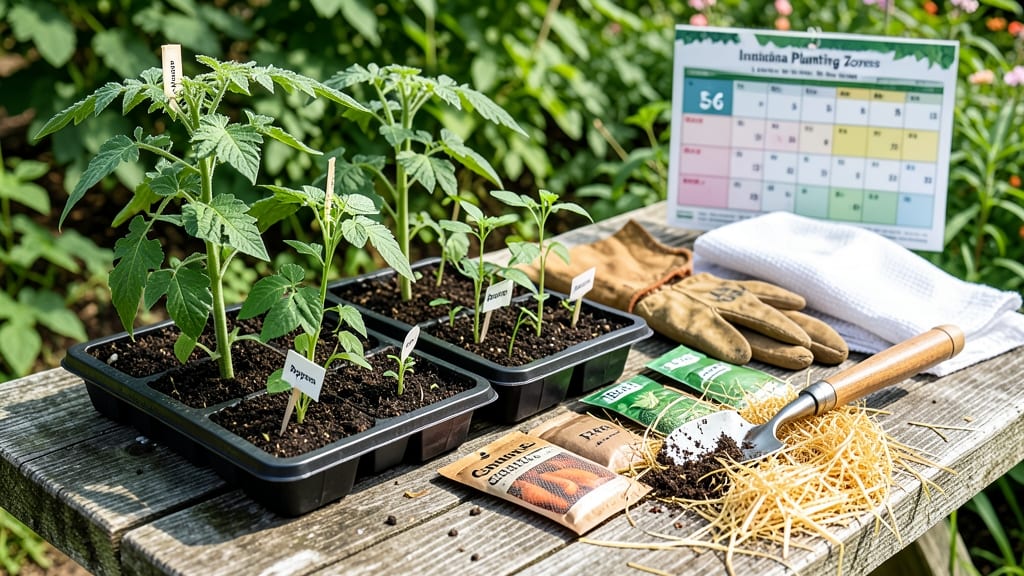
Planting a garden in Indiana at the right time means the difference between a bountiful harvest and a frost-nipped failure.
Indiana’s unpredictable spring weather can turn your garden dreams into a gamble—but knowing the exact planting windows for your zone means fewer surprises and bigger harvests. Whether you’re in northern Indiana’s cooler Zone 5b or southern Indiana’s milder Zone 6a, timing is everything.
Most gardeners wait until after the average last frost date—typically late April to early May—but soil temperature and microclimates (like urban heat islands or river valleys) can shift those deadlines by weeks.
Cool-season crops like spinach or peas can handle a light frost, while tomatoes and peppers need warm soil to thrive.
In this guide, I’ll break down the zone-specific planting calendar you need to avoid common mistakes, extend your growing season with simple tricks, and pick the best crops for each month—so you can finally stop guessing and start growing with confidence.
Indiana planting zones & last frost dates: your risk-free timeline
Indiana spans USDA Hardiness Zones 5b to 6a, meaning your last spring frost can vary by 2-3 weeks depending on location. Northern counties like Lake County average May 10th for last frost, while southern areas like Gibson County often see April 20th.
These differences directly impact when you can safely plant warm-season crops like tomatoes and peppers.
Understanding your first fall frost is equally critical. In Zone 5b (northern Indiana), expect October 15th on average, while Zone 6a (southern Indiana) typically holds off until October 30th. This timeline determines when to harvest cool-season crops like kale and spinach before winter sets in.
Here's your zone-specific planting timeline with average frost dates and recommended planting windows for both cool-season and warm-season crops:
| Zone | Last Spring Frost | First Fall Frost | Cool-Season Planting | Warm-Season Planting |
|---|---|---|---|---|
| 5b (Northern IN) | May 10 | October 15 | March 15 - April 15 | May 20 - June 1 |
| 6a (Southern IN) | April 20 | October 30 | February 28 - April 1 | April 25 - May 15 |
| Transition Zones | April 25 - May 5 | October 10 - 20 | March 1 - April 10 | May 1 - May 15 |
For cool-season crops like lettuce and peas, start seeds indoors 4-6 weeks before your last frost date. In Zone 5b, that means mid-March, while Zone 6a gardeners can begin late February. These early starts give seedlings a head start before transplanting outdoors.
When planting warm-season crops, wait until soil temperatures reach 60°F (15°C). Use a soil thermometer to verify—cold soil stunts growth. In northern Indiana, this typically aligns with May 20th, while southern Indiana can start April 25th. Tomatoes and peppers are particularly sensitive to cold soil.
To adjust for your specific county, check the Indiana State Climate Office frost probability maps. Urban areas may experience microclimates with later frosts due to heat retention. For example, Indianapolis often sees its last frost 3-5 days later than rural areas just 20 miles away.
Extend your growing season with row covers or cold frames to push early plantings. I've successfully planted spinach in Zone 5b as early as March 1st using floating row covers, harvesting before summer heat arrives. Just remove covers when daytime temperatures exceed 75°F (24°C).
For fall planting, direct-sow cool-season crops like radishes and kale 6-8 weeks before your first frost. In Zone 6a, that means September 1st, while Zone 5b gardeners should aim for August 15th. These crops tolerate light frosts and often produce sweeter flavors after exposure.
Remember: Frost dates are averages. Use the National Weather Service's frost prediction tool for real-time updates. I always set a reminder for April 1st to start monitoring local forecasts—this gives me time to adjust if an unexpected late frost is predicted.
How to time your planting for Indiana’s unpredictable weather patterns
Indiana’s weather can shift from frost to 80°F in a single week, making planting decisions tricky. The key to success is understanding soil temperature and frost probability—not just calendar dates.
For example, tomatoes need soil at 60°F+ to thrive, but a late frost can wipe out seedlings overnight if you plant too soon.
I’ve learned the hard way that relying on average frost dates alone is risky. Instead, combine local weather forecasts, soil thermometers, and frost-free probability tools (like the National Weather Service’s Frost/Freeze Forecast) to pinpoint your exact planting window.
This approach has helped me extend my growing season by 3-4 weeks both in spring and fall.
Even if your last frost date is April 15, a late frost in early May can kill tender seedlings. Cool-season crops (like lettuce or peas) tolerate light frosts, but warm-season plants (tomatoes, peppers, basil) will crisp and die if exposed to 32°F+ temperatures.
Always wait until soil is consistently above 50°F for 5+ days before planting warm-season crops.
To push your planting windows, I recommend using row covers or cold frames for early starts. A simple floating row cover can raise soil temperatures by 5-10°F and protect seedlings from light frosts.
For late-season extensions, low tunnels or hoop houses let me harvest kale and spinach well into November—sometimes even December—without frost damage.
If frost strikes after planting, don’t panic. Cover plants immediately with blankets, cardboard, or plastic sheeting to trap heat. For tomatoes or peppers, prune damaged leaves and monitor for blossom end rot (a common stress response).
In my garden, this tactic saved a 30% yield after a surprise May frost last year.
For cool-season crops, start seeds indoors 4-6 weeks before the average last frost date for your county. Use a seedling heat mat to maintain 70-75°F soil temps for faster germination. Harden off seedlings gradually by moving them outdoors for 2-3 hours daily before transplanting.
Pro tip: Bookmark the Midwest Regional Climate Center’s frost maps and check them weekly in spring. Pair this with a soil thermometer ($10 at garden centers) to confirm when conditions are truly safe. With these tools, you’ll avoid the heartbreak of frost-killed seedlings and maximize your Indiana garden’s potential. 🌱