
Container Gardens
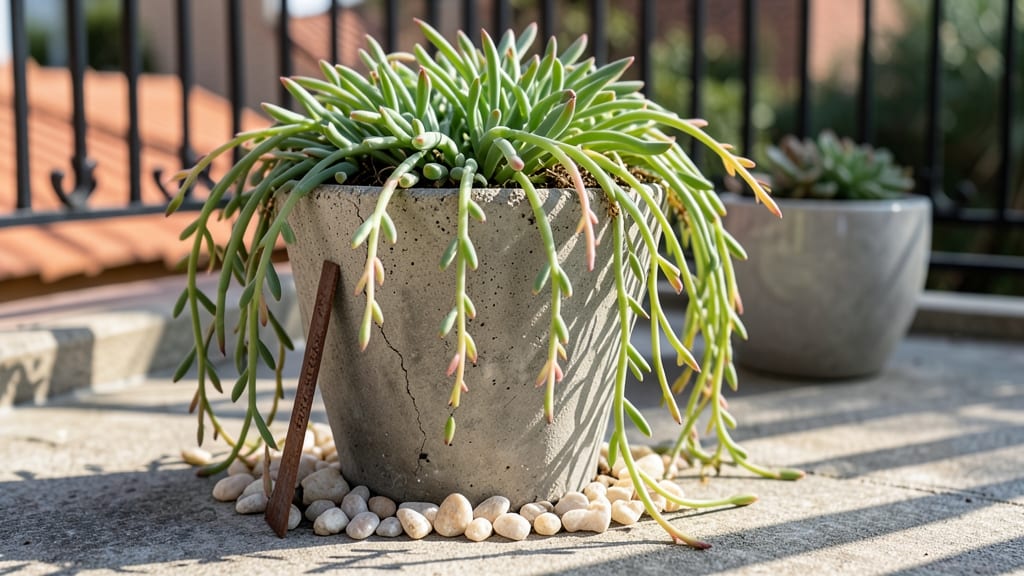
Cement garden pots provide exceptional strength for containers holding heavy plants like succulents or herbs, but achieving the right mix—usually 1 part Portland cement to 2-3 parts sand—is crucial to avoid cracking. Their substantial weight also helps anchor tall plants against wind.
Cement garden pots stand out because they resist weathering far better than plastic or terracotta. The dense, mineral-rich composition holds up against UV rays, temperature swings, and even root pressure over time. 🔥 Unlike lightweight plastic, cement pots maintain consistent moisture levels without warping, making them ideal for drought-resistant plants.
Plus, their weight acts as a natural anchor—critical for Mediterranean herbs or tall ornamental grasses in breezy climates.
For DIY projects, the cement-to-sand ratio determines both strength and drainage. A 1:2 mix works for lightweight pots, while a 1:3 ratio suits heavy-duty planters. Adding fiber mesh during mixing reduces cracking risks, and proper curing (keeping pots damp for 3-5 days) ensures long-term durability.
I’ve found that pre-mixing small batches in a wheelbarrow makes blending easier—just avoid overworking the cement to prevent air pockets.
💡 In This Article
- Why Cement Garden Pots Last Longer Than Plastic or Terracotta
- DIY Cement Mixing Ratios for Different Plant Types
Why cement garden pots last longer than plastic or terracotta
Cement's durability comes from its mineral composition—primarily calcium silicates and aluminates—that forms a dense, crystalline structure when mixed with water. This structure resists UV degradation far better than plastic, which yellows and becomes brittle over 3-5 years under sunlight.
The compressive strength of cured cement (around 3,000-5,000 psi) also handles root pressure from aggressive plants like succulents or roses without cracking, unlike terracotta which can shatter when roots expand against its porous walls.
The weight of cement pots—typically 10-20 lbs for a 12-inch diameter container—acts as a natural windbreak, stabilizing plants like tall ornamental grasses or lavender bushes that might topple in plastic pots. This stability is especially critical in coastal areas where salt spray accelerates plastic degradation.
Cement’s thermal mass also helps regulate soil temperature swings, keeping roots in 65-75°F range even when external temps fluctuate between 90°F days and 40°F nights.
Moisture retention differs dramatically too. Plastic pots dry out 30-50% faster due to their smooth surfaces, while cement’s rough texture creates microcapillaries that hold water near roots. Terracotta absorbs water but loses it quickly, requiring daily checks for plants like herbs or vegetables.
Cement’s balance makes it ideal for Mediterranean plants that need occasional watering but hate soggy roots—a perfect middle ground between plastic’s evaporation and terracotta’s thirst.
Freeze-thaw cycles reveal cement’s advantage. While plastic pots can crack at -10°F and terracotta absorbs water that freezes and expands, cement’s low porosity (typically 10-15%) prevents ice formation within the material.
This makes cement pots the only viable option for four-season gardens in Zone 5-7 climates, where winter dieback is a risk for other materials.
Consider this comparison: A 14-inch cement pot will last 15-20 years with proper curing, while a similar plastic pot may degrade in 5 years from UV exposure alone. The tradeoff? Cement’s weight requires sturdy surfaces—place them on paver bases or wooden stands to prevent soil erosion at the base.
For visual contrast, imagine a rosemary bush in a lightweight plastic pot: it sways dramatically in a breeze, while the same plant in cement stays firmly planted. The difference isn’t just aesthetic—it’s about root stability and long-term growth. 🌱