
Fertilization
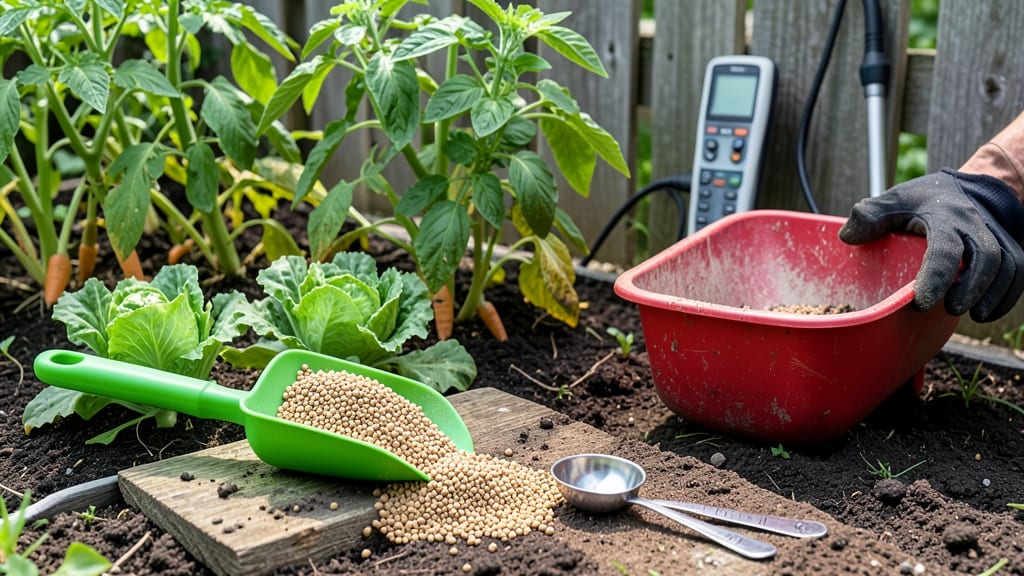
Figuring out how much fertilizer for garden requires balancing soil type, plant requirements, and seasonal growth phases. Begin with 1 pound of balanced (10-10-10) fertilizer per 100 square feet, while sandy soils need more frequent applications and clay soils less, always following plant-specific recommendations.
Soil type dramatically changes how your garden absorbs nutrients—sandy soils drain quickly, so you'll need to apply fertilizer every 4-6 weeks during growing seasons, while clay holds moisture longer and may only need feeding every 6-8 weeks. 🌱 Organic fertilizers like compost break down slower, making them ideal for clay, while synthetic granules work better for sandy beds.
Always test your soil first to avoid overloading plants with excess nutrients, which can harm roots and stunt growth.
Most gardeners make the mistake of using a one-size-fits-all approach, but vegetables like tomatoes thrive with 2 pounds per 100 square feet every 3-4 weeks, while flowering plants often need half that amount. Spring feeding kickstarts growth, while summer applications support blooming and fruiting—just avoid fertilizing when plants are stressed by heat or drought.
Pay attention to leaf color: dark green means it's time to feed, while yellowing suggests you've overdone it.
💡 In This Article
- Soil Type and Fertilizer Application Ratios
- Plant-Specific Fertilizer Dosages and Scheduling
Soil type and fertilizer application ratios
Your garden's soil acts like a sponge—some types soak up nutrients quickly, while others hold onto them for months.
Sandy soils, with their coarse particles, drain water and nutrients rapidly, which is why they need more frequent but lighter applications—think of it like watering a potted plant versus a clay pot.
For sandy beds, spread 1.5 pounds of 10-10-10 fertilizer per 100 square feet every 4-6 weeks during growing seasons, as nutrients wash away faster.
In contrast, clay soils compact tightly, trapping moisture and nutrients, so you can apply half the amount every 6-8 weeks—about 0.5 pounds per 100 square feet—because the nutrients linger longer.
The choice between organic and synthetic fertilizers also depends on soil type. Organic options like composted manure or bone meal break down slowly, making them perfect for clay soils where nutrients need time to release.
Synthetic granules, however, dissolve quickly—ideal for sandy soils where nutrients disappear fast. 🌱 For loamy soils (the happy medium with balanced drainage), a 1-pound application every 5-7 weeks of either type works well. The key is matching the fertilizer's release rate to your soil's natural retention capacity.
Here's what happens when you get it wrong: Over-fertilizing sandy soil leads to nutrient runoff (wasting fertilizer and polluting water), while under-fertilizing clay soil starves plants of essential minerals. Test your soil's pH first—most plants prefer 6.0-7.0—because extreme acidity or alkalinity locks nutrients out of reach.
For example, phosphorus (the "P" in 10-10-10) binds tightly to clay particles at high pH, making it unavailable to plants, which is why clay gardens often need phosphorus-specific amendments like rock phosphate.
Visual clues help adjust your approach. Sandy soil gardens show yellowing leaves with green veins (iron deficiency) because nutrients wash away, while clay soil gardens may develop purple stems (phosphorus deficiency) as plants struggle to access trapped nutrients.
Amend sandy soil with 2-3 inches of compost annually to improve water retention, and mix sand or perlite into clay soil to prevent compaction. These adjustments create a more consistent environment for your plants to thrive.
Seasonal timing matters too. In spring, when roots are establishing, focus on nitrogen (N) to build leafy growth. For sandy soils, use a higher-nitrogen fertilizer (like 12-4-8) every 3 weeks, while clay soils benefit from a balanced formula every 4 weeks.
Summer calls for potassium (K) to support flowering and fruiting—switch to a 5-10-15 ratio for both soil types, but halve the application rate for clay. The goal is to mimic nature's slow nutrient release while preventing waste.
Don't forget about micronutrients! Sandy soils often lack iron and manganese, so add chelated micronutrient sprays every 6-8 weeks during peak growth. Clay soils typically have enough micronutrients but may suffer from zinc deficiency—sprinkle zinc sulfate granules lightly around plants in early spring.
These targeted boosts ensure your garden gets the full spectrum of nutrients it needs, regardless of soil type. 💫