
Tools
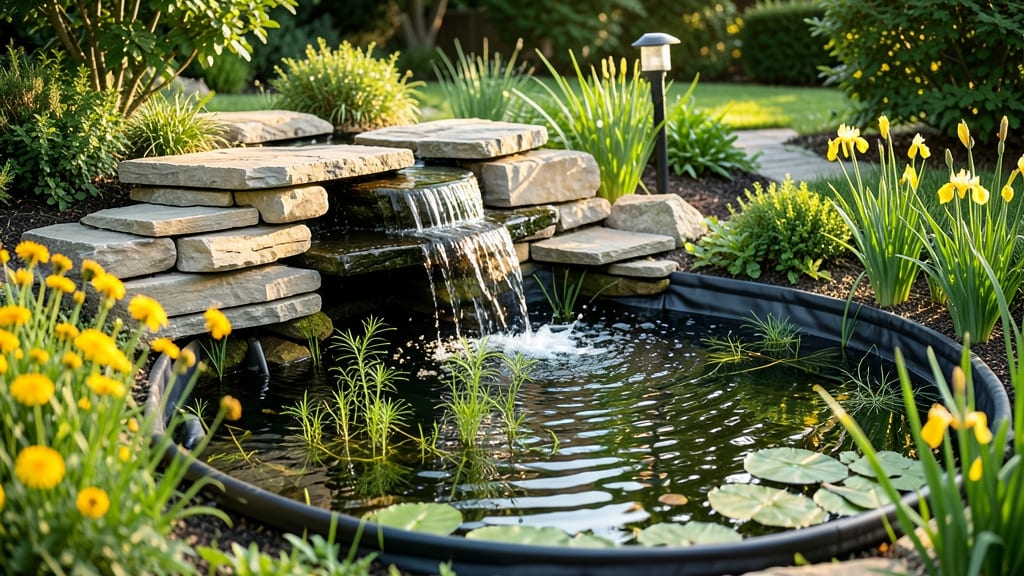
A garden pond waterfall requires careful planning: start with a natural slope or constructed incline, then arrange rocks in cascading layers to direct water flow naturally while preventing erosion. Install a pump to maintain circulation, and incorporate aquatic plants to enhance both the ecosystem and visual appeal.
A well-designed garden pond waterfall transforms your backyard into a serene oasis by combining functionality with natural beauty.
The key is creating a gradual slope—whether using existing terrain or building one—that allows water to flow smoothly without pooling or eroding. 🌊 Rocks play a crucial role here: larger, flat stones at the base provide stability, while smaller, irregularly shaped ones in the middle create natural tiers.
As for plants, they’re not just decorative—they prevent soil erosion and filter water naturally, making your setup both sustainable and low-maintenance.
One common mistake is rushing the rock placement—water pressure can shift them over time, so securing them with landscape adhesive or underlayment is often necessary. The pump you choose should match the pond’s size and waterfall height, as an undersized unit will struggle to maintain flow.
I’ve found that adding a small skimmer at the top of the waterfall helps keep debris out of the pond, reducing maintenance down the line.
💡 In This Article
- How to Design a Natural Flow Waterfall for Garden Ponds
- Choosing Plants and Materials for a Balanced Waterfall Feature
How to design a natural flow waterfall for garden ponds
The secret to a smooth-flowing waterfall lies in the gradient angle—ideally between 15-30 degrees—which balances water speed and erosion control. Too steep (35°+) causes fast, turbulent flow that wears away soil, while too shallow (10°) creates weak water movement and algae buildup.
Think of it like a natural riverbank: the gentle curve of a meandering stream prevents erosion while maintaining steady flow.
Rock selection is where the magic happens. Start with a base layer of large, flat stones (like granite or slate) to create a stable foundation—these should be at least 6-12 inches thick and buried half their depth in the slope.
For the cascading layers, use irregularly shaped rocks (basalt or limestone work well) with varying textures to mimic natural erosion patterns. The key technique is the "staggered placement" method: position each rock so its weight distributes water flow to the next layer below, creating a seamless water path.
Pump selection often gets overlooked, but it's critical for both aesthetics and function. A submersible pump (like a 2000-4000 GPH model) works best for most garden ponds, as it sits below water level and avoids the need for unsightly above-ground plumbing.
For waterfalls over 2 feet high, you'll need a pump with sufficient head pressure (measured in feet) to overcome gravity. Pro tip: Add a small pre-filter to your pump intake to prevent debris from clogging the system—this saves hours of maintenance later.
Water movement creates its own ecosystem dynamics. The aeration from falling water increases oxygen levels, which is vital for fish health if you plan to add them later. However, too much turbulence can disrupt the pond's stratification (the natural layering of warm and cold water).
To balance this, design your waterfall with gentle curves rather than straight drops—this mimics nature's approach and reduces erosion while maintaining a tranquil sound.
Don't forget about the waterfall's edge. The point where water enters the pond should be 1-2 inches below the water surface to create a natural spillway effect. This prevents unsightly splashing and helps maintain water clarity.
For extra visual appeal, consider adding a small ledge or shelf where water can collect briefly before flowing into the pond—this creates a beautiful, glass-like effect as the water cascades down.
One common mistake is treating the waterfall as an afterthought. The best designs integrate it seamlessly with the pond's ecosystem by creating a natural circulation loop.
When planned properly, your waterfall won't just look beautiful—it'll become the heart of your pond's filtration system, with plants growing at its base helping to naturally filter water before it re-enters the pond.