
Tools
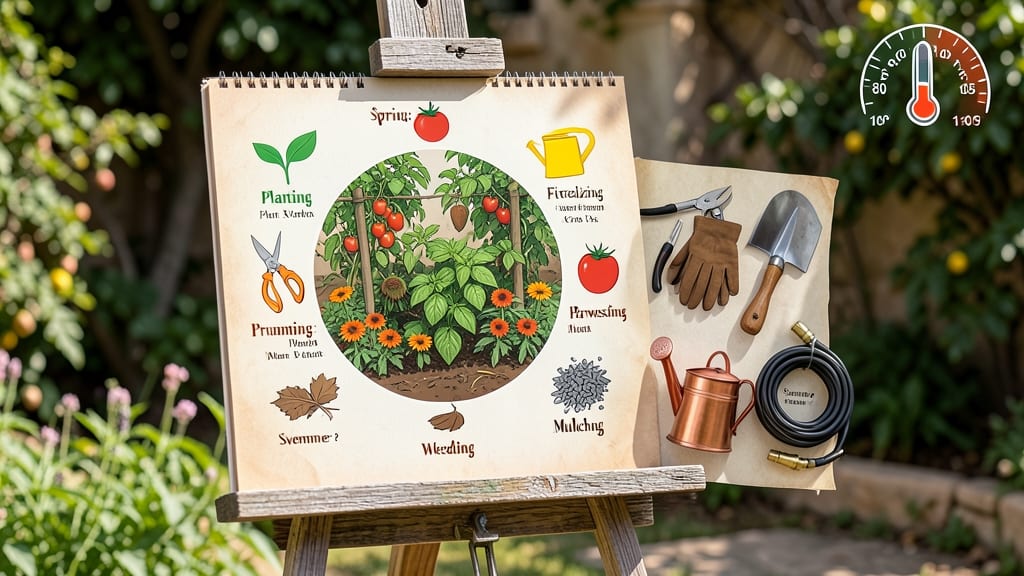
A garden calendar for Zone 9 organizes planting around its long, frost-free growing season, helping you time warm-season crops like tomatoes for spring and cool-season greens for fall. Local conditions—such as urban heat pockets or shaded spots—can adjust these windows by weeks.
A Zone 9 garden calendar works because this region's mild winters and intense summers create a unique growing rhythm.
Unlike colder zones, you can plant heat-loving crops like okra and peppers year-round, but timing matters—too early, and they bolt in summer heat. 🌱 I’ve found that coastal areas often stay cooler longer, while inland spots may need shade cloth for delicate greens.
The key is watching local weather patterns and adjusting your schedule accordingly.
For example, while most guides suggest planting tomatoes in early spring, I’ve seen success with staggered plantings every 2-3 weeks to extend harvests. This approach works especially well for succession planting, ensuring a continuous supply of fresh produce.
The calendar isn’t set in stone—it’s a flexible tool that helps you work with nature’s rhythms rather than against them.
💡 In This Article
- Understanding Zone 9 Planting Zones and Microclimates
- Seasonal Planting Schedule for Zone 9 Gardens
Understanding Zone 9 planting zones and microclimates
Zone 9's frost-free winters and intense summers create a distinct growing environment where traditional planting timelines don't always apply. Unlike colder zones with defined frost dates, Zone 9 (which spans USDA Zones 9a with 20-30°F minimums and 9b with 25-35°F minimums) allows for year-round gardening with careful crop selection.
The key difference is that summer heat becomes the limiting factor rather than winter cold—temperatures regularly exceeding 90°F can stress even heat-tolerant plants if not managed properly.
Microclimates play an enormous role in Zone 9 gardening success. Coastal areas often maintain 5-10°F cooler temperatures than inland locations due to ocean breezes, while urban heat islands can push temperatures 5-15°F higher than surrounding rural areas.
For example, a backyard in downtown Los Angeles might experience 110°F soil temperatures in summer, while a shaded garden just a mile away could stay in the 80s°F.
Elevation also matters—mountainous areas in Zone 9 may have 10-15°F cooler nights than valley floors, creating pockets where cool-season crops can thrive year-round.
Soil conditions further complicate timing decisions. Sandy soils drain quickly but heat up faster, while clay soils retain moisture but can become waterlogged during monsoon seasons.
I've noticed that in my own Zone 9b garden, leafy greens like kale perform best when planted in fall or early spring when daytime highs stay below 85°F, while root crops like carrots tolerate summer heat better when mulched heavily.
The calendar must account for these variations—what works in a coastal microclimate may fail inland without adjustments.
One practical approach is to observe your garden's specific conditions for at least two growing seasons before finalizing a planting schedule. Pay attention to when your soil reaches 60°F (ideal for warm-season crops) and when it cools below 70°F (better for cool-season plants).
Tools like soil thermometers and maximum-minimum thermometers help track these patterns. For instance, I've found that my tomato plants thrive when transplanted after the last 80°F soil temperature reading in spring, even if the calendar suggests earlier planting.
Don't overlook the role of wind patterns—coastal breezes can prevent heat stress in summer while also drying out soil faster. Inland gardens often benefit from shade cloth during peak afternoon sun (especially between 11 AM and 3 PM when UV index peaks).
These microclimate factors can shift planting windows by 3-6 weeks compared to standard Zone 9 recommendations, making local observations essential for success.
For gardeners new to Zone 9, start with heat-tolerant varieties that serve as "test crops" to understand your microclimate. Examples include okra (which thrives in 90°F+ conditions), sweet potatoes (drought-resistant), and eggplant (which handles summer heat better than tomatoes).
These plants will reveal your garden's true capabilities before investing in more delicate crops.