
Planting
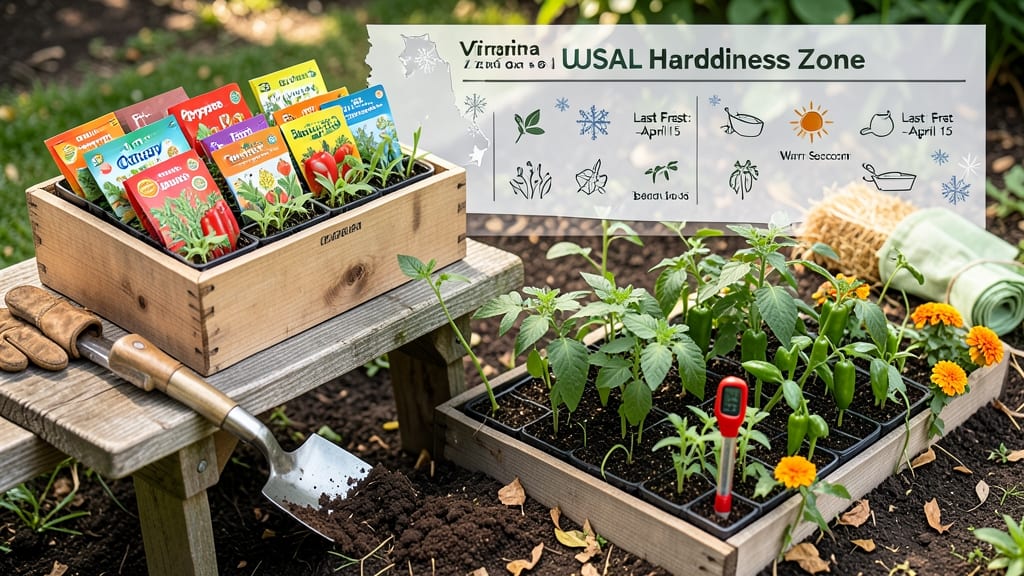
To plant a vegetable garden in Virginia, time your crops between mid-March and early November—but the exact window depends on whether you’re growing cool-season greens or heat-loving tomatoes.
Virginia gardeners know timing is everything—plant too early and frost will wipe out your crops, too late and you’ll miss peak harvests. With Zone 7a/7b’s unpredictable frost dates, knowing exactly when to plant can mean the difference between a thriving garden and a disappointing one.
Cool-season crops like lettuce and peas thrive when soil temps hit 40°F, while warm-season favorites such as peppers and cucumbers need to wait until after the last frost—usually mid-April in the Piedmont or even later in the mountains.
Coastal areas like Norfolk can start earlier, but a single late freeze can set you back weeks.
Below, I break down the best planting windows for Virginia’s three major regions, when to prep your soil, and how to stretch your harvest with succession planting—so you’re never left wondering why your garden isn’t delivering.
Virginia’s Zone 7a/7b frost dates & critical planting windows by month
Virginia’s Zone 7a/7b climate offers a 180-day frost-free growing season, but frost dates vary by region. The last spring frost typically arrives between March 15–April 15, while the first fall frost hits around November 1–15.
These dates determine whether your cool-season crops like lettuce or warm-season crops like tomatoes will thrive—or fail.
For Zone 7a (colder areas like Roanoke), expect earlier frosts than Zone 7b (warmer regions like Richmond). My garden in Zone 7b gets a 10-day longer growing season, which means I can squeeze in extra late-summer plantings of beans or fall kale.
Understanding these nuances helps avoid wasted seeds and lost harvests.
🌱 Key Rule: Plant cool-season crops 4–6 weeks before the last frost, and warm-season crops 2–3 weeks after. Use row covers to extend early/late seasons if needed. For example, spinach can handle light frosts, while tomatoes need warm soil to germinate.
My Zone 7b garden in Richmond thrives with early March plantings of peas and spinach, followed by tomatoes and peppers after April 15. The August–September window is perfect for fall broccoli
Best vegetables to plant in Virginia’s spring vs. fall seasons (with exact timing)
Virginia’s spring and fall seasons offer perfect windows for growing cool-season vegetables that thrive in milder temperatures. Unlike summer’s heat-loving crops, these plants tolerate light frosts and even prefer cooler weather.
My top picks for spring include leafy greens, root vegetables, and cool-hardy brassicas, all of which mature quickly before summer’s heat sets in.
For fall planting, the key is timing—start seeds indoors in July or transplant seedlings in August to ensure harvests before the first frost. Crops like kale and carrots actually sweeten when exposed to light frosts, making fall one of the best times to grow them.
But avoid planting warm-season crops like peppers or tomatoes in fall—they simply won’t mature in time.
🌱 Virginia’s Best Spring vs. Fall Vegetables (With Exact Timing)
- 🌱 Spring (March–May): Plant cool-season crops 4–6 weeks before last frost (avg. March 15 in Zone 7a). Top picks:
- Lettuce & Spinach (March 1–April 15)
- Peas & Radishes (March 15–April 30)
- Broccoli & Cabbage (March 15–April 1)
- Carrots & Beets (April 1–May 15)
- 🍂 Fall (August–October): Start seeds indoors in July or transplant by August 15 for harvests before first frost (avg. November 1). Top picks:
- Kale & Swiss Chard (August 1–September 15)
- Turnips & Radishes (August 15–September 1)
- Spinach & Arugula (September 1–October 15)
- Garlic & Onions (October 1–November 1)
- ⚠️ Avoid in Fall: Tomatoes, Peppers, Cucumbers—they need 90+ frost-free days and won’t mature in Virginia’s short fall season.
- 🔄 Succession Planting Tip: For continuous harvests, sow lettuce, radishes, or bush beans every 2 weeks in spring/fall.
One of my favorite spring crops is bush beans, which I plant in late April after the soil warms to 60°F. They mature in just 50–60 days, giving me a quick harvest before the heat peaks.
In fall, I prioritize kale—it’s frost-tolerant and keeps producing until winter. For succession planting, I’ll sow radishes every 2 weeks in spring to ensure a steady supply.
If you’re new to fall gardening, start small with easy-to-grow crops like arugula or turnips. These handle cooler temps well and mature quickly. Pro tip: Use row covers in late fall to extend your harvest window by 2–3 weeks.
Just avoid planting anything that needs warm soil, like squash or melons, after July—they’ll languish in Virginia’s cooler fall nights.
For maximum yield, pair fast-maturing crops (like radishes) with slower growers (like broccoli) in spring. In fall, focus on hardy greens that sweeten with frost, such as collard greens.
And remember: soil prep is key—amend beds with compost in early spring and fall to give your plants a nutrient boost when they need it most.
🌱 Whether you’re sowing spring seeds or prepping for fall harvests, Virginia’s climate rewards gardeners who plan ahead. With these exact timing tips, you’ll avoid the pitfalls of frost damage or bolting greens and enjoy a bountiful garden from spring to fall.