
Blooming
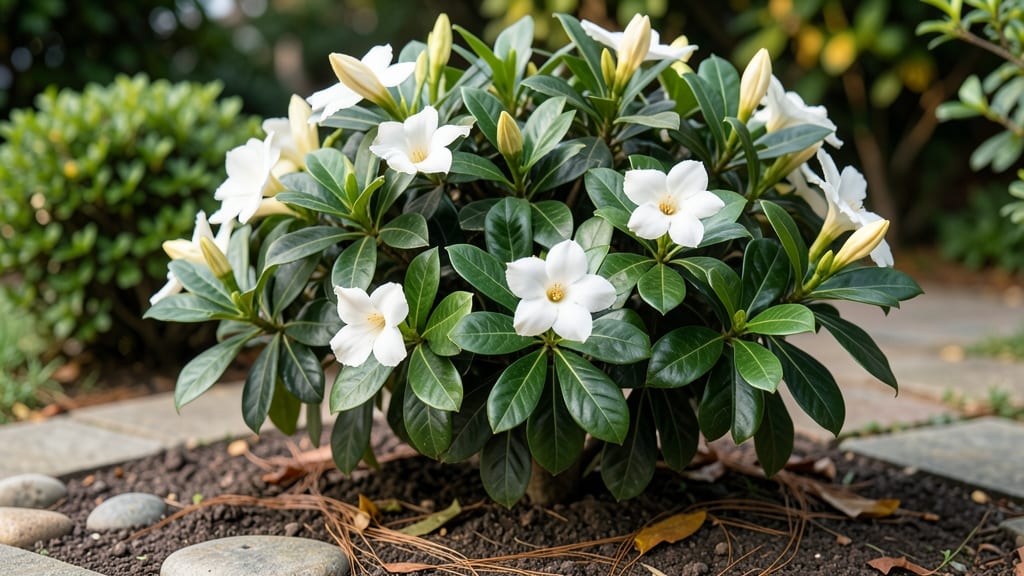
Gardenias don't bloom all summer naturally—their main flowering window is late spring to early summer, though some varieties may produce occasional blooms into fall when given ideal conditions and attentive care.
Gardenias are tropical plants with a natural seasonal rhythm that responds to environmental cues.
Their peak bloom time aligns with warmer temperatures and longer daylight hours, typically between May and July in most climates. 🌸 What's fascinating is how these plants use temperature shifts as a signal—cooler evenings after hot days actually trigger bud formation.
Varieties like 'Kleim's Hardy' or 'Radicans' might reward you with a few late-season blooms if you maintain consistent moisture and avoid sudden temperature swings.
While you can't force continuous blooming, creating optimal conditions can extend their flowering period. The key is mimicking their natural environment—think 60-70% humidity, partial shade, and regular feeding with acidic fertilizer during their active growing season.
I've found that gardenias respond beautifully to a light trim after their main bloom cycle, which encourages new growth that might produce secondary flowers.
💡 In This Article
- Gardenia Blooming Seasons and Environmental Triggers
- Extending Gardenia Bloom Time with Care Techniques
Gardenia blooming seasons and environmental triggers
Gardenias follow a strict botanical schedule tied to their tropical origins, where flowering is triggered by specific environmental cues. The most critical factor is temperature—they require daytime highs between 70-85°F but need cooler nights (60-68°F) to stimulate bud formation.
This temperature differential mimics their natural seasonal shifts, where the contrast between warm days and cooler evenings signals the plant to produce flowers. Without this pattern, gardenias may produce fewer blooms or none at all.
The length of daylight also plays a crucial role. Gardenias are short-day plants, meaning they respond to decreasing daylight hours as summer progresses. When daylight drops below 12-14 hours, it triggers the hormonal changes that lead to bud development.
This explains why their peak bloom occurs in late spring to early summer—when days are long but beginning to shorten. In regions with extended summer daylight (like the southern U.S.), gardenias may experience a delayed or reduced bloom cycle because the natural daylight decline happens later in the season.
Humidity levels are equally important, as gardenias originate from tropical and subtropical regions where air moisture hovers around 60-70%. Low humidity causes buds to drop before opening, while high humidity prevents fungal issues that can stress the plant.
The combination of proper temperature, daylight, and humidity creates the ideal conditions for bud formation. For example, gardenias grown in dry climates (like Arizona) may produce fewer blooms unless you invest in a humidifier or misting system during their active growth phase.
Another fascinating aspect is how gardenias use their leaves to regulate these processes. The thick, waxy leaves help conserve moisture while the plant's root system absorbs nutrients efficiently during warm months.
When temperatures rise above 90°F consistently, the plant may go into a semi-dormant state, halting flower production until conditions improve. This is why gardenias in hot climates often bloom best in spring and fall rather than throughout summer.
Light exposure matters too, though not in the way you might expect. Gardenias thrive in partial shade—typically 4-6 hours of morning sun followed by afternoon shade. Too much direct sunlight can scorch the leaves and stress the plant, while too little light reduces energy production for flowering.
The balance is delicate: think of it like a Goldilocks scenario where every factor must be "just right" for optimal blooming.
What most gardeners don't realize is how sensitive gardenias are to sudden environmental changes. A sharp drop in temperature or a sudden increase in wind can cause buds to abort. This is why gardenias in coastal areas often bloom more reliably—the consistent maritime climate provides stable conditions.
In contrast, inland gardeners may need to take extra precautions like using frost cloths or moving potted plants to sheltered locations during temperature swings.
Understanding these triggers helps explain why gardenias don't bloom continuously—they're following an ancient biological rhythm designed for their native tropical environments.
While you can't force them to bloom all summer, creating the right conditions can extend their flowering window and ensure you enjoy their intoxicating fragrance for as long as possible. 🌿