
Landscaping
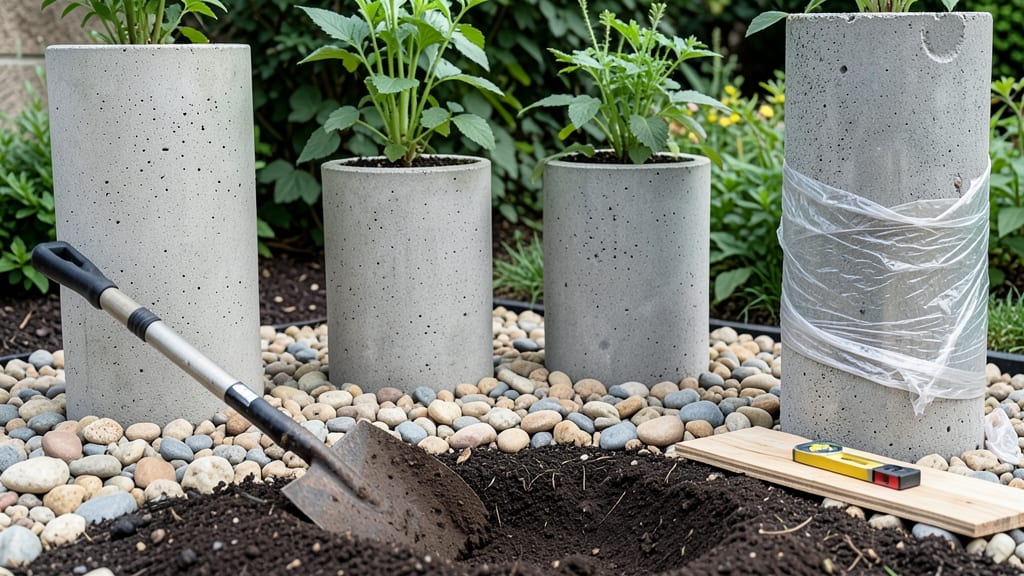
Garden concrete pillars provide sturdy support for structures like trellises and pergolas while adding visual appeal and lasting durability against weather, pests, and decay. Opt for reinforced pre-cast designs or DIY forms with proper curing for maximum strength.
These versatile supports aren't just functional—they elevate your garden's aesthetic while handling heavy loads like climbing roses or decorative vines. 🌿 I've seen them transform ordinary spaces into grand entryways or cozy seating areas, all while standing up to years of exposure.
The key to their longevity lies in proper reinforcement and curing; even DIY versions can rival professional-grade pillars when mixed correctly with 4,000 psi concrete and cured for at least 7 days.
For maximum stability, consider 12-inch diameter pillars with 3-inch thick walls—this balance gives you strength without overwhelming your landscape. The wider base (typically 16 inches) distributes weight better, preventing sinking over time.
Whether you're supporting a 10-foot trellis or creating a decorative border, concrete pillars deliver both beauty and practicality that other materials simply can't match.
💡 In This Article
- How to Choose Durable Concrete Pillars for Outdoor Use
- DIY Concrete Garden Pillars: Step-by-Step Mixing and Installation
How to choose durable concrete pillars for outdoor use
Durability in garden pillars starts with the concrete mix itself. High-quality concrete for outdoor use typically contains 4,000 psi (pounds per square inch) strength, achieved by mixing 1 part cement, 2.5 parts sand, and 3 parts gravel with water.
The gravel provides internal structure, while the sand fills gaps—this ratio creates a dense matrix that resists cracking from freeze-thaw cycles. Additives like air-entraining agents (about 0.05% by weight) introduce microscopic air bubbles that expand when frozen, preventing internal pressure buildup that causes spalling.
The reinforcement is where pre-cast pillars outperform DIY versions. Factory-made pillars often include #4 rebar or wire mesh embedded during casting, creating a steel-concrete composite that handles 1,500+ pounds of vertical load per pillar.
For DIY projects, use ½-inch rebar vertically with horizontal ties every 12 inches—this mimics structural engineering practices for small-scale applications. The base width matters too: a 16-inch diameter base spreads weight over 200+ square inches, reducing soil pressure by 60% compared to narrow supports. 🏗️
Design choices affect both function and aesthetics. Tall pillars (8 feet or taller) need 3-inch thick walls to prevent bending, while shorter decorative posts can use 2-inch walls.
The curing process is equally critical—properly cured concrete develops 80% of its strength in 7 days and full strength in 28 days. Mist pillars with water 2-3 times daily for the first week to prevent surface drying, which creates weak layers prone to erosion.
For extra protection, apply a silicone-based sealer after curing to repel moisture and UV rays.
Material composition also determines resistance to environmental stressors. Concrete with 5% fly ash (a byproduct of coal combustion) improves durability by 20% compared to standard mixes, while slag cement enhances resistance to sulfate attacks from soil.
For coastal gardens, use corrosion-inhibiting admixtures to protect embedded steel from salt exposure. The texture matters too—smooth finishes look elegant but show stains more easily, while exposed aggregate surfaces hide dirt while adding visual interest. 🌊
Consider the specific load requirements for your design. A 10-foot trellis with climbing roses can exert 50-100 pounds of lateral force during wind, requiring pillars spaced 6-8 feet apart with 3-foot deep footings.
For decorative purposes, lighter designs with 6-inch diameter pillars work well, but they'll need 2-foot footings to prevent toppling. Always check local building codes—some areas require permits for structures over 6 feet tall or bearing 200+ pounds.
Pre-cast pillars offer convenience but cost $15-$30 per foot installed, while DIY versions run $5-$10 per foot in materials. The trade-off? Factory pillars come with 10-25 year warranties, while DIY projects depend entirely on your mixing and curing precision.
For maximum longevity, combine high-slump concrete (for better workability) with fiber mesh reinforcement—this hybrid approach gives you professional-level strength without the price tag. 💰