
Tools
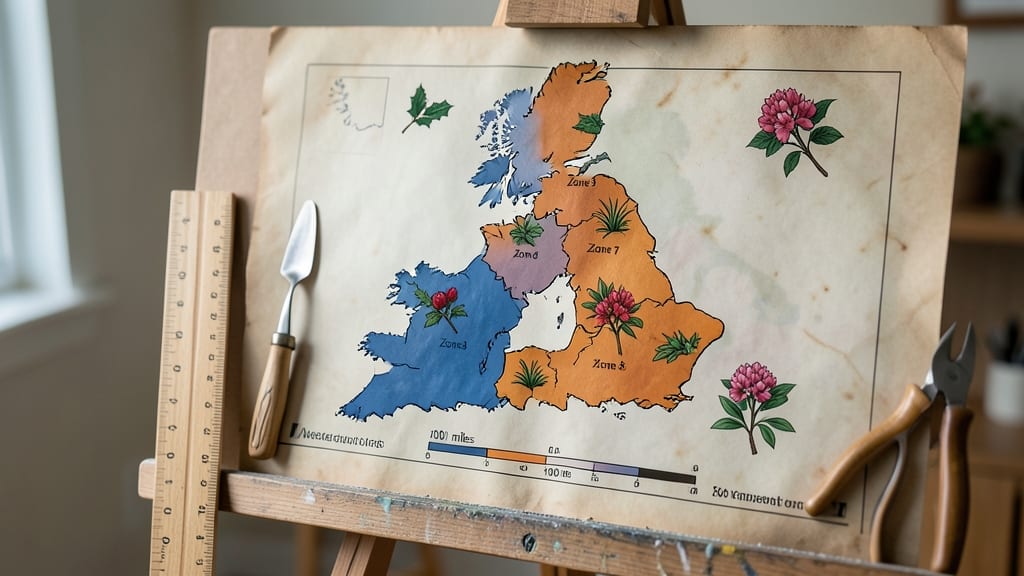
UK garden zones classify planting areas by frost risk and climate, helping gardeners choose cold-hardy plants for their region. The UK uses a 1-10 scale (10 being mildest) to match plants to local winter conditions, with maps available from the Royal Horticultural Society (RHS).
Understanding your UK garden zone is like having a climate report for your plot. 🌱 The RHS divides the country into 10 zones based on average winter temperatures, with zone 1 (coldest, like the Scottish Highlands) facing harsher freezes than zone 10 (mildest, such as Cornwall).
This system helps you avoid planting tender species like bougainvillea in zone 3 or citrus trees in zone 5—both would freeze without protection. The maps even account for coastal vs. inland microclimates, where sea breezes can raise temperatures by several degrees.
For practical use, I recommend starting with the RHS's interactive postcode tool to pinpoint your exact zone. Once you know your number, you can select plants that thrive in your conditions—like hardy heathers for zone 1 or Mediterranean lavender for zone 8.
Many gardeners also adjust for local variations, such as planting frost-sensitive species against south-facing walls or in sheltered borders.
💡 In This Article
- How UK Garden Zones Determine Plant Survival
- Using UK Garden Zone Maps for Smart Planting
How UK garden zones determine plant survival
The UK's garden zone system is built on average minimum winter temperatures, measured over decades to account for long-term climate patterns. Zone 1 (like the Scottish Highlands) experiences average winter lows of -5°C to -2.5°C, while zone 10 (Cornwall and coastal areas) rarely drops below 2.5°C to 5°C
This 2.5°C difference per zone may seem small, but it dramatically affects which plants survive—just like how 10°C separates hardy citrus from tender ferns. The Royal Horticultural Society (RHS) calculates zones using 30-year temperature averages from the UK Met Office, combined with historical frost data. They analyze last frost dates in spring and first frost dates in autumn, critical for timing plantings. For example, zone 1 might see 120 frost days per year, while zone 10 averages just 20-30. This explains why zone 1 gardens thrive with hardy evergreens like juniper, while zone 10 supports palm trees and bougainvillea without protection. What makes this system unique is how it accounts for microclimates—local variations that can shift zones by 1-2 levels. A north-facing slope in zone 5 might behave like zone 4, while a sheltered urban garden could mirror zone 6. This is why the RHS maps show gradual transitions rather than sharp boundaries. For instance, Edinburgh (zone 3) can grow holly bushes that would struggle in nearby zone 2 Glasgow due to urban heat islands. Plant survival hinges on cold tolerance, measured by hardiness ratings (e.g., H7 for -15°C to -10°C). A zone 1 plant must survive H7 or colder, while zone 10 species often top out at H5 (-10°C to -5°C). This is why zone 5 gardeners can grow apple trees (H6) but must protect figs (H5) in winter. The RHS even tests plants in controlled frost chambers to refine these ratings. Here’s how the zones break down in practice: The science behind this is plant cell freezing. When temperatures drop below -5°C, water in plant cells crystallizes, rupturing membranes. Hardy plants produce antifreeze proteins that lower their freezing point, while tender species lack this adaptation. 🌿 This is why zone 10 plants wilt in zone 3 freezes—their cells simply can’t handle the stress.