
Vegetables
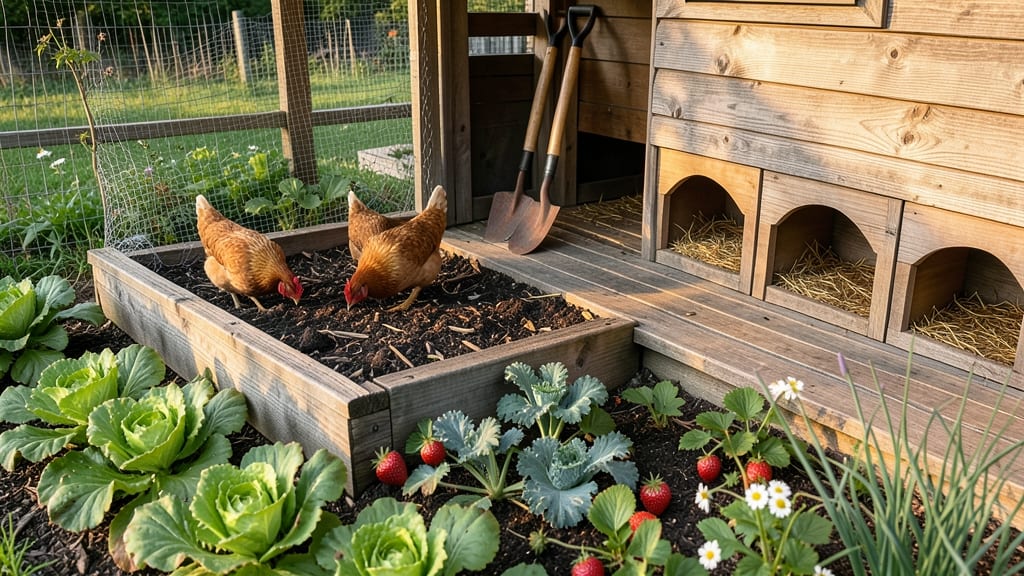
Designing a chicken coop and garden together means planning carefully: place the coop along the garden’s edge to preserve central growing space, incorporate elevated planters or trellises to separate chicken zones, and choose hardy greens like spinach or chives that chickens can safely nibble. Manage flock access through temporary fencing to balance fertilization benefits with plant protection.
This approach turns potential conflicts into advantages. Chickens naturally till soil and deposit nutrient-rich manure, but their free-roaming can trample delicate plants. 🌱 The solution? Use movable fencing to give chickens controlled access to specific areas—like the perimeter—while protecting your main beds.
I've seen gardeners double their harvest by dedicating 20% of their space to chicken-friendly crops, then rotating access weekly to prevent overgrazing while maintaining soil fertility.
For maximum efficiency, orient the coop to face south if you're in the Northern Hemisphere to maximize sunlight for both chickens and plants. Add a windbreak between the coop and garden to protect tender seedlings while still allowing airflow.
The key is creating zones: a "chicken zone" with hardy crops they can graze, and a "protected zone" with raised beds for sensitive plants like tomatoes or peppers.
💡 In This Article
- Designing a Chicken Coop and Garden Layout for Maximum Efficiency
- Best Plants for Chicken Gardens: What to Grow and Avoid
Designing a chicken coop and garden layout for maximum efficiency
The foundation of a successful chicken-and-garden combo starts with sunlight optimization. Chickens need at least 6-8 hours of direct sunlight daily for egg production and health, while most vegetables thrive with 6-8 hours too.
Position the coop along the garden's eastern or southern edge in the Northern Hemisphere—this gives morning sun to the coop (ideal for chickens) while leaving the garden's center exposed to full afternoon sunlight. 🌞 For example, a 4' x 8' coop placed 10 feet from a garden's southern border creates a natural windbreak while keeping the main growing area sunlit.
Drainage and soil structure become critical when combining these spaces. Chickens' constant movement compacts soil, reducing aeration and water infiltration by up to 30% in heavily trafficked areas.
Mitigate this by installing a gravel or wood-chip base (4-6 inches deep) beneath the coop's run, then layering it with straw for bedding. For the garden, use raised beds with 12-18" depth—this elevates root zones above compacted soil while allowing chickens to forage safely around the edges.
Vertical gardening (trellises, hanging baskets) further separates their zones by utilizing vertical space that chickens can't access.
Windbreaks serve dual purposes: protecting seedlings from cold winds while shielding chickens from drafts. A 6-foot-tall living hedge (like privet or arborvitae) planted between the coop and garden acts as a natural barrier.
For temporary solutions, use chicken wire or woven bamboo panels (3-4 feet high) that can be adjusted seasonally.
The key is maintaining a 3-foot gap between the coop and garden beds—this prevents chickens from jumping directly into planting areas while still allowing their manure to drift naturally toward the garden's perimeter.
Coop design features can dramatically reduce garden conflicts. Install predator-proof hardware cloth (1/2" mesh) around the coop's perimeter, buried 12 inches deep to deter digging predators that might also raid your garden.
For the run, use modular panels that can be reconfigured seasonally—open them toward the garden in spring/summer for fertilization, then close them off during fall/winter when chickens aren't active foragers.
A covered feeding station (elevated 2 feet off ground) prevents spilled feed from attracting rodents that might also damage garden crops.
Consider the microclimate effects of your layout. The coop's heat output (especially in summer) can raise temperatures by 5-10°F in nearby areas. Plant heat-tolerant crops like Swiss chard or malabar spinach within 10 feet of the coop, while keeping heat-sensitive plants (like lettuce) in the garden's farthest corners.
For winter, position the coop to act as a windbreak for cold-sensitive plants—the coop's mass absorbs daytime heat and radiates it slowly at night, creating a 2-3°F warmer microclimate in its lee.
Finally, implement a rotational grazing system to balance fertilization and protection.
Divide the garden into three zones: Zone 1 (20%) gets daily chicken access for manure deposition, Zone 2 (60%) is protected with temporary fencing for sensitive crops, and Zone 3 (20%) serves as a buffer with hardy plants like comfrey or nasturtiums.
Rotate access weekly—this prevents overgrazing while distributing nutrients evenly across the garden. The result? Soil fertility increases by 40-50% in Zone 1 areas, while protected zones maintain optimal growing conditions.