
Plants
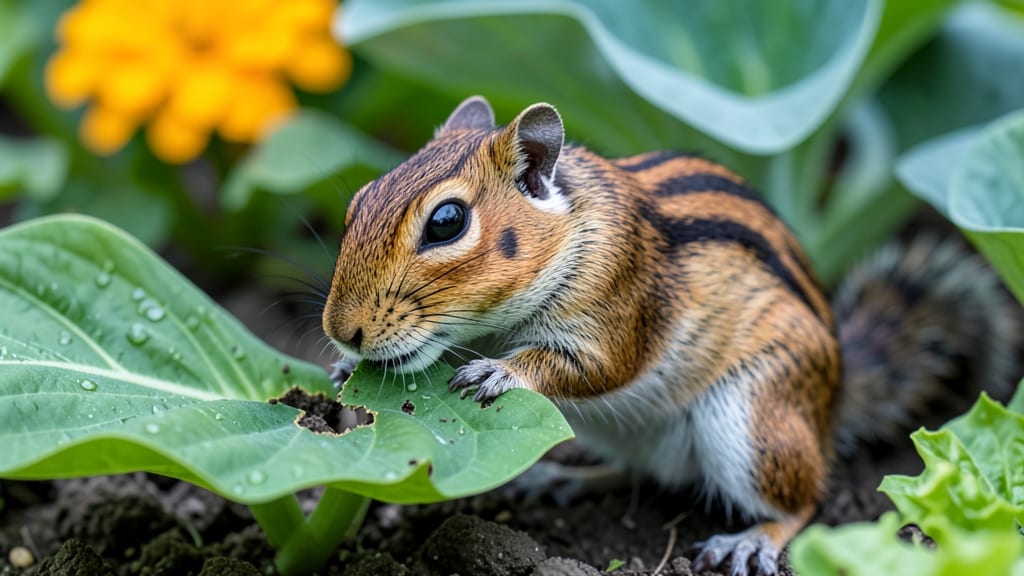
Chipmunks do eat garden plants, especially seeds, bulbs, fruits, and vegetables like lettuce, beans, and strawberries. Their tiny size lets them nibble on hidden parts of plants, often ruining seedlings and stored harvests in gardens.
These busy rodents are drawn to gardens because they're natural foragers, and your plants offer an all-you-can-eat buffet. 🌱 Chipmunks have a particular fondness for tender young shoots, ripe fruits, and seeds—basically anything easy to dig up or munch on.
Their burrowing habits mean they'll often target low-lying plants or stored vegetables in compost piles, making them a persistent garden pest when populations grow. The real damage comes from their ability to access places other critters can't, like buried bulbs or hidden seed packets.
What makes them especially tricky is their seasonal behavior. While they're active year-round in warmer climates, their feeding patterns peak in late summer and fall when natural food sources dwindle. This is when gardeners typically notice the most damage, as chipmunks turn to cultivated plants for survival.
Understanding this pattern helps explain why your carefully planted spring garden might suddenly look like a chipmunk salad bar.
💡 In This Article
- Chipmunk Diet: Why They Target Garden Plants
- Effective Chipmunk Deterrents for Garden Protection
Chipmunk diet: why they target garden plants
Chipmunks are opportunistic foragers with a diet that's about 80% plant-based when natural food sources are scarce. Their preference for garden plants stems from a combination of nutritional needs and foraging efficiency.
These tiny rodents have cheek pouches that can hold up to one ounce of food—enough to carry seeds, nuts, and even small fruits back to their burrows for later. This behavior explains why you'll often find partially buried seeds or scattered fruits near their tunnels.
Their attraction to specific crops comes down to three key factors: high moisture content, easy accessibility, and nutrient density. For example, strawberries contain 91% water and natural sugars that chipmunks find irresistible, while leafy greens like lettuce provide the hydration they need during dry periods.
The real damage occurs when chipmunks target seedlings and bulbs—their sharp incisors can slice through tender stems or excavate buried plant starts in minutes. 🌱
Seasonal patterns play a huge role in their garden raids. While chipmunks are active year-round in temperate climates, their feeding intensity peaks during late summer and fall when natural food sources decline.
This is when they become most destructive, often stripping entire rows of corn or tunneling into compost piles for stored vegetables. Their burrowing habits mean they'll dig down 6-12 inches to reach buried crops, making traditional surface-level deterrents ineffective.
What most gardeners don't realize is that chipmunks have an incredible memory for food sources. Studies show they can remember thousands of hiding spots across their territory, which is why once they find a productive garden, they'll return repeatedly.
This memory, combined with their ability to scale vertical surfaces (thanks to their 1-inch-long claws), makes them particularly adept at accessing raised beds and container gardens that other pests can't reach.
Interestingly, their diet isn't just about quantity—it's about quality. Chipmunks prefer foods with high fat and protein content during breeding season (spring/summer) and shift to carbohydrate-rich plants in fall for winter storage.
This explains why they'll target both your bean pods (protein) and squash blossoms (carbohydrates) in the same garden. Their foraging strategy is essentially a multi-course meal plan adapted to seasonal availability.
One often-overlooked factor is their social structure. Chipmunks live in colonies with complex underground networks that can span 50-100 feet, meaning a single garden might be shared by multiple foraging parties.
This communal living explains why damage appears suddenly and in clusters—what looks like one chipmunk's work is often the collective effort of an entire burrow system. 🐿️