
Plants
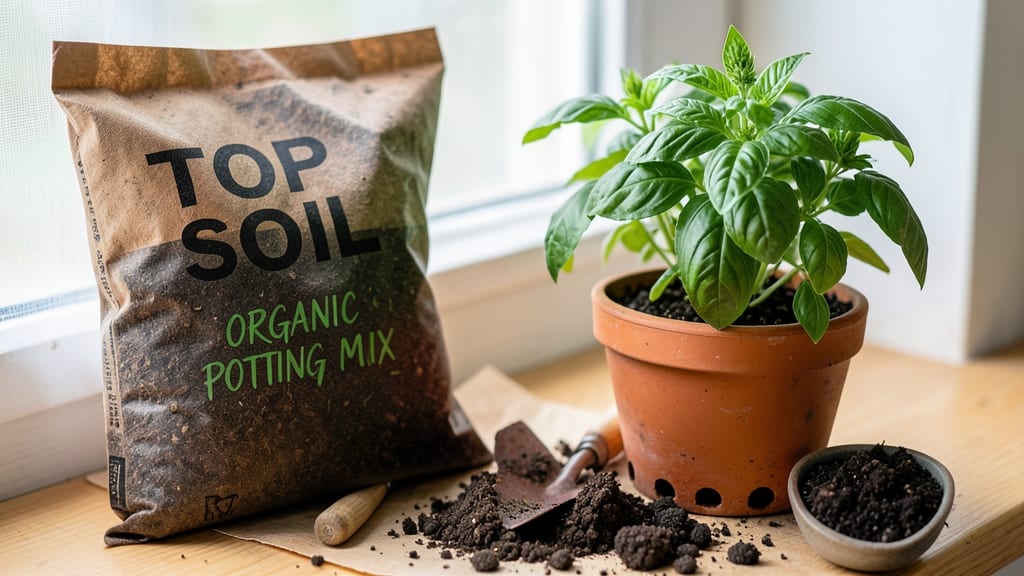
You can use garden soil for potted plants, but only after amending it with perlite, compost, and coconut coir to improve drainage and aeration while reducing compaction. Always sterilize the soil first to eliminate pests and pathogens that could harm delicate roots.
Garden soil isn't ideal for potted plants because it compacts easily, trapping moisture and cutting off oxygen to roots. 🌱 Without proper aeration, beneficial microbes struggle to thrive, and excess moisture invites fungal growth.
The nutrient balance also shifts—what works for in-ground plants often lacks the right mix of organic matter for container gardening. Even with amendments, I recommend using garden soil as only 30-50% of your potting mix to maintain the right structure.
For best results, combine garden soil with 50% perlite or vermiculite (for drainage) and 20% compost or worm castings (for nutrients). Sterilize by baking at 200°F for 30 minutes or boiling for 1 hour to kill weeds and pathogens.
This approach mimics the lightweight, well-draining nature of commercial potting mixes while keeping costs low.
💡 In This Article
- Why Garden Soil Fails in Potted Plants
- How to Transform Garden Soil into Safe Potting Mix
Why garden soil fails in potted plants
Garden soil's natural structure makes it a poor fit for potted plants because it's designed for in-ground conditions where roots can spread freely. The heavy clay or silt particles pack tightly when watered, creating a dense matrix that restricts oxygen flow to roots.
This compaction reduces porosity by up to 70% compared to ideal potting mixes, which need 30-50% air space for healthy root respiration. The result? Roots suffocate, leading to yellowing leaves and stunted growth.
Moisture retention is another critical issue. Garden soil holds water like a sponge, often staying saturated for days after watering.
This creates anaerobic zones where harmful bacteria thrive, producing foul-smelling compounds like hydrogen sulfide. 🌱 In contrast, potting mixes with perlite or coconut coir maintain 40-60% moisture content while allowing excess water to drain quickly.
The difference is dramatic—plants in unamended garden soil show 3x more root rot than those in properly aerated mixes.
Nutrient imbalances also play a role. Garden soil contains uneven distributions of organic matter, often lacking the consistent microbial activity found in compost-rich potting mixes. For example, nitrogen levels can fluctuate wildly, causing rapid leaf growth followed by sudden yellowing.
The phosphorus and potassium ratios may also be off, leading to poor flowering or fruiting. Delicate plants like ferns or orchids, which require precise nutrient ratios, suffer most from these inconsistencies.
Pest and pathogen risks are the final nail in the coffin. Garden soil often contains weed seeds, nematodes, and fungal spores that lie dormant until activated by the warm, moist conditions of a pot.
A single tablespoon of unsterilized garden soil can introduce thousands of harmful organisms, many of which thrive in the confined space of a container.
Even "healthy" looking garden soil from your yard may harbor Phytophthora (a deadly root fungus) or root-knot nematodes, which can devastate potted plants within weeks.
Consider this comparison: A typical garden soil sample has 10-20% organic matter, while premium potting mixes contain 40-60%—this extra organic content fuels beneficial microbes that break down nutrients into forms plants can absorb.
The texture difference is equally stark—garden soil feels dense and gritty, while potting mix has a light, crumbly consistency that mimics forest floor humus, perfect for root systems to explore.