
Tools
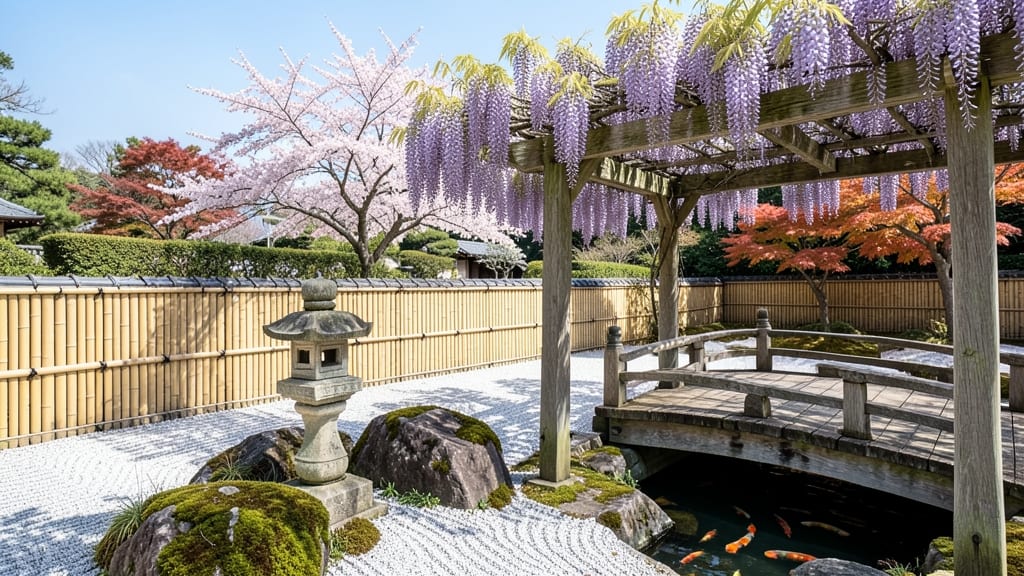
Wisteria in Japanese gardens thrives as a treasured ornamental vine, prized for its cascading lavender blooms and deep cultural significance, requiring careful pruning, well-draining soil, and partial shade to flourish in traditional Zen landscapes.
Japanese gardeners have cultivated wisteria (fuji) for centuries, not just for its breathtaking springtime displays but for its spiritual symbolism tied to purity and fleeting beauty. 🌸 The vine's delicate, fragrant blooms mark the arrival of spring in Kyoto's temple gardens, where it's often trained to create natural archways or frame sacred spaces.
Unlike Western wisteria varieties, Japanese wisteria (Wisteria floribunda) develops its iconic cascading form more slowly, requiring decades of patient cultivation to achieve the dramatic weeping effect seen in famous locations like the Philosopher's Path.
What sets Japanese wisteria apart is its ritualized pruning cycle, which differs from Western methods. Gardeners time cuts to preserve the vine's flower clusters while shaping it to complement the garden's Zen principles—often creating asymmetrical forms that mimic natural landscapes.
The process begins in late winter when the vine is dormant, using specialized tools like kama-boko shears to make clean, angled cuts that promote healthy regrowth while maintaining the vine's structural integrity.
💡 In This Article
- Why Wisteria Holds Sacred Meaning in Japanese Gardens
- Step-by-Step Wisteria Pruning for Japanese Garden Aesthetics
Why wisteria holds sacred meaning in Japanese gardens
Wisteria, known as fuji in Japanese, carries profound spiritual weight in Shinto traditions, symbolizing both purity and the transient nature of life. Its delicate lavender blooms represent the fleeting beauty of spring (harusame), a concept deeply embedded in Japanese aesthetics.
In Kyoto's temple gardens, wisteria often frames sacred spaces, creating natural archways that guide visitors toward moments of reflection—like the famous fuji tunnels at Kiyomizu-dera, where monks once used the vines' fragrant blossoms in purification rituals during spring festivals.
The vine's cultural significance stems from its association with hanami (flower viewing) and mono no aware (the pathos of things), two cornerstones of Japanese poetry and garden design.
Unlike Western wisteria, Japanese varieties (Wisteria floribunda and Wisteria sinensis) produce longer, more delicate racemes that cascade like silk ribbons, evoking a sense of gracefulness. 🌸 This visual poetry is why Kyoto's aristocracy historically cultivated wisteria in their private gardens—its blooms were said to whisper secrets of the seasons to those who paused to listen.
The scent alone, often described as a mix of sweet pea and jasmine, was believed to cleanse negative energy (kegare).
Garden designers in Kyoto employ wisteria strategically to enhance shakkei (borrowed scenery), where the vine's form becomes part of a larger spiritual narrative. For example, at the Ryoan-ji temple, wisteria vines are trained to frame the iconic rock garden, creating a living connection between the earthly and divine.
The timing of its bloom—typically late April to early May—aligns with the Higan festival, when Japanese people honor ancestors and reflect on impermanence. This deliberate synchronization reinforces wisteria's role as a bridge between the human world and the sacred.
What most people overlook is how wisteria's growth habit mirrors Zen principles. Its slow, deliberate spread teaches patience—a core value in Japanese garden philosophy. The vine's ability to climb without support (unlike many ornamental plants) symbolizes self-sufficiency and natural harmony.
In a traditional niwaki (formal garden), wisteria might be pruned to create a "weeping" form that appears to bow respectfully toward the ground, a gesture of humility in line with Buddhist teachings about impermanence.
The physical characteristics of wisteria also hold symbolic meaning. Each flower cluster (grapes) represents a cycle of life—birth (new buds), growth (blooming), and decay (fallen petals). This natural progression is why wisteria appears in so many ukiyo-e prints and literary works as a metaphor for human existence.
For instance, the 17th-century poet Matsuo Bashō wrote about wisteria in his haiku, comparing its ephemeral beauty to the fleeting moments of life itself. 🌿 The vine's deep roots, which can extend up to 30 feet underground, further emphasize its connection to the earth's enduring wisdom.
To experience this symbolism firsthand, visit Kyoto during the late April bloom season when the air fills with the scent of fuji and temple grounds come alive with soft purple canopies.
The contrast between the vine's vibrant blooms and the muted tones of stone lanterns creates a visual harmony that feels almost meditative—a deliberate design choice that invites visitors to slow down and contemplate life's impermanence. This is why wisteria remains the ultimate "living poem" in Japanese gardens.