
Planting
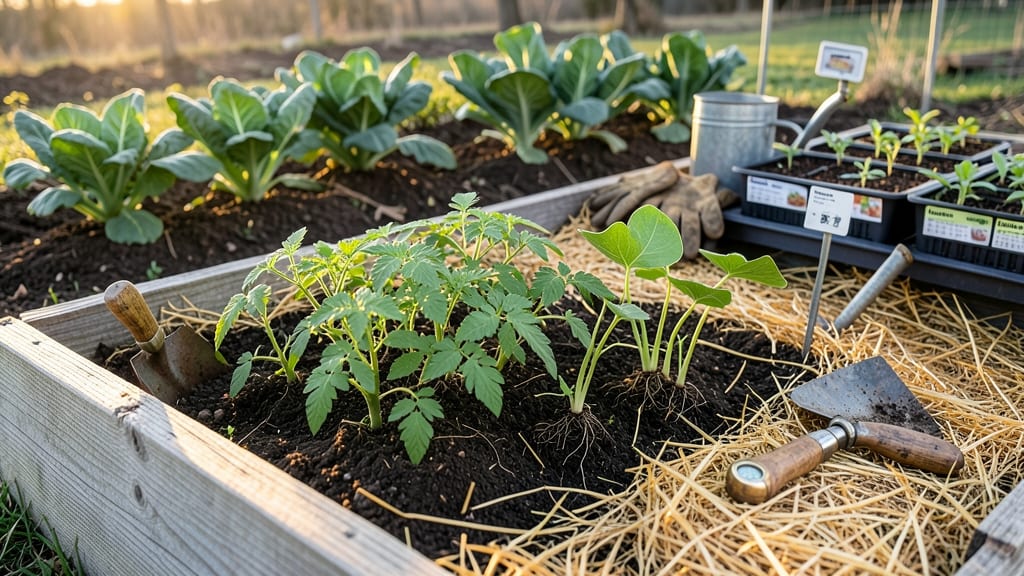
Planting your garden in North Carolina at the right time means the difference between a bountiful harvest and wasted seeds — and the exact weeks depend on whether you’re in the mountains, Piedmont, or Coastal Plain.
If you’ve ever watched your tomatoes bolt in the heat or your spinach bolt in the cold, you know timing is everything.
NC’s frost dates shift by weeks from the coast to the mountains, so planting too early or late can leave you with stunted crops or no harvest at all.
Cool-season crops like kale and peas thrive when planted 4-6 weeks before your last frost (late February to early April for most of the state), while warm-season plants like okra and sweet potatoes need to wait until 2-3 weeks after the last frost (mid-April to early May).
Below, I break down the precise planting windows for every major crop, adjusted for NC’s USDA zones 6b-8a, plus how to tweak your schedule for late frosts, heat waves, and unpredictable weather. Ready to get growing?
North Carolina planting calendar by crop type: exact weeks for frost-free success
North Carolina’s three distinct growing regions—Coastal Plain, Piedmont, and Mountains—create wildly different planting windows. The Coastal Plain (Zone 8a) enjoys longer growing seasons, while the Mountains (Zone 6b) face earlier frosts.
Knowing your last frost date (March 15-April 15 for Coastal, April 1-May 1 for Piedmont, May 1-June 1 for Mountains) is key to timing plantings for maximum frost-free growth.
I’ve organized this guide by crop type—cool-season, warm-season, and year-round plants—with exact weeks before/after frost for each NC region. Cold-hardy crops like kale and spinach can handle early spring plantings, while heat-sensitive tomatoes and peppers need to wait until soil warms to 60°F+.
Let’s dive into the precise windows for your garden’s success.
| Crop Type | Coastal Plain (Zone 8a) | Piedmont (Zone 7b) | Mountains (Zone 6b) | Notes |
|---|---|---|---|---|
| Cool-Season Veggies | Feb 15 - Mar 15 (6-8 wks before last frost) | Mar 1 - Apr 1 (4-6 wks before last frost) | Apr 1 - May 1 (3-5 wks before last frost) | Kale, spinach, lettuce, broccoli |
| Warm-Season Veggies | Apr 15 - May 1 (2-3 wks after last frost) | May 1 - May 15 (2-3 wks after last frost) | May 15 - Jun 1 (2-3 wks after last frost) | Tomatoes, peppers, cucumbers, squash |
| Herbs | Feb 1 - Mar 15 (cold-hardy) or Apr 15 (warm-loving) | Mar 15 - Apr 1 (cold-hardy) or May 1 (warm-loving) | Apr 1 - May 1 (cold-hardy) or May 15 (warm-loving) | Basil (wait for warmth), parsley (early), cilantro (fall) |
| Flowers | Feb 1 - Mar 15 (annuals) or Sep 1 (perennials) | Mar 15 - Apr 1 (annuals) or Sep 15 (perennials) | Apr 1 - May 1 (annuals) or Oct 1 (perennials) | Marigolds, zinnias, cosmos, pansies |
| Fall Plantings | Jul 15 - Aug 15 (6-8 wks before first frost) | Aug 1 - Sep 1 (6-8 wks before first frost) | Aug 15 - Sep 15 (6-8 wks before first frost) | Carrots, radishes, turnips, arugula |
*Adjust for microclimates: Slopes warm faster, valleys stay cooler. Use row covers for early/late plantings.
For cool-season crops, I recommend starting seeds indoors 4-6 weeks before your region’s last frost date. Spinach and lettuce can handle light
How to adjust planting times for NC’s unpredictable weather patterns
North Carolina’s late spring frosts and early fall chills can throw off even the most careful planting plans. I’ve learned the hard way that sticking to a rigid calendar often leads to wasted seeds or stunted plants.
The key is flexibility—using tools like row covers, cold frames, and soil thermometers to fine-tune your schedule.
Warm-season crops like tomatoes and peppers need soil temperatures above 60°F to thrive. Waiting for the last frost date isn’t enough—check your soil with a thermometer.
In the Piedmont region, this often means planting 2-3 weeks after the average last frost, while Coastal NC may be safe earlier due to milder winters.
⚠️ callout-warning
Melons and squash are particularly vulnerable to late frosts. If you’re planting these in May or June, have row covers ready—even a light frost can ruin tender seedlings. For mountain regions (Zone 6b), wait until mid-May to plant warm-season crops, while Coastal NC (Zone 8a) can start as early as late March.
Pro Tip: Use black plastic mulch to warm soil faster and straw mulch to protect young plants from temperature swings.
For cool-season crops like kale and spinach, I plant 4-6 weeks before the last frost date—but I also sow succession crops every 2 weeks to extend harvests. In fall, a cold frame can push harvests into December for crops like broccoli and carrots.
Don’t overlook microclimates—a south-facing slope warms up faster than a low-lying area. I’ve seen peppers thrive in April on a sunny hillside while nearby gardens still had frost. Use these heat sinks to plant early for warm-season crops.
When in doubt, start seeds indoors 4-6 weeks before the last frost. This gives you a 2-week head start on the season. For high-risk crops, like eggplants, I harden off seedlings for 10 days before transplanting to avoid shock from temperature swings.
Finally, keep a planting journal to track what works in your specific zone. Last year, my zucchini bolted in June because of a heatwave—this year, I’ll use shade cloth to protect them. Adjusting your schedule based on real-time conditions is the secret to a successful NC garden. 🌱