
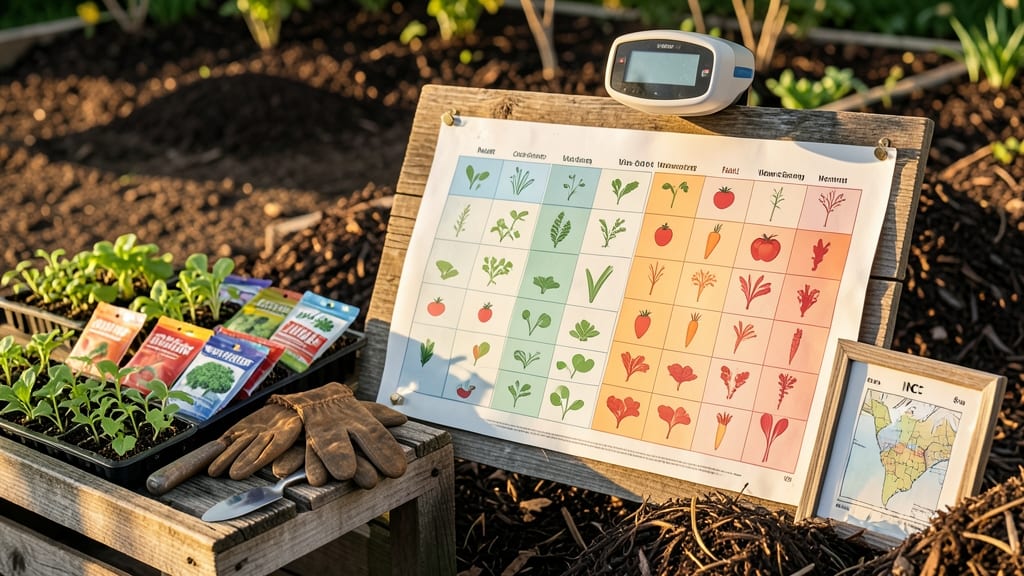
When to Plant a Vegetable Garden in NC: Heat-Tolerant Crops vs. Cool-Season Start Dates

Planting

When to Plant a Vegetable Garden in NC: Heat-Tolerant Crops vs. Cool-Season Start Dates

Planting a vegetable garden in North Carolina at the right time means the difference between a bountiful harvest and a sad, wilted disappointment 🌱 — and the clock starts ticking in early spring.

North Carolina’s diverse climate—from the coastal plains to the mountains—means your vegetable garden’s success hinges on timing. Plant too early, and frost will wipe out your crops; too late, and heat will stunt growth. Here’s your NC-specific planting calendar to maximize yields, whether you’re growing heat-loving tomatoes or cool-season spinach.

If you’ve ever watched your seedlings crisp under a late frost or bolt into flower from summer heat, you know how critical the right window is.

The key is aligning your planting with NC’s USDA zones 7b-8a, where last frost dates range from February in the mountains to April along the coast.

Below, I’ll break down the exact months to start seeds indoors, direct-sow warm-season crops, and stretch your cool-season harvests with row covers—plus the one shortcut that buys you an extra two weeks of growing time.

🌱 When to Plant Vegetable
Jan ❄️
Feb ❄️
Mar 🌱
Apr 🌱
May 🌱
Jun 🌱
Jul ☀️
Aug ☀️
Sep 🍂
Oct 🍂
Nov 🍂
Dec ❄️
Ideal Time
Also Good

NC planting zones & frost dates: the foundation for your garden calendar

North Carolina spans USDA Plant Hardiness Zones 7b through 8a, creating a unique gardening landscape where Piedmont and Coastal Plain regions experience different frost patterns. Understanding these zones—and their average last frost dates—is the first step to timing your vegetable garden for success.

For example, Asheville (Zone 7b) typically sees its last frost in mid-April, while Raleigh (Zone 7a) waits until early April. Coastal areas like Wilmington (Zone 8a) can start planting even earlier, around late February.

To pinpoint your exact planting window, check the NC State Extension’s interactive frost maps. These tools account for local variations, like urban heat islands or valley microclimates, which can shift frost dates by 1-2 weeks.

For instance, a garden in Durham’s downtown might experience warmer microclimates than nearby rural areas, allowing for earlier cool-season plantings like broccoli or kale. Always verify with the Extension’s 10-year frost data—not just the previous year—to avoid surprises.

Cool-season crops like lettuce, spinach, and peas thrive when soil temperatures hover between 40°F and 70°F. In Zone 7b, this means starting seeds indoors by late February and transplanting outdoors 2-3 weeks after your last frost.

Warm-season staples like tomatoes, peppers, and squash, however, demand soil temperatures above 60°F. In Zone 8a, you can direct-sow these crops as early as mid-March, while Zone 7b growers should wait until late April.

The NC State Extension recommends using row covers to extend cool-season growing windows by 3-4 weeks in fall. For example, planting carrots or radishes in early October under a lightweight fabric can yield harvests well into November, even in Zone 7b.

Conversely, warm-season crops like okra or sweet potatoes should be sown directly into the ground after Memorial Day, when soil temperatures consistently exceed 70°F.

Microclimates play a critical role in NC gardening. The Coastal Plain, with its milder winters, allows for earlier spring plantings and longer fall harvests compared to the mountains.

For example, Zone 7b in the Blue Ridge may experience late spring frosts in May, while Zone 8a in New Bern can safely plant cucumbers by early March. Always observe your garden’s unique conditions—like sun exposure or wind patterns

Here’s how to use frost dates to plan your cool-season vs. warm-season crops:

Crop Type Zone 7b (Piedmont) Zone 8a (Coastal Plain) Key Tip
Cool-Season (Kale, Broccoli) Start seeds indoors: Feb 15
Transplant outdoors: April 15
Start seeds indoors: Jan 30
Transplant outdoors: March 20
Use row covers to extend harvests into November.
Warm-Season (Peppers, Squash) Direct-sow: May 1
Soil temp: 60°F+
Direct-sow: March 20
Soil temp: 60°F+
Mulch heavily to retain soil warmth in Zone 7b.
Succession Crops (Beans, Lettuce) Plant every 2 weeks from April 15-July 1 Plant every 2 weeks from March 20-August 1 Prioritize shade-tolerant varieties for late summer.
Fall Extenders (Carrots, Spinach) Sow by August 15 with row covers Sow by

Heat-tolerant crops in NC: when to start seeds indoors vs. direct-sow

North Carolina’s summer heat can be brutal for unprepared gardeners, but with the right timing, you can grow heat-tolerant crops like tomatoes, okra, and sweet potatoes that thrive in our USDA zones 7b-8a.

The key is balancing indoor seed-starting for early varieties with direct-sowing once soil warms to 60°F+. Let’s break down the best strategies for each crop to ensure a bountiful harvest.

For tomatoes, the most popular heat-loving crop in NC, start seeds indoors in late February to early March if you want an early jump. This gives you a 6-8 week head start before transplanting outdoors after the last frost.

For okra and sweet potatoes, which love the heat, you can skip indoor starting and direct-sow seeds in mid-April to early May once the soil is consistently warm.

  1. 1. February-March: Start tomato, pepper, and eggplant seeds indoors 6-8 weeks before last frost (use grow lights for 14-16 hours/day).
  2. 2. Mid-April: Direct-sow okra, bush beans, and sweet potatoes once soil reaches 60°F+ (test with a soil thermometer).
  3. 3. Late April-Early May: Transplant tomato and pepper seedlings outdoors after hardening off (acclimate for 7-10 days).
  4. 4. Every 2 Weeks: Succession plant bush beans and cucumbers for continuous harvests through summer.
  5. 5. June-July: Direct-sow Southern peas and malabar spinach for late-season heat tolerance (they thrive in 90°F+).

Don’t overlook the power of succession planting—this technique ensures you’re never without fresh produce. For example, plant bush beans every 2 weeks from April through July to enjoy a steady supply. Similarly, cucumbers and squash benefit from staggered plantings to extend harvests into early fall.

When selecting varieties, prioritize heat-tolerant strains like ‘Celebrity’ tomatoes, ‘Clemson Spineless’ okra, or ‘Beauregard’ sweet potatoes. These varieties are bred to handle NC’s high humidity and summer heat, reducing the risk of blossom drop or stunted growth.

Always check NC A&T’s heat-tolerance chart for additional recommendations tailored to your specific region.

Finally, monitor your soil temperature closely—it’s the ultimate decider for direct-sowing. Use a soil thermometer to confirm warmth before planting heat-loving crops. If temperatures dip below 60°F, wait a few more days or use black plastic mulch to warm the soil faster.

With these strategies, you’ll be well on your way to a flourishing summer garden packed with homegrown goodness.

★★★★★4.9(10 reviews)
Categories Planting