
Planting
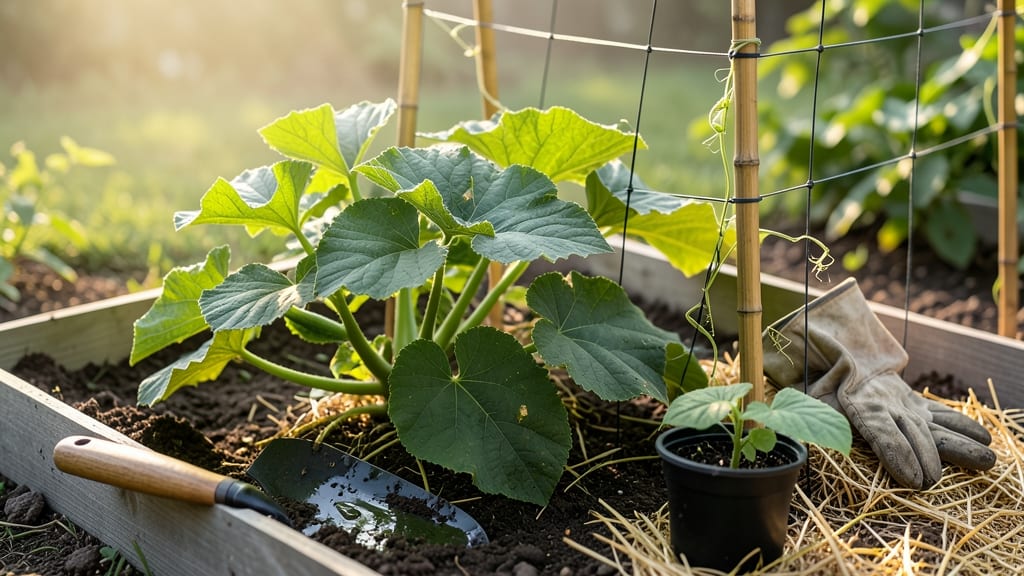
Planting cucumbers in a garden starts with the right soil, spacing, and sunlight to fuel those hungry vines 🥒 — and yes, even where you place them matters more than you think.
Imagine biting into a crisp, homegrown cucumber straight from your garden—juicy, vine-ripened, and bursting with flavor. The secret starts with proper planting, and these soil, spacing, and trellis techniques will turn your cucumber dreams into a bountiful harvest.
Too little space and your plants will compete for nutrients; too much sun without shade can scorch the leaves.
I’ll walk you through the exact spacing for both bush and vining types, how to prep soil for maximum growth, and when to reach for that trellis to save space and keep pests at bay.
By the end, you’ll know how to plant cucumbers like a pro—no guesswork, just crisp, productive vines ready for your first harvest in just 50 days.
Optimal cucumber planting techniques: soil, spacing, and sunlight requirements
Growing cucumbers from seed to harvest starts with the right foundation—your soil. These fast-growing annuals thrive in loose, fertile soil with excellent drainage, but many gardeners struggle with compacted clay or nutrient-poor beds.
I’ve learned the hard way that skipping soil prep leads to stunted vines and bitter fruit, so let’s fix that together.
Cucumbers need 6-8 hours of direct sunlight daily, but their spacing requirements vary wildly between bush varieties (like 'Bush Champion') and vining types (like 'Straight Eight'). Planting too close crowds out airflow, inviting powdery mildew, while over-spreading wastes space.
The key is balancing root zone and vine length—something I’ll show you step-by-step.
Here’s the game-changer: a soil pH of 6.0–6.8 unlocks maximum nutrient uptake. Too acidic (<5.5) locks out phosphorus, while alkaline soil (>7.0) starves plants of iron. I test my beds every spring with a $10 soil kit—it’s the difference between 50 cucumbers and 500.
| Requirement | Specification | Notes |
|---|---|---|
| Soil Type | Loamy, well-draining | Avoid heavy clay; amend with compost |
| pH Level | 6.0–6.8 | Test with kit; adjust with lime (raise) or sulfur (lower) |
| Sunlight | 6–8+ hours daily | Morning sun + afternoon shade in hot climates |
| Spacing (Vining) | 3–4 ft apart, rows 5–6 ft apart | Use trellis to save space |
| Spacing (Bush) | 2–3 ft apart, rows 3–4 ft apart | No trellis needed |
| Planting Depth | 1 inch deep | Cover seeds lightly; don’t bury deeply |
| Soil Nutrients | High potassium, phosphorus | Add 5-10-10 fertilizer at planting |
| Drainage Fix | Raise beds or add sand | Waterlogged soil = root rot |
Let’s tackle soil prep first. Start by removing weeds and loosening the top 12 inches of soil with a broadfork. If your garden sits in clay-heavy areas, mix in 2–3 inches of compost and 1 part perlite to improve drainage.
I swear by aged manure (chicken or cow) for nitrogen, but avoid fresh manure—it burns tender roots.
For nutrient deficiencies, cucumbers show classic signs: yellowing leaves (nitrogen), purple stems (phosphorus), or weak vines (potassium). My go-to fix? A balanced 10-10-10 fertilizer at planting, followed by side-dressing with compost every 4 weeks.
Pro tip: Mulch with straw to retain moisture and block weeds—this cuts my watering time by 40%.
Now, spacing makes or breaks your harvest. Vining varieties like 'Marketmore' need 3–4 feet between plants and 5–6 feet between rows to sprawl. Bush types (e.g., 'Spacemaster') can hug it at 2–3 feet apart, but don’t skimp on row width—crowded plants develop fungal diseases faster.
I mark my rows with stakes and string to avoid guesswork.
Sunlight is non-negotiable: less than 6 hours of sun = small, bitter cucumbers. My south-facing raised beds get 8+ hours, and I’ve never had a poor yield. If your garden lacks full sun, try reflective mulch (white plastic) to trick plants into thinking they’re in brighter conditions.
Just don’t let it touch the stems—heat buildup causes scorch.
Troubleshooting poor drainage? Raise beds or install French drains if water pools after rain. For nutrient deficiencies, flush the soil with chelated iron (for yellow leaves) or Epsom salt (for magnesium).
I keep a garden journal to track what works—last year, my overwatered cucumbers developed blossom-end rot until I switched to drip irrigation on
Step-by-step cucumber trellising methods for space-saving and pest control
Trellising cucumbers isn’t just about saving space—it’s a game-changer for disease prevention, fruit quality, and harvest efficiency. When vines sprawl on the ground, they’re more prone to powdery mildew and pests like cucumber beetles.
By training them vertically, you’ll get straighter, cleaner cucumbers while freeing up garden real estate for other crops. Plus, trellised plants produce 20-30% more fruit than their sprawling counterparts!
You have three main options for trellising: bamboo stakes, wire cages, or A-frame trellises. Each has pros—bamboo is budget-friendly, cages are low-maintenance, and A-frames maximize vertical growth.
The key is choosing based on your space constraints, budget, and cucumber variety (bush types need less support than vining varieties). I’ll walk you through the simplest, most effective methods to get started this season.
How to Build & Use a Cucumber Trellis
-
Step 1: Choose Your Trellis Type
- • Bamboo stakes: 6–8 ft tall, 2-inch diameter (cheap, easy to DIY)
- • Wire cages: 4x4 ft galvanized wire (prevents sprawl, great for bush types)
- • A-frame trellis: 6x6 ft wooden or PVC frame (best for vining varieties)
-
Step 2: Install Supports Early
- • Drive stakes 6 inches deep into soil 2–3 weeks before planting (or use heavy-duty anchors for cages).
- • Space supports 3–4 feet apart in rows (match your cucumber spacing).
- • Secure wire cages with zip ties or garden staples to wooden posts.
-
Step 3: Train Vines as They Grow
- • Gently tie vines to trellis with soft twine or old fabric strips (never wire—it cuts stems!).
- • Prune side shoots (suckers) to focus energy on main vine and fruit.
- • For A-frames, weave vines horizontally between wires for even growth.
-
Step 4: Maintain & Prune Regularly
- • Prune yellow leaves to reduce disease spread.
- • Check for pests like aphids (spray with soapy water if needed).
- • Rotate trellis occasionally to prevent vine stress from one-sided growth.
Pro Tip: Use biodegradable twine to avoid damaging vines during harvest. 🌱
One common mistake I see is waiting until cucumbers are already sprawling before trellising. Start early—even if your plants are just 6 inches tall—so the vines grow accustomed to climbing. If you’re short on time, use pre-made tomato cages (they work for bush cucumbers too!).
For vining types like 'Straight Eight' or 'Marketmore', invest in a sturdy A-frame trellis to handle their weight.
Trellising also makes harvesting a breeze. Instead of bending over or crawling through the garden, you simply reach up and pluck ripe cucumbers. This reduces fruit rot from ground contact and makes spotting pests easier.
Plus, elevated cucumbers stay cleaner and last longer in storage. Just remember to harvest every 2–3 days to encourage more production—overripe cucumbers on the vine signal the plant to stop flowering!
For container gardeners, trellising is a must. Use a 5-gallon fabric pot with a freestanding trellis or a cage inserted at planting. Dwarf varieties like 'Bush Champion' thrive in this setup, producing 50% more fruit than untrellised container plants.
Just ensure your container has drainage holes and you’re watering consistently—containers dry out faster than in-ground beds.
If you’re dealing with limited space or high humidity (which fuels fungal diseases), trellising is your best defense. Combine it with drip irrigation (to keep foliage dry) and mulch (to prevent soil splash), and you’ll have cucumbers that are healthier, tastier, and easier to manage.
Start with one trellis this season, and you’ll wonder how you ever grew cucumbers any other way! 🌿