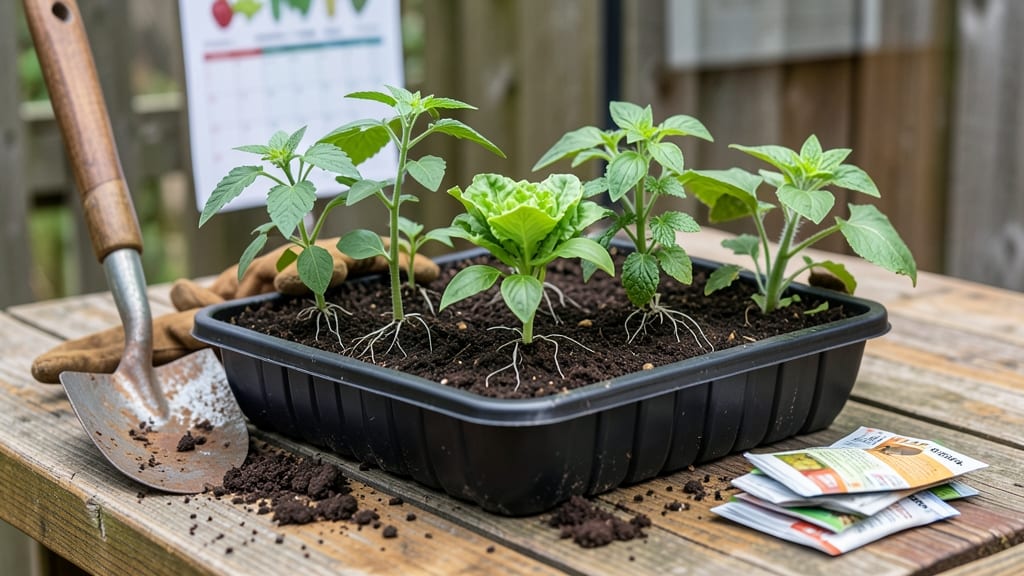
Planting a vegetable garden in Missouri at the right time means the difference between a harvest that feeds your family and one that barely survives 🌱 — and the clock starts ticking when the soil warms up.
Missouri’s unpredictable springs and hot summers can make or break your vegetable garden—planting at the wrong time means stunted growth or total failure. But timing it right guarantees a bountiful harvest, whether you’re growing tomatoes, zucchini, or leafy greens.
With USDA zones ranging from 5b to 7a, Missouri’s frost dates vary wildly by region, from late April in St. Louis to early May in the Ozarks.
Cool-season crops like lettuce and peas need to hit the ground early, while tomatoes and peppers wait until the soil reaches 60°F.
Below, I’ll break down the exact planting windows for your zone, how to adjust for urban heat islands, and the five mistakes that ruin timing—so you can grow faster, bigger, and with less guesswork.
🌱When to Plant Vegetable
Jan❄️
Feb❄️
Mar🌱
Apr🌱
May🌱
Jun🌱
Jul☀️
Aug☀️
Sep🍂
Oct🍂
Nov🍂
Dec❄️
Ideal Time
Also Good
Missouri planting zones: exact dates for cool-season vs. warm-season vegetables
Missouri spans USDA zones 5b through 7a, meaning your planting schedule should shift slightly depending on whether you're in St. Louis (6a), Kansas City (6a), or the Ozarks (5b-6a).
The average last frost date ranges from mid-April in southern Missouri to late May in the northern Ozarks, while the first frost arrives between mid-October and early November. These dates determine whether you're planting cool-season crops (like lettuce and peas) or warm-season crops (like tomatoes and peppers).
For cool-season vegetables, I recommend starting seeds indoors 6-8 weeks before your last frost date—so if your last frost is April 15, begin seeds around February 15.
Transplant seedlings outdoors 2-3 weeks before the last frost, but always use row covers if nighttime temperatures dip below 40°F. Warm-season crops, however, cannot tolerate frost and should only go into the ground after soil temperatures reach 60°F, typically mid-May to early June.
Vegetable
USDA Zones
Planting Window
Last Frost Date
Soil Temp Requirement
Lettuce (Cool)
5b-7a
Feb 15 - Apr 15 (direct sow)
Mid-Apr to late May
40-50°F
Tomatoes (Warm)
5b-7a
Apr 15 - May 15 (transplant)
Mid-Apr to late May
60°F+
Peppers (Warm)
6a-7a
May 1 - May 15 (transplant)
Mid-Apr to late May
70°F+
Broccoli (Cool)
5b-6a
Mar 15 - Apr 15 (transplant)
Mid-Apr to late May
45°F+
Okra (Warm)
6a-7a
May 15 - Jun 1 (direct sow)
Mid-Apr to late May
80°F+
Peas (Cool)
5b-7a
Feb 15 - Mar 31 (direct sow)
Mid-Apr to late May
40°F+
Zucchini (Warm)
5b-7a
Apr 15 - May 15 (transplant)
How to adjust planting times for Missouri’s microclimates (city vs. rural vs. Ozarks)
Missouri’s diverse landscapes create unique microclimates that can shift planting times by weeks or even months. St. Louis’ urban heat islands bake 5-10°F warmer than rural areas, while the Ozarks’ higher elevation delays spring warming by 2-3 weeks.
These differences mean your neighbor’s successful tomato harvest might fail in your garden if you don’t adjust timing.
City gardens often experience earlier springs due to pavement and buildings trapping heat, while rural areas maintain cooler temperatures longer. The Ozarks, with their mountainous terrain, can have frost until May 15 in some zones, compared to St. Louis’ average last frost of April 15.
Understanding these variations helps you extend growing seasons and avoid costly mistakes.
Here’s how to adjust planting for Missouri’s three main microclimates, plus season-extending tricks to maximize harvests in all regions:
Microclimate
Last Frost Date
First Planting Window
Season Extension Tools
Key Adjustments
St. Louis (Urban)
April 15
March 15 (cool crops) April 20 (warm crops)
Row covers Drip irrigation Reflective mulch
Plant 2 weeks earlier than rural areas. Use shade cloth in summer to prevent bolting.
Rural Missouri
April 25
March 30 (cool crops) April 25 (warm crops)
Cold frames Black plastic mulch Windbreaks
Follow USDA Zone 6-7 guidelines. Use succession planting every 2 weeks for continuous harvests.
Ozarks (High Elevation)
May 15
April 10 (cool crops) May 10 (warm crops)
Greenhouses Heavy mulch Frost cloth
Delay planting by 2-3 weeks. Focus on cold-hardy crops like kale, peas, and broccoli.
Row covers are my go-to for St. Louis gardens—they add 4-6°F protection and let me plant lettuce in February instead of March. For rural areas, I swear by black plastic mulch, which warms soil 5-8°F faster than bare earth, perfect for tomatoes and peppers that need warm roots.
In the Ozarks, I’ve had success with cold frames to start spinach and carrots in January. The key is monitoring soil temperature—40°F+ for cool crops and 60°F+ for warm crops. Use a soil thermometer to avoid false starts.
For all regions, succession planting is non-negotiable. In St. Louis, I’ll plant bush beans every 2 weeks from May to July for a continuous harvest.
Rural gardeners can stretch their season by planting fall crops in August, while Ozarks growers should aim for late July plantings of frost-tolerant varieties.
Pro tip: Check Missouri’s local frost maps from the Missouri Botanical Garden—they update weekly and account for microclimate shifts. With these adjustments, you’ll beat the heat and frost like a pro, no matter where in Missouri you garden. 🌱