
Companion Plants
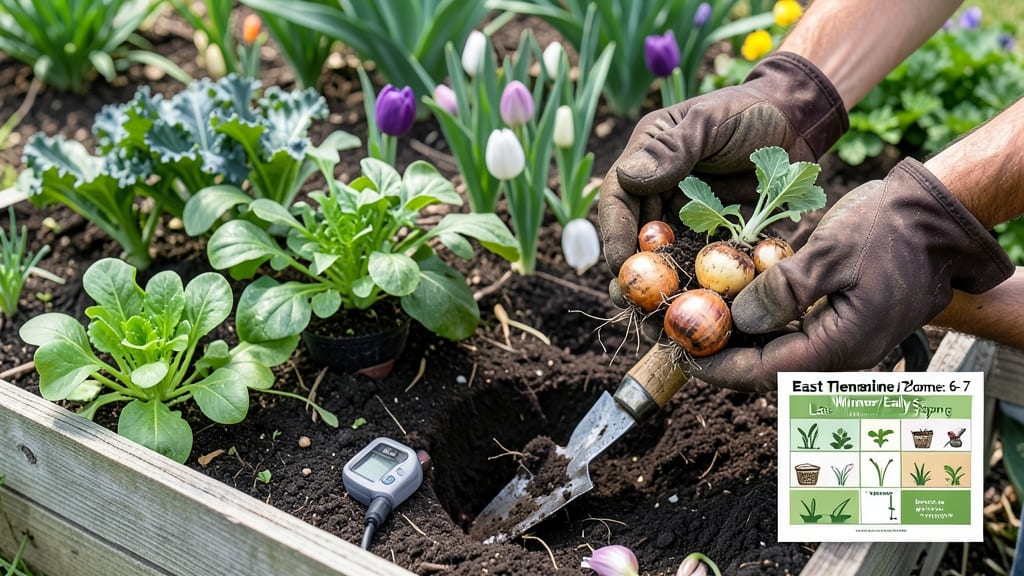
Planting a garden in East Tennessee depends on elevation and microclimates: start cool-season crops like lettuce and peas in early March for lowland areas, while higher elevations (e.g., Smoky Mountains) wait until mid-April. Warm-season vegetables like tomatoes thrive after soil reaches 60°F, typically late April to early May in most zones.
Timing your garden in East Tennessee means working with the region's dramatic elevation shifts—lowland valleys can be 3-5 weeks ahead of mountain slopes. 🌱 For instance, Knoxville's average last frost is around April 15, while higher elevations near Gatlinburg may see frost lingering until May 10.
I always check NOAA's frost-free date maps to adjust my planting calendar, especially for delicate crops like basil that won't tolerate even light frosts.
Local soil conditions also play a huge role—many East Tennessee gardens deal with clay-heavy or rocky soil that needs extra compost to warm up faster. If you're using containers, you can plant warm-season crops like peppers 2 weeks earlier than in-ground beds since they heat up quicker.
My best advice? Start cool-season crops in late February under row covers, and monitor soil temperatures with a simple probe—60°F is your magic number for warm-season starters.
💡 In This Article
- East Tennessee’s Microclimate Zones and Frost Dates
- Planting Schedule for East Tennessee’s Most Popular Vegetables
East Tennessee’s microclimate zones and frost dates
East Tennessee’s dramatic elevation changes create distinct microclimates that shift frost dates by weeks. The region spans USDA hardiness zones 6b (higher elevations) to 7a (valleys), with a 3,000-foot elevation gain between Knoxville and the Great Smoky Mountains.
This means Knoxville’s average last frost arrives around April 15, while mountain areas near 4,000 feet may still see frost until May 10.
The higher you go, the later you plant—cool-season crops like broccoli can be direct-sown in March at 800 feet but wait until April at 3,000 feet.
Frost formation works like this: Cold air sinks into valleys, creating "frost pockets" where temperatures can drop 5-10°F colder than nearby ridges. This is why gardeners in the French Broad River valley often plant 2 weeks earlier than those on nearby mountain slopes.
To check your exact frost dates, use NOAA’s Frost/Freeze Product or the Old Farmer’s Almanac calculator—both account for local topography. I’ve seen 10°F temperature swings between a valley garden and a ridge garden just 1 mile apart during spring.
Soil temperature matters just as much as air temperature. Clay-heavy soils common in East Tennessee retain cold longer, delaying planting by 1-2 weeks compared to loamy soils. A soil thermometer ($15 at garden centers) reveals when your beds hit 60°F—the threshold for warm-season crops like tomatoes.
In my raised beds, which warm 5°F faster than ground soil, I plant cucumbers 10 days earlier than in traditional beds. For container gardeners, black pots absorb heat 20% more efficiently than white ones, giving you a 1-week head start on warm-season planting.
Here’s how elevation affects common crops:
- Lowland valleys (600-1,000 ft): Lettuce in late February, tomatoes in early April
- Mid-elevation (1,500-2,500 ft): Lettuce in early March, tomatoes in mid-April
- High mountains (3,000+ ft): Lettuce in mid-March, tomatoes in late April
Pro tip: Use row covers to extend cool-season growing by 3-4 weeks—I’ve grown spinach until May 1 in Knoxville using lightweight fabric. For warm-season crops, wait until nighttime temperatures stay above 50°F consistently.
The Smoky Mountain region often sees late frosts in May, so I plant heat-loving crops like okra in early June there, while valley gardeners can start them in mid-May.
Remember: Microclimates aren’t just about elevation—they’re shaped by nearby water bodies, building structures, and even tree canopies. A south-facing slope warms 2-3°F faster than a north-facing one, which can mean the difference between successful and failed plantings.
Always scout your specific garden spot for 2-3 years before finalizing your planting calendar. 🌿