
Picking
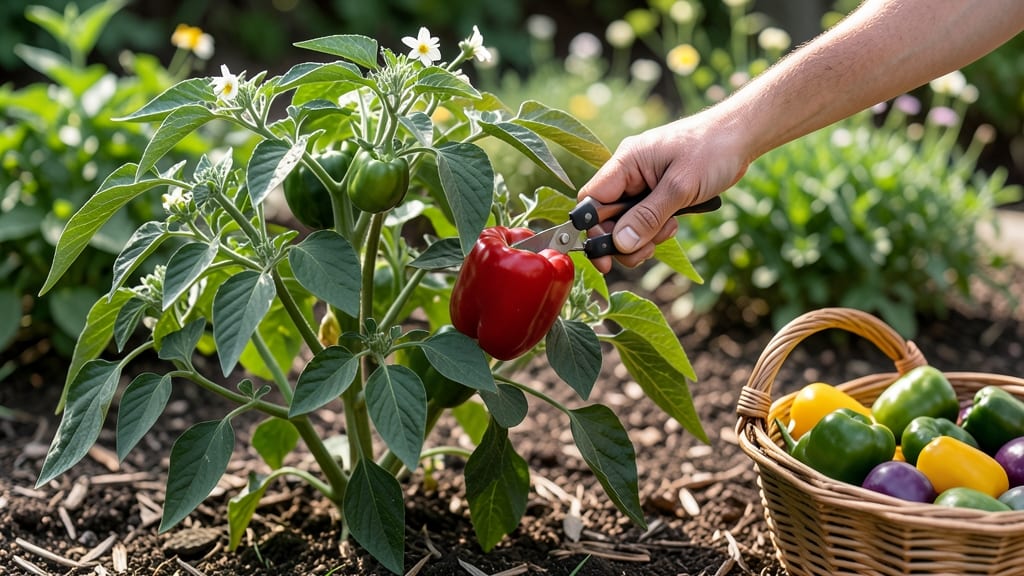
To pick bell peppers from your garden at the perfect moment means catching them when they’re bursting with flavor—not too early (still tough) and not too late (mealy or cracked).
Harvesting 🌶️ at the wrong time can mean the difference between sweet, crisp perfection and bland, rubbery disappointment—so knowing exactly when to pick them is critical for gardeners.
Look for deep, vibrant color (green, red, or yellow, depending on your variety) and firm skin that gives just slightly when gently squeezed. A brown stem base is another telltale sign they’re ready.
In this guide, I’ll walk you through the color-coded ripeness stages, how to check for readiness beyond just color, and even how to extend your harvest season for a longer supply of homegrown peppers.
Bell pepper ripeness by color: the exact timing for optimal flavor and texture
Bell peppers are one of those magical garden vegetables where color isn't just for looks—it's your direct ticket to knowing when to pick for peak flavor.
A green pepper plucked too early might taste bland, while a red or yellow pepper left too long on the vine can become tough and seedy. Understanding each color stage helps you harvest at the perfect moment, whether you're growing sweet bell peppers for salads or fiery varieties for cooking.
Most gardeners focus only on color, but flavor and texture are also tied to maturity. For example, green bell peppers are typically harvested first, but their sweetness peaks when they ripen to red, orange, or yellow.
Meanwhile, yellow and orange peppers often have a slightly sweeter, more complex flavor than their green counterparts. Let’s break down each stage so you can time your harvests like a pro.
🌶️ Pro Tip: Always harvest in the morning when peppers are cool and crisp. This ensures the best texture and flavor for storage or immediate use.
| Color Stage | Harvest Window | Flavor Profile | Storage Life | Best For |
|---|---|---|---|---|
| Green | 60-75 days after transplanting | Mild, slightly grassy, less sweet | 1-2 weeks in fridge | Stir-fries, pickling, cooking |
| Yellow | 75-90 days after transplanting | Sweet, fruity, slightly tangy | 2-3 weeks in fridge | Raw salads, roasting |
| Orange | 80-95 days after transplanting | Balanced sweetness, carrot-like notes | 2-3 weeks in fridge | Stuffing, grilling, fresh eating |
| Red | 90-100+ days after transplanting | Sweetest, richest, slightly smoky | 1-2 weeks in fridge | Raw dishes, sauces, preserving |
If you're growing green bell peppers for immediate use, you can harvest them as soon as they reach 3-4 inches long and feel firm to the touch. These peppers are typically picked before they fully ripen, which is why they often taste milder.
However, if you leave them on the plant, they’ll gradually change color and develop more complex flavors.
For yellow and orange bell peppers, timing is everything. These varieties often ripen faster than reds but still need patience. Harvest them when their color is even and vibrant, and the skin is slightly glossy—a sure sign of sweetness.
These peppers are perfect for adding a pop of color to dishes while keeping that bright, tangy flavor intact.
When it comes to red bell peppers, the wait is worth it. These are the sweetest and most flavorful, but they take the longest to ripen. Look for a deep, consistent red color and a skin that’s firm but not hard.
Overripe red peppers can become leathery, so don’t wait too long! Once harvested, store them in the fridge for up to 2 weeks to preserve their quality.
🌱 Did You Know? Some varieties, like Cubanelle peppers, are typically harvested green but can still ripen to yellow or red if left on the plant. Always check your seed packet for specific variety notes to avoid surprises.
One common mistake gardeners make is assuming all peppers on a plant will ripen at the same time. In reality, peppers ripen sequentially, so you might see green, yellow, orange, and red peppers all on the same plant at once.
This is normal! Prioritize harvesting the ripest ones first to encourage more fruit to mature.
For long-term storage, consider preserving your harvest. Red bell peppers freeze well, while green peppers are better suited for pickling or fermenting. Always wash and dry peppers thoroughly before storing to prevent mold.
If you’re unsure whether a pepper is ready, give it a gentle squeeze—it should feel firm but slightly yielding, like a ripe avocado.
Finally, don’t forget that environmental factors like temperature and sunlight play a role in ripening. Peppers need consistent warmth (70-85°F) and full sun (6+ hours daily) to ripen properly.
If your summer is hot but short, focus on harvesting at the first signs of color change to avoid losing your crop to early frost.
5 Key signs your bell peppers are ready to harvest (beyond just color)
Bell peppers might seem ready when they turn bright red or yellow, but color alone isn't the only sign of true ripeness. Overlooking subtle cues can lead to underripe peppers with bland flavor or overripe ones that turn mealy.
I’ve learned the hard way—harvesting too early means sacrificing sweetness, while waiting too long ruins texture. Let’s break down the 5 key indicators that confirm your peppers are truly ready for picking.
First, size matters more than you think. Mature bell peppers typically reach 3–4 inches long and 2–3 inches wide, depending on the variety. Smaller peppers may still be developing their full flavor and crunch.
For example, a ‘Jalapeño’ should be at least 3 inches long before harvesting, while a ‘Bell Pepper’ like ‘California Wonder’ needs to hit 4 inches. Use a ruler to check—it’s an easy way to avoid premature harvests.
- 1 Firm but yielding skin: Press gently—ripe peppers feel firm but slightly soft, like a ripe avocado. If it’s rock-hard or mushy, it’s not ready.
- 2 Stem snaps cleanly: Gently twist the pepper at the stem. If it snaps off easily with a slight crack, it’s ready. A green stem means it needs more time.
- 3 Deep, consistent color: Avoid pale or striped peppers. A vibrant, even hue (green, red, yellow, etc.) signals full ripeness. Wait for the color to deepen naturally.
- 4 Seed cavity development: Cut open a pepper to check. If the seeds are fully formed and the cavity is dry, it’s ready. Wet seeds mean it’s underripe.
- 5 Morning harvest time: Pick peppers in the early morning when temperatures are cool. This preserves flavor and firmness, especially in hot climates.
One mistake I’ve made is harvesting peppers based solely on color changes, only to find them underripe inside. For example, a red bell pepper might look perfect but still feel hollow when cut open—a sign it was picked too late.
Always combine visual cues with physical tests, like the stem snap and skin firmness, for the best results.
Another pro tip: Check the stem end. A ripe pepper will have a brown or slightly woody stem where it attaches to the plant. If it’s still green, give it another week. This is a foolproof way to avoid overripe peppers that lose their crunch.
I now use a small notebook to track the stem color and size of my peppers—it’s saved me from wasting underripe harvests!
Finally, harvest frequency matters. Bell peppers continue to ripen off the vine, so don’t wait until they’re overripe. Pick them every 2–3 days during peak season to encourage more production.
Overripe peppers not only lose flavor but also attract pests like aphids, which can spread to other plants in your garden. A quick morning harvest keeps your peppers at their peak and your garden thriving.
By mastering these 5 key signs, you’ll enjoy bell peppers that are sweet, crisp, and bursting with flavor—not the bland, rubbery versions that come from harvesting too early or too late. Happy harvesting! 🌱