
Picking
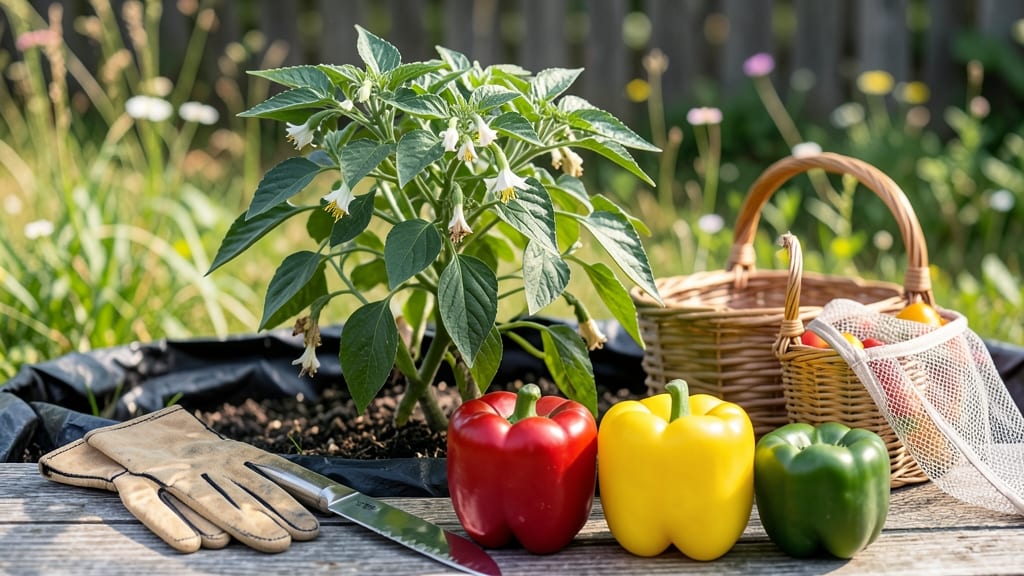
To pick peppers from your garden at their peak flavor, watch for color shifts and firmness—because harvesting too early means bland peppers, while waiting too long risks overripe mush.
Most gardeners assume green peppers are ready to pick, but they’re often underripe. 🌶️ The secret lies in the color: bell peppers turn deep green, jalapeños deepen to red or yellow, and even the firmness changes as sugars develop.
Miss these cues, and you’re left with peppers that lack the bold taste they’re capable of.
Climate plays a role too—hot summers speed up ripening, while cooler zones like 6a may need extra weeks. Below, I’ll break down the exact color stages, size thresholds, and environmental triggers so you never guess again.
You’ll also learn how to avoid common mistakes like picking with wet hands (which spreads disease) and why a slight give in the skin means "ready," not "rotten." By the end, you’ll harvest peppers that burst with flavor, not disappointment.
Peppers ripeness stages by color: when to harvest for maximum flavor
Harvesting peppers at the right color stage unlocks their full flavor potential. Most gardeners assume green peppers are the only option, but waiting for color changes transforms mild peppers into sweet, spicy, or complex-tasting treasures.
The heat level also peaks at later stages—red jalapeños, for example, pack twice the capsaicin of their green counterparts.
Understanding the color progression helps you decide whether to harvest for fresh eating, cooking, or drying. Some varieties like bell peppers shine when fully red, while jalapeños or serranos reach their spiciest peak at orange or red. Even storage life changes: green peppers last weeks longer than ripe red ones.
| Stage | Color | Heat Level | Flavor Profile | Harvest Time | Storage Life |
|---|---|---|---|---|---|
| Immature | Green | Low (0-5,000 SHU) | Mild, grassy, slightly sweet | 60-75 days | 3-4 weeks |
| Turning | Yellow/Orange (partial) | Moderate (5,000-20,000 SHU) | Balanced sweet-spicy | 75-90 days | 2-3 weeks |
| Mature | Red/Orange/Yellow (full) | High (5,000-100,000+ SHU) | Deep, complex, sweeter | 90-120 days | 1-2 weeks |
| Overripe | Dull, wrinkled | Variable (often bitter) | Mushy, loss of flavor | 120+ days | 1 week (rapid spoilage) |
Green peppers are harvest-ready at 60-75 days after transplanting, but their flavor is underdeveloped. This stage works for quick pickling or stir-fries but lacks the sweetness of mature peppers. For example, bell peppers stay green until fully ripe, while jalapeños turn yellow/orange before red.
When peppers shift to yellow or orange, their sugar content spikes and heat intensifies. This is the ideal window for drying or fermenting, as the capsaicin concentration peaks.
For jalapeños, harvesting at orange gives you a milder but sweeter alternative to red. Serranos and habaneros also hit their spiciest at this stage.
The red stage is where bell peppers reach their sweetest, most complex flavor. Red peppers contain up to 10x more vitamin C than green and develop a richer, almost fruity taste.
For hot peppers, red often means maximum heat—think red jalapeños at 8,000 SHU vs. green at 2,500 SHU. Wait too long, though, and they’ll overripe, becoming wrinkled and bitter.
Not all peppers follow the green-to-red path. Some varieties stay yellow or purple when ripe, like yellow wax peppers or purple bell peppers. These retain their unique color while still hitting peak flavor. Always check your seed
5 Key signs your peppers are ready to pick (beyond just color)
Color isn't the only clue that your peppers are ready for harvest. Many gardeners overlook tactile cues and environmental triggers that signal peak ripeness. These subtle signs—like stem separation and skin texture—can mean the difference between bold flavor and bland disappointment.
Let’s explore the five key indicators that your peppers are truly ready to pick, beyond just their color.
First, consider the maturity days listed on your pepper variety’s seed packet. Most peppers reach harvest readiness between 60 to 120 days, depending on the type. However, environmental factors like temperature swings or extended cloudy periods can delay maturity.
If your peppers are taking longer than expected, check for these other readiness signs to avoid missing the optimal harvest window.
🌱
📌 5 Key Signs Your Peppers Are Ready to Pick
- 🌡️ 1. Reaches Variety-Specific Size
Bell peppers should be 3-6 inches long, while smaller varieties like jalapeños or cherry peppers may only need 2-3 inches. Measure against the seed packet’s guidelines for accuracy. - 🤏 2. Stem Snaps Cleanly When Bent
Gently bend the pepper’s stem away from the plant. If it snaps easily (not tears), it’s ready. A stubborn stem means it’s not fully ripe yet. - 🌿 3. Skin Texture Is Firm but Slightly Yielding
Press your thumb into the pepper’s skin gently. It should feel firm to the touch but give slightly—like a ripe avocado. Overly soft peppers are overripe and prone to spoiling. - 🌡️ 4. Consistent Temperature Triggers Ripening
Peppers mature faster in warm, stable temperatures (70-85°F). If nights dip below 55°F, ripening slows. Harvest before frost threatens, even if color isn’t fully developed. - ✂️ 5. Skin Separates Effortlessly When Plucked
Grasp the pepper near the stem and pull firmly. If it detaches cleanly without resistance, it’s ready. A stubborn pull means it needs more time.
Don’t rely solely on color—some peppers like jalapeños or serranos can turn red but still taste mild if harvested too late. For bell peppers, wait until they’re fully colored and firm to maximize sweetness. Meanwhile, hot peppers often peak in heat when they’re slightly underripe but fully sized.
If your peppers are showing these signs but the weather is turning cool, act fast. Frost-sensitive varieties like bell peppers can suffer flavor loss if left on the vine too long.
Harvest them early and ripen indoors if needed. For hot peppers, you can even pick them green for cooking and let them ripen on a sunny windowsill.
Pro tip: Use a sharp pair of pruning shears to avoid damaging the plant. Cut the stem 1/4 inch above the fruit to prevent disease entry points. Store harvested peppers in a cool, dry place (50-55°F) to preserve flavor and extend shelf life for up to 2 weeks.
✂️