
Container Gardens
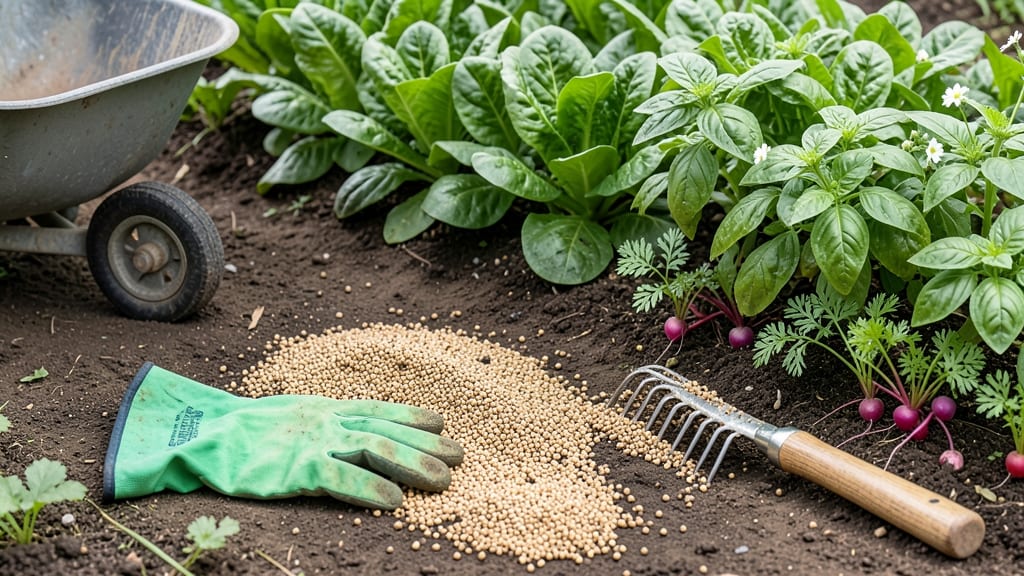
To fertilize garden beds at the right time, focus on plant type and growth stage: apply organic fertilizer in early spring before planting, side-dress leafy greens mid-season, and feed flowering plants during bud formation. Always test soil first to prevent over-fertilizing.
Timing matters because plants absorb nutrients differently at each growth stage.
In early spring, roots need energy to establish, so pre-planting fertilizer helps kickstart growth. 🌱 Leafy greens like lettuce and spinach thrive when you add nitrogen-rich fertilizer mid-season to support rapid foliage growth, while flowering plants—such as tomatoes or roses—require phosphorus-heavy feed during bud formation to encourage blooms.
Testing soil first ensures you're not overdoing it, which can burn roots or leach into groundwater.
For vegetable gardens, I recommend a balanced organic fertilizer in spring, followed by a side-dressing of compost in summer. Flower beds, however, often benefit from a phosphorus boost in early spring and again when buds appear.
Lawns have their own rhythm—spring and fall are ideal for feeding, but avoid fertilizing in extreme heat or drought.
💡 In This Article
- Optimal Fertilizing Timelines by Plant Growth Stages
- Seasonal Fertilizer Schedule for Different Garden Types
Optimal fertilizing timelines by plant growth stages
Plants absorb nutrients most efficiently during specific growth phases, and understanding these stages helps you fertilize at the perfect moment.
In early spring, when roots are establishing, plants need a balanced fertilizer to support cell division and energy production. 🌱 This is why pre-planting applications of compost or a 10-10-10 NPK (nitrogen-phosphorus-potassium) blend work best—roots are actively growing but haven't yet reached their full size, making them more receptive to nutrients.
The nitrogen-phosphorus-potassium ratio becomes critical as plants mature. Leafy greens like spinach or kale require higher nitrogen (N) during their rapid foliage growth phase, typically 4-6 weeks after planting.
This is why gardeners often side-dress with blood meal or fish emulsion—these provide a quick nitrogen boost without overwhelming the soil. Meanwhile, flowering plants like tomatoes or marigolds need more phosphorus (P) when buds form, as phosphorus fuels energy transfer for flower and fruit development.
Potassium (K) plays a supporting role in root strength and disease resistance, especially during late summer when plants face heat stress. A low-potassium fertilizer applied at this stage helps plants better withstand drought and pests.
For example, bananas or wood ash can provide potassium without adding excessive nitrogen, which could delay flowering. The key is matching the fertilizer's NPK ratio to the plant's current needs—this precision prevents nutrient waste and promotes healthier growth.
Perennials have different timing needs because they grow over multiple seasons. In early spring, they benefit from a light application of compost to replenish nutrients lost over winter. Then, in late summer, a phosphorus-rich fertilizer encourages root growth for next year's blooms.
For instance, daylilies or coneflowers often produce more vibrant flowers when fed in early spring and again in mid-summer, just as buds begin to form.
What most gardeners overlook is the role of soil microbes in nutrient availability. Organic fertilizers like compost or worm castings release nutrients slowly, feeding plants over time.
This is why a pre-planting application of compost (about 2-3 inches mixed into the top 6 inches of soil) provides a steady nutrient supply throughout the growing season. Microbes break down organic matter, converting it into plant-accessible forms—a process that takes time but results in healthier soil structure.
For container gardens, timing is even more critical because plants have limited root space. Fertilize every 4-6 weeks during the growing season using a water-soluble fertilizer diluted to half-strength. This frequent but light feeding mimics the natural nutrient release in garden soil, preventing root burn while keeping plants thriving.
For example, herbs like basil or thyme grow best with a low-nitrogen fertilizer (like 5-5-5) to encourage bushy growth without excessive leaf production.