
Tools
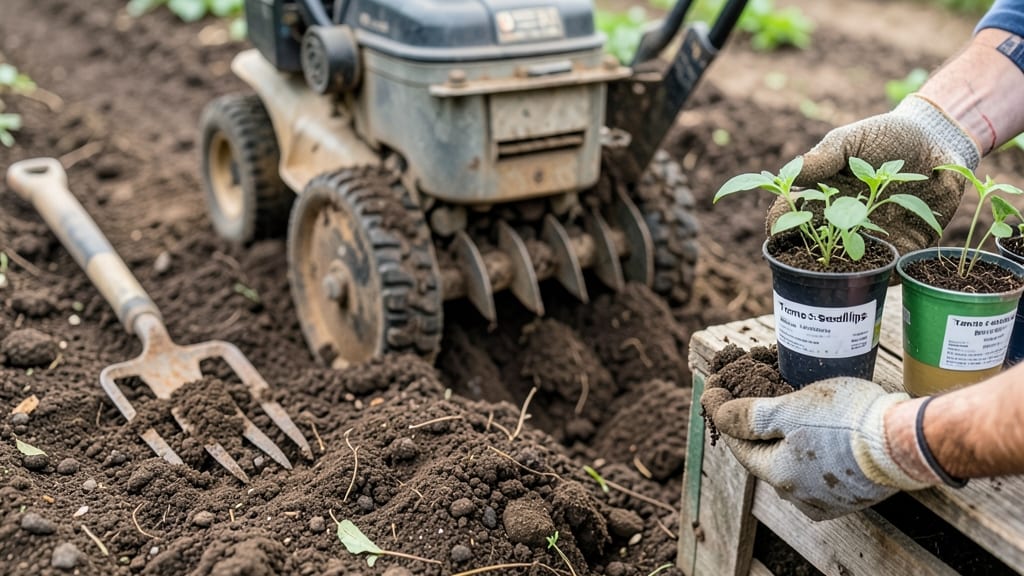
The best time to till a garden is when soil temperatures sit between 50°F and 65°F, moisture is balanced (not soggy or bone-dry), and weeds are dormant but seeds haven't yet sprouted. This typically falls in early spring or fall, avoiding frozen, waterlogged, or peak-growing-season soil to protect roots and soil structure.
The ideal timing for tilling balances soil science with practical gardening. When temperatures hover between 50°F and 65°F, microbial activity peaks, breaking down organic matter while preventing damage to tender roots. 🌱 Moisture matters too—too dry soil clumps, while overly wet soil compacts.
I always check by squeezing a handful: if it crumbles easily, it's ready. Spring tilling preps beds for planting, while fall tilling incorporates fallen leaves and weeds before winter."
Your climate plays a big role. In cooler zones, aim for spring tilling after the last frost but before seeds germinate. Warmer regions can till in late fall to prevent winter weeds.
For heavy clay soils, tilling in slightly drier conditions helps break up compaction, while sandy soils benefit from slightly moister conditions to maintain structure.
💡 In This Article
- Ideal Soil Temperature and Moisture for Tilling
- Seasonal Tilling Schedule for Different Climates
Ideal soil temperature and moisture for tilling
The magic window of 50°F–65°F isn't arbitrary—it's where soil microbes become most active. At these temperatures, beneficial bacteria and fungi break down organic matter efficiently, creating nutrient-rich crumbly soil perfect for planting. Below 50°F, microbial activity slows dramatically, leaving organic material undecomposed.
Above 65°F, heat can stress tender roots and disrupt soil structure, especially in clay-heavy soils. Think of it like baking bread: too cold and it won't rise; too hot and it burns.
Moisture levels are equally critical. Soil that's too dry forms hard clumps when tilled, creating a brick-like texture that plants struggle to penetrate. On the flip side, overly wet soil sticks to tools and compacts when worked, crushing beneficial soil organisms.
The ideal moisture feels like a damp sponge—it holds its shape when squeezed but crumbles easily when released. A simple test is the "squeeze-and-observe" method: grab a handful of soil; if it forms a ball that crumbles when tapped, it's perfect.
For precision, use a moisture meter (aim for 40-60% capacity), or stick a trowel in—if soil clings to the blade but doesn't ooze, you're golden.
Seasonal weather plays a hidden role too. Spring tilling after the last frost but before seeds germinate (typically 2-4 weeks before planting) gives roots time to establish without competing weeds.
Fall tilling, however, should happen 4-6 weeks before the first frost to let any disturbed weeds resprout and die before winter. The key is timing it so you're not tilling when soil is either frozen solid or saturated from spring rains—both scenarios turn your garden into a muddy mess. 🌱
Different soil types react uniquely to tilling. Sandy soils drain quickly and benefit from slightly moister conditions (35-45% moisture) to maintain structure, while clay soils need drier conditions (50-60% moisture) to prevent compaction.
The texture difference is dramatic: sandy soil feels like flour, while clay feels slick and dense. Over-tilling either can destroy soil aggregates, which are the tiny clumps that hold air and water—critical for plant roots.
That's why experienced gardeners often use a broadfork instead of a tiller for clay soils to avoid excessive disruption.
Here's what happens when you till at the wrong times: In winter, frozen soil shatters like glass, creating sharp edges that damage root systems. In peak summer, tilled soil bakes hard, forming a crust that blocks water and air.
Even worse, tilling during active growing seasons can sever root networks, stunting plants. The best approach? Plan your tilling schedule around your local frost dates and rainfall patterns. For example, in Zone 5, aim for early May or late September; in Zone 8, shift to March or November.
Always check soil temps with a simple thermometer—it's your best friend for avoiding costly mistakes.
Pro tip: If you must till in less-than-ideal conditions, work the soil when it's slightly drier than perfect. Dry soil is easier to work and won't stick to your tools, plus it helps break up compaction. Just be prepared to water thoroughly afterward to restore moisture balance.
And remember, the goal isn't to turn your soil into powder—it's to create a loose, aerated environment where roots can thrive. That's the real secret to successful tilling. ✨