
How To
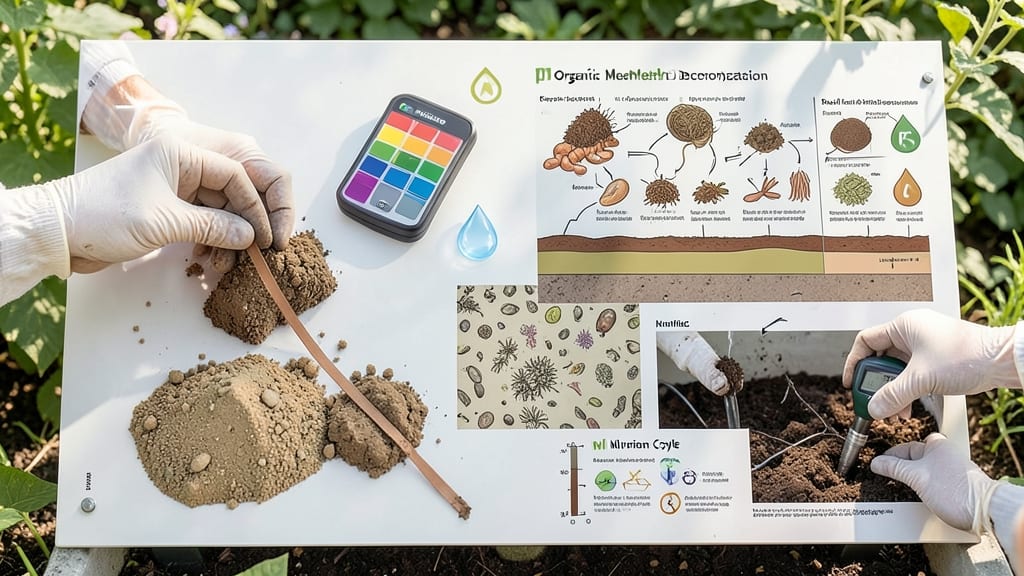
Soil science for gardeners is all about mastering soil composition, structure, and fertility to create the perfect growing environment. The core principles involve analyzing pH levels, balancing essential nutrients, and enhancing drainage to support strong root systems and vibrant plant life.
Understanding your soil's makeup is like knowing the foundation of your garden's success. 🌱 The balance between sand, silt, and clay—called soil texture—determines how well water and air move through it. For example, sandy soil drains quickly but lacks nutrients, while clay holds moisture but can suffocate roots.
Organic matter, like decomposed plant material, acts as a glue that improves both structure and nutrient availability. Microbes in healthy soil break down organic matter into plant-available forms, creating a thriving ecosystem beneath your plants.
Most gardeners don't realize how critical pH testing is—it directly affects nutrient uptake. A soil pH of 6.0 to 7.0 is ideal for most vegetables, but acid-loving plants like blueberries need pH 4.5 to 5.5.
Simple DIY tests using vinegar or baking soda can reveal your soil's pH, while home test kits measure nitrogen, phosphorus, and potassium levels. Once you know your soil's weaknesses, you can amend it with compost, worm castings, or specific fertilizers to create the perfect growing medium for your plants.
💡 In This Article
- How Soil Composition Affects Plant Growth
- Practical Soil Testing and Improvement Techniques
How soil composition affects plant growth
Soil composition is the hidden architecture of your garden, where the balance between sand, silt, and clay creates the foundation for plant health. Sandy soil, with its large particles, drains water rapidly but struggles to retain nutrients—think of it like a sieve that lets everything slip away.
Clay soil, with its tightly packed particles, holds moisture like a sponge but can become waterlogged, suffocating roots. The ideal mix, called loam, typically contains 40% sand, 40% silt, and 20% clay, offering the perfect balance of drainage and nutrient retention for most plants.
Organic matter plays the role of nature's glue, binding soil particles together while adding essential nutrients. When you add compost or aged manure, you're introducing decomposed plant and animal material that improves soil structure and water-holding capacity.
This organic material also feeds beneficial microbes—like bacteria and fungi—that break down complex nutrients into forms plants can absorb.
For example, mycorrhizal fungi form symbiotic relationships with roots, extending their reach by up to 100 times and making nutrients more accessible. 🌱 Without these microscopic helpers, plants would struggle to access critical elements like phosphorus and nitrogen.
Root systems adapt remarkably to different soil textures. In sandy soil, roots grow quickly downward in search of moisture, while in clay soil they spread horizontally where oxygen is more available. The challenge is creating a soil environment that supports both deep root penetration and microbial activity.
For instance, adding 2-3 inches of compost annually can transform compacted clay into a more workable loam by improving aeration and water infiltration. This structural improvement allows roots to access both air and moisture efficiently, reducing stress on plants during dry periods.
Microbial activity is where the real magic happens beneath the surface. A single teaspoon of healthy soil contains billions of microorganisms that decompose organic matter, cycle nutrients, and suppress plant diseases. These microbes thrive in soils with a balanced pH (typically 6.0-7.0) and adequate organic carbon.
When soil pH strays too acidic or alkaline, microbial populations decline, reducing nutrient availability. For example, nitrogen-fixing bacteria like Rhizobium only function optimally in slightly acidic soils (pH 6.0-7.0), which is why legumes often struggle in highly alkaline conditions.
Consider the case of tomatoes, which prefer well-draining soil with plenty of organic matter. In pure sand, tomato plants would wilt quickly due to poor water retention, while in pure clay, their roots would suffocate. The solution?
Amending the soil with 30-40% compost creates the ideal loam texture that holds moisture without becoming waterlogged. This simple adjustment can increase tomato yields by up to 30% by providing both physical support and nutrient availability.
The key takeaway is that soil composition isn't just about what's in it—it's about how those components work together to support plant life.
What most gardeners overlook is how soil structure evolves over time. Regular additions of organic matter gradually improve soil texture, while tilling can disrupt beneficial microbial communities. The goal is to create a living, dynamic ecosystem where roots, microbes, and soil particles coexist harmoniously.
This balance is what transforms good soil into great soil—capable of supporting lush, productive gardens year after year. 🌿