
Tools
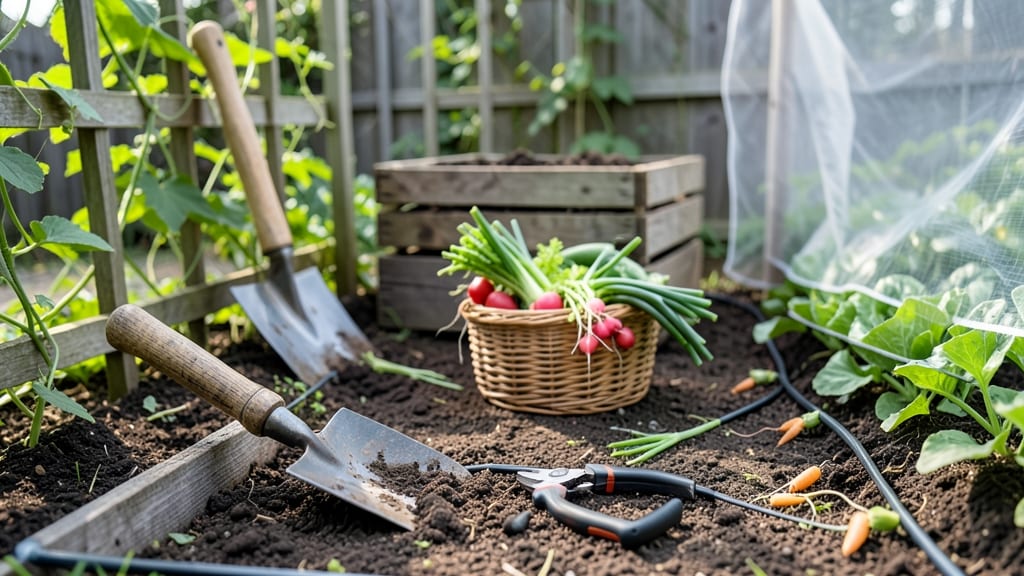
A market garden is a small-scale farming operation focused on growing high-value, fresh produce like vegetables, herbs, and fruits for direct sale to local consumers, restaurants, or farmers' markets. These farms prioritize quick turnover crops and seasonal variety to maximize profitability in limited space.
A market garden thrives by focusing on fast-growing, high-demand crops that sell quickly at premium prices.
Unlike large commercial farms, these operations prioritize small plots—often under 5 acres—and direct sales channels like farmers' markets or restaurant partnerships. 🌱 The key advantage is flexibility: growers can quickly adapt to market trends, test new varieties, and respond to customer feedback without the bureaucracy of industrial agriculture.
What sets them apart is their seasonal rotation system, which prevents soil depletion while ensuring a steady supply of fresh produce. Many market gardens also integrate value-added products like microgreens or specialty herbs to boost revenue per square foot.
The direct-to-consumer model eliminates middlemen, letting farmers keep more profits while building loyal customer bases.
For aspiring growers, the biggest hurdle is often startup capital—equipment, seeds, and marketing costs can add up quickly. However, the payoff comes from higher profit margins compared to commodity crops.
Successful market gardens often start small, perfect their sales channels, and scale gradually based on demand rather than land availability.
💡 In This Article
- Key Characteristics of Successful Market Gardens
- Starting a Profitable Market Garden: Essential Steps
Key characteristics of successful market gardens
Market gardens succeed by focusing on high-value crops that sell quickly—think leafy greens like kale (which can reach $3-$5 per pound at markets) or specialty herbs such as Thai basil (priced at $4-$6 per bunch).
These crops mature in 30-60 days, allowing growers to make multiple harvests per season.
The secret lies in their crop rotation systems, where farmers switch plant families (like tomatoes after beans) to prevent soil-borne diseases and maintain fertility. 🌱 Unlike large-scale farms, market gardens often use raised beds or biointensive techniques to maximize yield per square foot—sometimes producing 20% more than conventional row cropping.
The proximity to urban centers is critical. Successful market gardens are typically within 25-50 miles of their primary sales hubs to reduce transportation costs and keep produce ultra-fresh.
For example, a garden in Portland, Oregon, might specialize in microgreens for local chefs, while one in Austin, Texas, could focus on heirloom tomatoes for food trucks.
The direct-to-consumer model eliminates the 30-50% markups from grocery store distribution, letting farmers keep nearly 80% of the retail price—a stark contrast to commodity farming where profits are razor-thin.
Labor efficiency is another game-changer. Many market gardens employ high-density planting techniques, such as succession planting every 10-14 days, to ensure continuous harvests.
Tools like hoop houses (low-cost greenhouses) extend growing seasons by 4-6 weeks in cooler climates, while drip irrigation systems cut water use by 30-40% compared to overhead sprinklers. The result? A 2-3x return on labor compared to traditional row crops.
This efficiency allows growers to focus on quality and customer relationships rather than sheer volume.
Climate adaptation is where market gardens truly shine. Unlike monolithic agribusinesses, small-scale growers can experiment with climate-resilient varieties, like heat-tolerant peppers or drought-resistant kale. For instance, a garden in Arizona might grow Solar Fire peppers (which thrive in 110°F+ temperaturesWinterbor kale.
These adaptations not only reduce risk but also create unique products that command premium prices at farmers' markets.
What most people overlook is the community integration that fuels success. Top market gardens often host workshops, U-pick events, or farm-to-table dinners to build brand loyalty.
For example, a garden in California might offer "Harvest Days" where customers pay $20 per person to pick their own flowers or herbs—generating ancillary revenue while creating memorable experiences. This dual-income approach (produce + education) can add 15-25% to annual profits without extra land.
Finally, the data-driven approach separates thriving gardens from struggling ones. Successful growers track metrics like cost per pound to produce (aim for $0.50 or less for leafy greens) and market demand trends (using tools like LocalHarvest.org to identify gaps).
For example, if a garden notices 30% of sales come from heirloom tomatoes in summer, they might allocate 20% of their space to 5-6 varieties—balancing risk and reward. This precision ensures every seed planted aligns with a proven market.